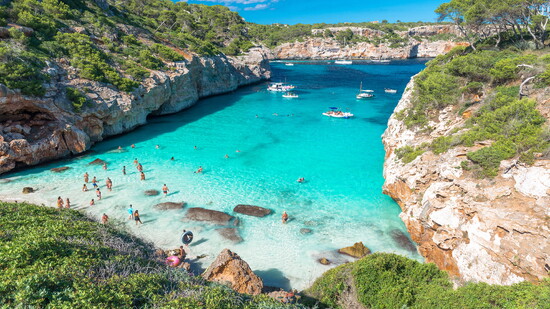
Birthed between heaven and sea, Mallorca sits off the coast of Spain in the azure waters of the Mediterranean. Trees of cedar, aloe, orange, lemon, fig and pomegranate line the landscape as emerald mountains meet the historic pastel lined streets of Palma. Mallorca boasts over 300 days of sunshine, welcoming visitors with bright blue skies, warm air and ocean breezes.
Mallorca was first inhabited in 6000BC, this Mediterranean island has been shaped by prehistoric settlers, Roman conquerors, Moorish farmers, Catalan kings, pirates, missionaries and modern tourism pioneers. Every era has left its mark, creating an island where history is never far from view — whether in the ancient stones of Alcúdia, the Gothic spires of Palma, or the traditions still alive in its villages.
“The nature, the trees, the sky, the sea, the monuments surpass all my dreams: this is the promised land!”- From George Sand’s letter to Carlotta Marliani
Our Mallorquin journey began at the Cap Rocat resort. A quick flight from bustling Barcelona and you find yourself on the natural shores of Mallorca where the art of doing nothing reigns. Once designed as a fortress, Cap Rocat was never used for this purpose and now stands as an architectural beauty carved in sandstone. The resort seamlessly blends into the landscape of Protected Natural Area where the biodiversity of its Posidonia meadows meet the Mediterranean.
White drapes blowing in the wind drape the buildings. Each suite is a secluded haven equipped with large seating areas, marble tiled bathrooms with soaking tubs, and a terrace outdoor area with an area for eating, sunbathing, and a large outdoor bed overlooking the sea perfect for enjoying the ocean breeze or at night stargazing. We were there during the peak of the Alpha Capricornids and the Southern Delta Aquarids, witnessing 12 meteors stream across the sky one night.
The Cap Rocat Beach Club sits above the Mediterranean with full service for drinks and fresh food as you lounge. A dip in the sea is a must. The clear, blue, buoyant waters of the Mediterranean beckon you in. Dive in or take the ladder and enjoy the salt of the sea. After a day spent savoring Mother Nature make plans to dine at the Sea Club. This was by far our favorite meal. Positioned overlooking Calo de la Reina (aka The Queen's Cove), The Sea Club is the perfect place to watch sunset, dine on freshly caught fish, and sip a craft cocktail or mocktail as the sun dips below the horizon. Every dish we had was remarkable, yet simple.
Breakfast can be enjoyed until noon every day in the main dining area or in your suite. Fresh juices, eggs prepared as you like, an array of meat options, and a smorgasbord of freshly baked pastries are all on the menu.
During summer, Cap Rocat hosts a temporary pop-up restaurant in collaboration with Michelin-starred Saddle Madrid. Five to seven courses featuring regional fare plus a cheese course. Guests also can partake in the art of butter shaving to accompany the bread course.
Perhaps the crown jewel of the resort, if one had to pick, is the spa. Carved into stone like a cave, you will find one of the most stunning views on the property, the indoor pool with an art sculpture hanging above. Try the floating massage for a uniquely therapeutic experience. The spa lounge area is even a work of art, designed as if for Moorish royalty with canopy beds lining both sides of the room.
Just a short drive from the resort is the most notable village on the island, Palma de Mallorca. Nearly half of Mallorca’s permanent population resides in the island’s capital, making it a vibrant and lively place. The impressive La Seu cathedral in Palma is one of Mallorca’s most significant heritage sites. It is a huge cathedral built on the site of a former mosque. The building of the cathedral began in 1230 and continued for 400 years. The cathedral has continued to have additional work undertaken with the renowned architect Antoni Gaudi adding to it more recently. Find a cafe and enjoy Huevos Rotos, or 'broken eggs', consisting of lightly fried eggs over fried potatoes, often with chorizo or ham, which Mallorcans eat anytime of day. Other popular regional dishes include Ensaimada, a sweet spiral pastry; Tumbet, a vegetable dish with fried eggplant, peppers, and potatoes; Frito Mallorquín, a stir-fried dish with meat or fish and vegetables; and Pa amb oli, a simple dish of bread rubbed with tomato and olive oil.
Some restaurants you must try: La Boveda, a beautiful small tapas bar, which offers very cozy dining and and where the Padron has been frying pimientos ever since he was a little boy; Botanic for its ambiance, beautiful interior design, and the pleasure of plant forward food; La Cana for tapas; Sa Llotja in Porto Colom for modern Mallorquin food; S'Arenal in Porto Colom, where you can have white wine and seafood, while sitting in the shade, looking at the ocean and having your feet in the sand.
Wander the streets of Palma and among the art galleries and shops you will find narrow corridors leading to lively courtyards where people are gathered eating from different cafes and listening to live music. We also discovered that Uber drivers are very accommodating in Mallorca - after catching a ride we wanted ice cream, our driver was nice enough to take us to the best ice cream place in town and wait while we ordered.
Artists and writers have been long been attracted to the dramatic and picturesque west coast of the island. Robert Graves, known as one of England’s greatest poets, was one of the first English to move to the island. He resided (& was buried) in the pretty mountain village of Deia, which has since become a hub for the creative crowd and celebrities. One of the most charming villages is Valldemossa, a mountain village known for its historic Carthusian Monastery where composer Chopin and author George Sand stayed.
Mallorca’s stunning Serra de Tramuntana mountain range was awarded World Heritage Status by UNESCO for being an area of great Physical and Cultural significance. Its highest peak is the Puig Major (1445 metres & is the highest mountain in the Balearic Islands). The most famous and longest hiking trail, stretching across the Serra de Tramuntana mountains is Dry Stone (GR221). Other hikes include the Path of the Archduke, scenic and highly-rated trail with dramatic views; Barranc de Biniaraix, a picturesque and popular hike, also a segment of the GR221; Puig de Galatzó, a classic hike up one of Mallorca's southern peaks; and Castell d'Alaró, a hike to a historic castle perched on a mountain.
Mallorca is also home to a breathtaking range of cave systems, with the most impressive being the Coves del Drach on the east coast of the island. This underground world is filled with an array of giant stalactites, stalagmites and shimmering underground lakes. The route is approximately 1,200 meters long and takes about an hour to traverse. It's a tourist attraction rather than a wilderness hike, but it's still a stunning underground experience. Another beautiful cave hike is Cova des Coloms, a popular sea cave located off the coast of Cala Romantica. It involves a 40-minute hike along a coastal path to reach the entrance, followed by a short swim into the cave. Some guided tours include rappelling into the cave and swimming back to the beach.
Whether you choose the art of doing nothing at Cap Rocat, taking in the historic streets of Palma with its museums, cafes, and nightlife, or immersing yourself in Mother Nature, there is something for everyone to enjoy this majestic slice of heaven in Mediterranean.
Birthed between heaven and sea, Mallorca sits off the coast of Spain in the azure waters of the Mediterranean.
Trees of cedar, aloe, orange, lemon, fig and pomegranate line the landscape as emerald mountains meet the historic pastel lined streets of Palma.