Drive along Ponus Ridge on the Stamford–New Canaan border and you might notice stone walls that disappear into the woods—and then into the water. Beneath the surface of the Laurel Reservoir lies Dantown, a once-thriving 19th-century village drowned in the name of progress.
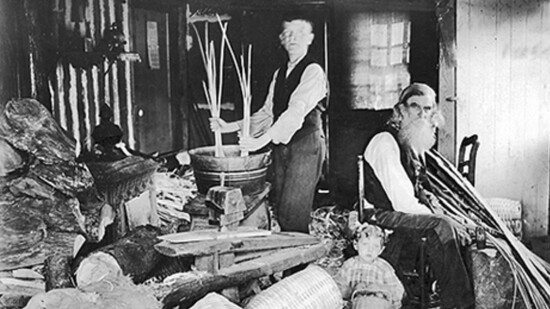
Founded by Francis Dan, a 17th-century settler who arrived in 1684, Dantown grew around the Rippowam River. The community prospered for generations, its families known for crafting oak-spun baskets prized by oyster farmers and clammers across Long Island Sound. At its peak, some 80 families lived here, their handiwork so essential it was traded as local currency.
Dantown also had its own school and Methodist church. Residents gathered for square dances, picnics, and services on Sundays. The mill on the river supplied both work and rhythm to daily life. But prosperity began to fade in the early 1900s, when a typhoid outbreak linked to tainted oysters decimated the local trade.
At the same time, Stamford’s population was booming. The city needed a dependable water source—and Dantown’s valley, rich with springs and fed by the Rippowam, proved ideal. In 1923, engineers from the Stamford Water Company began constructing a massive dam, clearing homes, mills, and farmland before flooding the basin. When the water rose, it swallowed Dantown whole.
The project created the 265-acre Laurel Reservoir, now a vital link in the regional water system. But it also erased a piece of living history. Entire homesteads vanished, leaving behind only faint traces: a cemetery on a nearby ridge, and stone walls that vanish beneath the lake’s edge.
During droughts, remnants of roads and foundations occasionally emerge—a reminder of a community sacrificed to quench a growing city’s thirst.
www.callcress.com