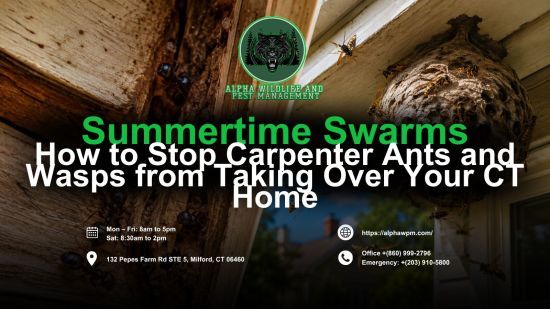
Summertime Swarms: How to Stop Carpenter Ants and Wasps from Taking Over Your CT Home
As summer arrives in Connecticut, homeowners naturally spend more time outdoors relaxing on decks, hosting backyard gatherings, and enjoying the warm weather. However, you’re not the only one taking advantage of the season. Carpenter ants in Connecticut and wasps in CT homes become significantly more active during the summer months, and if left unchecked, they can quickly turn your home into theirs.
What may start as a minor nuisance can escalate into a serious infestation leading to structural damage, safety risks, and costly repairs. Understanding how these pests behave, and how to stop them early, is key to protecting your home all summer long.
Why Carpenter Ants Are a Serious Summer Pest
When homeowners think of wood-destroying insects, termites usually come to mind. However, carpenter ants Connecticut homeowners deal with can be just as destructive in their own way.
Unlike termites, carpenter ants do not consume wood. Instead, they excavate it to create tunnels and nesting galleries. Over time this activity can weaken wooden structures and compromise the integrity of your home.
During the summer carpenter ant colonies are at peak activity. Worker ants leave the nest in search of food and moisture, often making their way indoors through small cracks and hidden entry points.
This is why carpenter ant infestation Connecticut cases tend to increase during warmer months.
Common Signs of Carpenter Ant Activity
Early detection is critical when dealing with carpenter ants. The longer an infestation goes unnoticed, the more damage it can cause.
Watch for these signs of carpenter ants in your home:
Large black ants crawling indoors
Small piles of sawdust-like material (known as frass)
Faint rustling or scratching sounds inside walls
Winged ants emerging indoors (especially near windows)
Damaged or hollow-sounding wood around doors, windows, or decks
Moisture plays a major role in attracting carpenter ants. Homes with water-damaged wood, leaking gutters, or poor drainage are especially vulnerable to carpenter ant problems in Connecticut.
The Dangers of Wasp Infestations
While carpenter ants threaten your home’s structure, wasps pose a direct risk to your safety. Wasp infestations in Connecticut become more dangerous as summer progresses.
In early summer wasp colonies are relatively small. However, by mid to late summer nests can grow rapidly housing hundreds or even thousands of wasps.
Common nesting locations include:
Roof eaves and overhangs
Decks and porches
Sheds and garages
Attics and wall voids
Outdoor play structures
Fences and railings
The real danger comes from their aggressive behavior. Wasps are highly territorial and will defend their nests if disturbed.
Signs You May Have a Wasp Problem
Spotting early warning signs can help you avoid a dangerous situation. Here are common indicators of a wasp problem in CT:
Increased wasp activity around your home
Visible nests attached to structures
Wasps flying in and out of small openings
Buzzing sounds coming from walls or ceilings
Frequent wasps near food, trash, or outdoor dining areas
For individuals with allergies, even a single sting can lead to a serious medical emergency. This makes wasp removal Connecticut services especially important for families with children or pets.
Why Summer Makes These Pests Worse
Summer provides the perfect environment for both carpenter ants and wasps to thrive. Warm temperatures accelerate colony growth, while increased outdoor activity creates more opportunities for pests to find food.
Several factors contribute to summer pest problems in Connecticut:
Higher humidity levels
Increased food availability outdoors
Longer daylight hours for foraging
Ideal nesting conditions in homes and structures
Without proper prevention these conditions can quickly lead to large-scale infestations.
How to Prevent Carpenter Ants and Wasps
The good news is that there are several proactive steps homeowners can take to reduce the risk of infestation. Effective pest prevention Connecticut homeowners need starts with eliminating the conditions that attract pests.
Reduce Moisture Around Your Home
Moisture is one of the biggest attractants for carpenter ants and can also create favorable conditions for wasps.
To minimize risk:
Repair leaking gutters and downspouts
Fix plumbing leaks immediately
Eliminate standing water around your property
Keep firewood stored away from the home
Replace rotting or water-damaged wood
Addressing moisture issues is a key part of carpenter ant prevention Connecticut strategies.
Seal Entry Points
Both carpenter ants and wasps can enter through surprisingly small openings. Conduct a thorough inspection of your home’s exterior and seal any potential access points.
Focus on:
Cracks in the foundation
Gaps around windows and doors
Openings around utility lines
Damaged siding or trim
Sealing these areas helps block access and is essential for wasp prevention in Connecticut homes.
Inspect Outdoor Structures Regularly
Your outdoor structures are prime real estate for nesting pests. Make it a habit to inspect:
Decks
Fences
Sheds
Rooflines
Playsets
Catching a small nest or colony early can prevent a much larger issue later on. Routine inspections are a simple yet effective part of summer pest control in CT.
Keep Outdoor Areas Clean
Food is a major attractant for both carpenter ants and wasps. Maintaining a clean outdoor environment reduces the likelihood of pests settling nearby.
Be sure to:
Clean grills after each use
Keep trash bins tightly sealed
Remove fallen fruit from trees
Wipe down outdoor dining surfaces
These habits go a long way in reducing wasp and ant activity around your home.
When to Call a Professional
While DIY methods may seem convenient, they often fail to address the root of the problem. Sprays and traps may reduce visible activity, but they rarely eliminate the colony itself.
Carpenter ants often nest deep within walls, attics, or structural wood, making them difficult to fully remove without professional tools and expertise. Similarly, wasp nests are often located in hard-to-reach or hazardous areas.
A professional pest control service in Connecticut can provide:
Thorough inspections to locate hidden nests
Accurate identification of pest species
Targeted treatments that eliminate the source
Long-term prevention strategies
This approach ensures that the infestation is handled safely and effectively.
Protect Your Home Before Summer Pests Take Over
The best way to deal with carpenter ants and wasps in Connecticut is to act early—before colonies become established and harder to control.
Early intervention helps:
Prevent structural damage
Reduce the risk of stings and injuries
Avoid costly repairs
Maintain a safe and comfortable home environment
At Alpha Wildlife & Pest Management, we specialize in carpenter ant control Connecticut and wasp removal CT services designed to protect your home throughout the summer season.
Final Thoughts
Summer should be a time to enjoy your home without worrying about pests taking over your space. Unfortunately, carpenter ants and wasps in CT homes are more than just a seasonal annoyance; they can cause real damage and pose serious risks if ignored.
By understanding their behavior, recognizing early warning signs, and taking proactive prevention measures, homeowners can stay ahead of infestations and keep their property protected.
If you are seeing signs of carpenter ants or increased wasp activity, don’t wait. Taking action now can save you time, money, and stress later in the season.