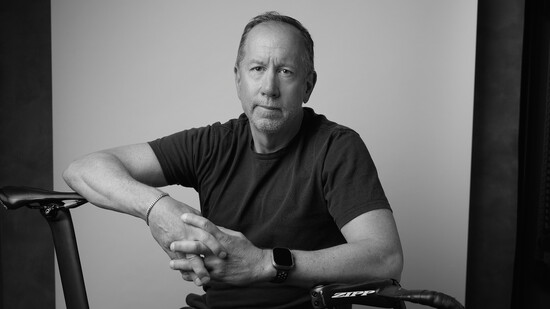
Before Mike McCarthy ever published a magazine, built a start-up, or worked on Wall Street, he was already living a life defined by elite performance.
Long before Reno became home, McCarthy was one of the most accomplished cyclists in American history — a 17-time national champion and a three-time world champion, winning twice as an amateur and once as a professional. He wasn’t just competing at the highest levels of his sport — he was dominating them.
Much of McCarthy’s life has been about accomplishment. He grew up in New York City, living just a block from Central Park. His proximity to the park helped lay the foundation for an early love of riding a bike. That love quickly grew into something more serious. It wasn’t long before McCarthy was racing, first locally, then nationally, and soon on the international stage.
“Being 14 and finding your passion in life is really amazing, especially during the 1980s in NYC. I was smitten,” McCarthy fondly recalls. “A couple years later I moved out to Colorado Springs and the Olympic Training Center.”
That move changed everything. McCarthy’s talent and work ethic accelerated him into the upper ranks of American cycling, and by the late 1980s he had become one of the sport’s premier competitors.
He qualified for the 1988 Summer Olympics in Seoul, South Korea, competing in the Velodrome 5K. It was a milestone achievement — but for McCarthy, it was only the beginning. He later turned professional, continuing to rack up titles and cementing his reputation as one of the world’s best pursuit riders.
In 1992, he captured a world championship in individual pursuit, a career-defining moment that still stands out decades later.
“The world championship, for me, that was the big one,” McCarthy says, alluding to his favorite athletic accomplishment. “I look at the Olympics as not being great showings. I finished sixth and ninth. I can rationalize both but I went to Atlanta with medal expectations.”
“Still, the older you get, the more you have to appreciate [the Olympics experience]. To do that twice is pretty cool. I set high standards and high goals. I’m in the U.S. Bicycling Hall of Fame. The further away I get, the more reflective I get. It’s pretty cool to have done the things I did.”
A year after his world title, Olympic rules changed, allowing professionals to compete in the Games. McCarthy qualified once again — this time for the 1996 Olympics in Atlanta, returning to the sport’s biggest stage with even greater expectations.
But even the greatest athletes eventually confront the same reality: the body can’t remain at peak performance forever. In world-class sports, Father Time is undefeated. And McCarthy, competitive to his core, didn’t want to hang on long enough for the sport to take something from him.
“After the Goodwill Games in 1998, I made the decision to stop,” he says. “I didn’t want to travel 300-plus days a year. I delivered a good performance in front of my home New York crowd and said goodbye. That’s how I’d written it in my head, so to do that was pretty awesome… I didn’t want to compete if I didn’t think I could be the best anymore, so it was time to go.”
When the racing ended, McCarthy’s drive didn’t disappear — it just shifted.
After cycling, he launched into an equally diverse professional career, including 16 years working on Wall Street and nearly another decade building start-ups in the Bay Area. The same discipline that carried him to Olympic velodromes and world championship podiums carried over into business, where he built a reputation for taking on complex challenges and thriving in high-performance environments.
That path eventually led him west again, and in late 2020 he relocated to the Truckee Meadows. The move was motivated in large part by lifestyle, and by the same love of the outdoors that first began in Central Park decades earlier.
When McCarthy arrived in Reno and began exploring what his next chapter might look like, magazine publishing wasn’t exactly the obvious answer. But as he looked around, he saw something missing in the region’s media landscape and saw a way to connect with a community he was still getting to know.
“When I got here, I wanted to do something to… impact the community in a positive way,” McCarthy says. “I didn’t know a ton of people here and I thought the magazine looked like an interesting opportunity.”
So McCarthy jumped in head-first. City Lifestyle dropped its first issue in November of 2023 and more than two years later, it’s still going strong. Now, instead of competing for podium finishes, he’s focused on spotlighting the people, businesses, and stories that shape the Reno region.