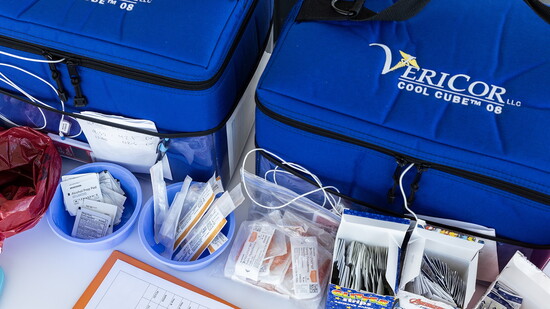
April, in most of the U.S., means spring has arrived: new leaves pushing out of dull branches, lawns becoming green and vibrant, robins plucking worms from between the emerging grass blades to feed their newborns.
April in Montana can mean a blizzard or a golf outing, or both.
Whatever the weather, the first full week of April also means National Public Health Week, an initiative of the American Public Health Association to “celebrate the impact of public health and spotlight priority issues that can improve our nation’s well-being,” according to their website.
For Chief Health Officer for Missoula Public Health Jeanna Miller, while it’s good to devote a week to shining a light on the work they do, it’s also just another day (or week) at the office.
“I think if people spent a week in the life of a public health professional, they would realize that truly every week is Public Health Week,” she says. “We are out there in our community in so many different ways, identifying what we all can do to make it easier for people to make the right choices and enjoy good health.”
At this point you may still be asking, “what exactly is ‘public health,’ and why should I care about it?” Well, public health is a lot of things, Jeanna explains.
“Something like crosswalk signals, or unleaded gasoline—things that you might not always think of as being public health initiatives are absolutely public health.”
Lily Walsh, Missoula Public Health’s Communications Officer, says, “I didn't have a public health background when I started working here. I feel so fortunate to be in this role where I'm able to look and see this is where the community has a need that I didn't even realize there was a need because the health department has come in and helped out.”
“It's always so fun to tell people, when people ask what I do for work, ‘did you know? We do all these things,’” Lily continues. “We give out free Narcan, we give out free gun locks. We have a lot of resources that we just give to the community.”
“A lot of people don't know what the health department does,” Jeanna says. “That really is something that public health professionals everywhere are talking about. Because what happens when your strategies are successful and what you implement is effective is people forget why it's important. Vaccines have been so successful that you probably don't know somebody who has had measles or polio. We are this close to eradicating some of these diseases, and then some of the perceived risk really goes down.”
“A lot of the time, folks in public health say, ‘you might not know what we do, but you would certainly know if we weren't doing it,’” she says. “In the world of prevention, the better you are at your job, sometimes the easier it is for people to forget why it's so important.”
So, while every week at Missoula Public Health is basically a Public Health Week, the official National Public Health Week is an important opportunity to raise awareness of this vital work that touches all aspects of our lives here in the Missoula Valley. It’s a lot of very hard work, and it should be celebrated.
“I think it's important to raise awareness that public health really is everything,” Jeanna says. “Public health is so broad and it touches every aspect of your life. My favorite definition of public health is it's what we as a society do collectively to improve the health of everybody. I think something like National Public Health Week is an opportunity to talk about it with everybody.”
“Everybody” is kind of a key word here: public health requires a society-wide effort, from local governments to individual community members themselves, in a commitment to sustaining a certain quality of wellbeing for all here in Missoula.
“Nobody can do it on their own,” Jeanna says. “Lily can't save public health; I can't save public health. I can't impact one factor all on my own. We have to do it together.”
“Everybody” also includes our public health professionals, how they choose to show up for themselves, their families, and their community.
“I think the way I carry this work personally is in the concept of service,” Jeanna says. “I really feel like some days I would do this job for no money from a cardboard box, because to see this impact is amazing. And so, I think that the way that I value service and the way that I live that through volunteerism and being a foster parent and those kinds of things, it makes those hard days easier.”
“I let people know that I carry Narcan on me,” Lily says “And it's important as a like citizen of Missoula too. To know if someone is in a place where they need that, I'm prepared.”
“At least I didn't show up and make a widget for a private corporation to buy somebody a second vacation home,” Jeanna continues. “Our job really is to figure out how to use really, really limited resources for the maximum good. And when that's what you did all day? I don't always sleep great 'cause there's a lot to do, but I don't lose sleep over the ethics and morals of what we're doing at the health department.”
“Public health is so broad and it touches every aspect of your life. My favorite definition of public health is it's what we as a society do collectively to improve the health of everybody." - Jeanna Miller, Chief Health Officer for Missoula Public Health
Missoula Public Health shows up in our everyday lives in ways that certainly go unnoticed. You might not think about all the work that's being done when it comes to our food service, industry permits, public accommodations, and even our body art. Public health is especially considered within your own workplace through safety materials, smoke-free areas, employee training, employee wellness, and daycare inspections. All efforts combine for the greater good in keeping Missoula a safe place for our community.