You’ve written that “home” is your theme for 2026. With the year coming to a close, how have you found yourself embracing that theme?
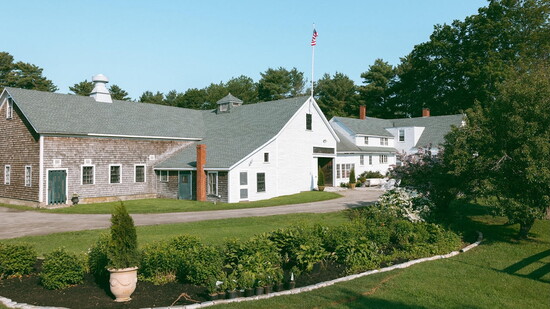
For so many years I was running—raising girls, building a business, making payroll, making things, dreaming up the next thing. Always moving. This farm, the Yellow Field, has somehow asked me to stop, or at least slow down enough to actually see my life. Home isn't just the house: it’s the land, the horses outside my window, my girls coming through the door, the old trees and gardens, and this very imperfect 1774 farmhouse that we are slowly bringing back to life. It’s being surrounded by things that have history and meaning.
When you take a step back and look at the life you’ve built—from your design work to The Yellow Field—what are you most thankful for right now?
Building a creative business is hard, and raising a family while doing it is hard. There have been incredible highs and some really hard years, too. When I look around now, I’m incredibly thankful that I kept listening to the little voice that told me to keep making things and keep going.
I’m thankful for my girls, my husband, my family, my team, and all of the people who have bought something I made and allowed me to keep doing this for all these years. And I am incredibly thankful for this land that created such a beautiful place to inspire my work.
Your work is deeply connected to Maine, your family heritage, and the natural world around you. What are you most grateful that those roots have given you?
A sense of place. Maine has given me a million stories and a beautiful life. I love getting lost here in the woods, on the massive trails on my bike, on a run, or walking the endless beaches. From holding my babies here to seeing them flourish and explore life as adults, I am so incredibly grateful for this state that has supported me and given me endless stories and visuals to draw from. My life is my design and my design is my life. Maine is woven into all of it.
What are some of the everyday things at The Yellow Field that you find yourself feeling especially grateful for?
I think what I love the most, and what I am most grateful for, is that time feels different here. It slips by so innocently as I work on a project with my entire heart, whether it’s digging a new flower bed or drawing in my studio. I get lost in the innocence of a life here because it feels like a life well-lived each day.
There’s something so romantic about it all. The morning and evening chores, caring for the land, the horse, the goals, the chickens. It is such a deep-rooted feeling of something you can’t quite describe, but it is a feeling of immense pride, hope, and love. It sweeps me away from the hustle and bustle of everything. Hours fly by, and yet somehow time seems to stand still here all at the same time. I see and feel things differently.
Your newest work draws inspiration from life at the farmhouse, including horses, flowers, botanical imagery, and the colors of the fields. How does gratitude show up in your creative process?
Gratitude shows up as noticing. Most of what I draw starts because something made me stop for a second. A flower. An old tile. The curve of a horse. A little botanical shape. A color in the field that is almost impossible to capture. There is so much beauty in an ordinary life if you pay attention to it. Maybe drawing something is my way of saying, I saw you. I noticed this. I see you.
Who are the people you’re most thankful for in your life and career?
Maslen has been beside me through every version of this life and business—the crazy ideas, the risks, the really good years, and the really hard ones. And my girls have grown up inside of it all. They are woven into everything I have built.
My dad, too. Losing him changed me in ways I am still understanding. I think you see your life and where you came from differently when you lose a parent.
And then there are all the people along the way—my team, friends, shop owners, customers, and people who saw something in my work and believed in it.
The one person that I miss who was my biggest cheerleader is my grandmother, Vivian. She held my hand like no other person could. I could be my most vulnerable self with her, and she absolutely adored me.
The Yellow Field is ultimately about bringing people together. What have you learned about the importance of gathering, community, and connection?
I think we need each other, and we need places that give us permission to slow down and just be together. Nothing needs to be perfect—I actually think the imperfect parts are usually what make something memorable.
I am incredibly grateful for this state that has supported me and given me endless stories and visuals to draw from. My life is my design and my design is my life—Maine is woven into all of it.