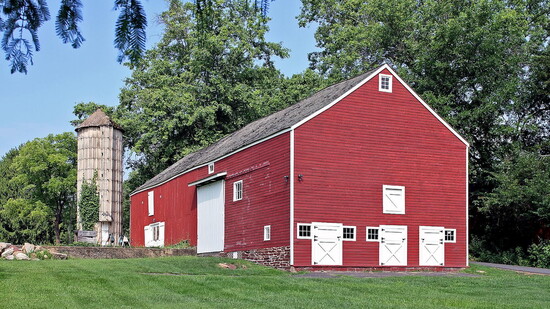
Tucked along King George Road, where rolling fields meet centuries-old architecture, the Kennedy Martin Stelle Farmstead stands as one of Somerset County’s most remarkable examples of historic preservation brought vibrantly into the present. Today known as Farmstead Arts, the 18th-century property has been transformed into a thriving hub for fine, performing and practical arts—yet its weathered beams, restored barns and storytelling stonework still echo more than 250 years of American history.
What began as a working farm in the early 1700s is now the region’s premier arts center, offering year-round programming that includes art classes, exhibitions, concerts, theater performances and special events. The Farmstead’s unique blend of heritage and creativity has made it a cultural anchor for Bernards Township and a beloved destination for residents seeking inspiration close to home.
A HISTORIC LANDSCAPE REVIVED
The Farmstead’s story spans generations—from its earliest Lenni-Lenape inhabitants to the arrival of European landowners, Revolutionary War figures and innovative 20th-century scientists.
The land was first purchased in 1717 by John Harrison from Chief Nowenoik of the Lenni-Lenape. Over the next century, the farm passed through the hands of notable owners, including Rev. Samuel Kennedy, who expanded the property in the 1760s and is believed to have operated a classical school for young scholars on-site. By the late 1770s, Col. Ephraim Martin—a Revolutionary War officer and later a key advocate for the U.S. Bill of Rights—stewarded the land.
For nearly 150 years, the Stelle and Runyon families made the property their home, adding structures, raising Guernsey cattle and shaping the homestead into a thriving agricultural operation.
The modern era of the Farmstead began in 1999, when Bernards Township acquired the property. Originally slated for demolition due to extensive disrepair, the site was saved through the efforts of passionate community advocates and the newly formed Friends of the Kennedy Martin Stelle Farmstead. The Friends assumed responsibility for restoring the buildings, stewarding the property and operating what would become the Farmstead Arts Center.
By 2010, after years of painstaking restoration, the Farmstead officially reopened to the public.
ART, COMMUNITY AND PRESERVATION
Today, the Farmstead is recognized not only for its historic structures—including the restored Farmhouse, English Barn and Icehouse—but also for the dynamic arts programming that fills its spaces.
“We are here to build community through the arts while honoring the history beneath our feet,” says Operations Manager Robin Storms. “Every class, performance or exhibition helps keep this site alive.”
Visitors can attend gallery shows, enroll in painting or pottery workshops, enjoy chamber concerts, or experience theater productions staged against the backdrop of original 18th-century architecture. Seasonal events draw families from across Somerset County, while lectures and historical exhibits connect guests with the region’s agricultural and Revolutionary War roots.
Much of this work is supported by the Friends of the Kennedy Martin Stelle Farmstead, a nonprofit formed in 2004 that continues to oversee restoration, preservation and daily operations.
LOOKING TOWARD TOMORROW
While significant progress has been made, restoration remains ongoing. The Wagon House—currently cluttered and fenced off—has long been a visible reminder of the work still ahead. The Friends were recently awarded a $577,000 state grant to begin rebuilding the structure, which will ultimately serve as a new welcome center for visitors.
Additional plans include adaptive reuse of the Cow Shed and expanded historical interpretation across the property.
“For us, preservation and creativity go hand in hand,” shares board president Leslie Workman. “When the community gathers here—whether to create, perform or learn—the Farmstead’s legacy grows stronger.”
A COMMUNITY-DRIVEN FUTURE
As Bernards Township continues to grow, Farmstead Arts remains both a cultural beacon and a reminder of the land’s deep history. It is a place where history does not sit quietly behind velvet ropes—it breathes, evolves and inspires.
The Friends emphasize that the Farmstead’s success depends heavily on volunteers. Like many organizations, volunteer participation has not yet returned to pre-pandemic levels, and new helping hands are always welcome.
“There are no barriers,” Storms notes. “Anyone interested in supporting the arts, history or community is encouraged to get involved. We are welcoming and receptive to all.”
Through dedicated volunteers, thoughtful programming and a steadfast commitment to preservation, Farmstead Arts continues to shape the region’s cultural landscape while honoring the stories that built it.
For class schedules, upcoming performances or ways to support restoration efforts, visit farmsteadarts.org.