It can happen when you least expect it. One day you’re living your life, the next you get laid off and the next job isn’t as easy to find. Someone gets hurt or sick, and that income is gone for months at a time. Savings quickly dwindle. Suddenly, it’s harder to pay the bills and put food on the table. This story could belong to any number of people in our community. Messengers of Hope Mission is working to lift up those facing hardship and homelessness and bring compassion and humanity to those facing a situation they never expected.
“Homelessness is not necessarily someone's fault,” shared Bob Gardner, board president, executive director and co-founder of Messengers of Hope Mission. “We often think, ‘Oh, that person's lazy, or they have a drug habit, or they're an alcoholic.’ That certainly does exist. But the vast majority of the people we meet, they're one paycheck away. A lot of people don't realize that homelessness happens a lot of time because of small things that build up, a snowball effect.”
For Gardner, that understanding of hardship is personal—and it helped shape the mission he co-founded. “I started going through a divorce. I didn't want my family to be out of the house, so I made sure they were in a home, and I lived on people's couches. I lived in a laundry room for a month. I lived in my car for three or four months. But you would never have known I was homeless,” shared Gardner.
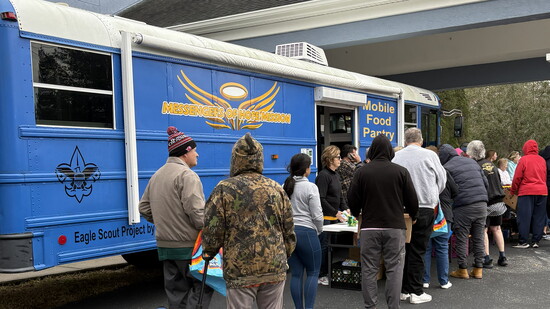
Later, while serving as a youth pastor, he took a group of teenagers to New York, where they saw a mobile food pantry in action. Back in Florida, after searching for a way to bring that kind of help to the community, Gardner started with what he could: 12 bag lunches a week. Within about a year and a half, he was handing out 250. Today, Messengers of Hope operates food pantries at 10 locations, serving over 20,000 people in September, and the numbers keep climbing. While the food pantry is the organization’s primary focus, it also supports a weekly homeless outreach program in Tampa, provides groceries to eight special-needs foster homes and distributes clothing and toiletries when available.
What Messengers of Hope brings is far more than just groceries. On a recent visit to a storm damaged, low-income neighborhood in the New Port Richey area where the organization serves, a woman sought out Bob to thank him. She told him how initially they all lined up for the pantry, cautious and suspicious of each other. But something started to change. One would hold another’s place in line if they had to run home. Then they started conversations in line and getting to know one another. That led to conversations over coffee. Offering to pick up food from the pantry if someone couldn’t make it. Another week someone had extra food to share, and they invited the others over for a meal. Where once there was suspicion, now there was community.
That connection is another measure of the impact community support can have. Those looking to help can contribute in three practical ways: donate funds, offer shelf-stable foods to help stock the pantry, or volunteer. Bob calls them the mission’s “Holy Trinity.” The result is more than a bag of groceries. It’s an opportunity to offer compassion and dignity to people who could be your neighbors—someone who has fallen on hard times and simply wants to be seen and treated with respect.
“They are not a project, they are a person,” said Gardner.
The mission’s goal, Gardner said, is for clients, volunteers, and donors alike to feel “loved on and cared for.” In a community where hardship can arrive unexpectedly, that care can start with a bag of groceries—and grow into neighbors showing up for one another.