There’s something uniquely American about watching someone chase greatness in a field most people will never fully understand.
In Mt. Juliet, that pursuit now lives quietly among neighborhood walks, bass fishing trips, early morning training sessions, and peaceful backyards tucked against the trees. Long before the world turns its attention toward the 2028 Olympics in Los Angeles, two of Team USA’s most accomplished shot put athletes are already hard at work here at home. And if the residents of Mt. Juliet didn’t realize it before, they now share their city with two of the greatest throwers on the planet.
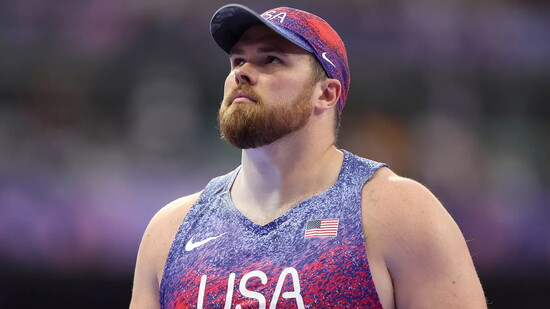
Ryan Crouser - a three-time Olympic gold medalist, three-time world champion, and current world record holder in the shot put - relocated to Middle Tennessee while his wife Megan completes her medical residency at Vanderbilt University Medical Center. Joining him is fellow Olympian Payton Otterdahl, a two-time Olympian and fourth-place finisher at the Paris Olympics, who made the move to continue training alongside the sport’s most decorated athlete.
Together, their résumés are staggering. Crouser has not only dominated his sport for nearly a decade, but redefined it entirely, throwing beyond 22 meters more than 140 times - something no athlete in history has come close to matching. Otterdahl, meanwhile, has steadily risen through the international ranks, becoming one of the top throwers in the world after sweeping NCAA throwing titles and emerging as one of Team USA’s most promising medal contenders heading toward Los Angeles.
For both men, Mt. Juliet offered something increasingly rare: balance.
“Mt. Juliet was the place where we were close enough for my wife to commute, but still kept that smaller town feel,” Crouser says. Otterdahl felt it immediately, too. “When we visited Ryan this past March to find a place to live, we loved Mt. Juliet’s quiet, small-town feel,” he says. “Our house backs up to the woods and the community has been so kind.”
That quieter pace exists in stark contrast to the demands of Olympic-level athletics. While most fans only see the few explosive seconds inside an Olympic stadium, the reality behind those moments is relentless. Crouser’s typical week includes multiple daily training sessions devoted to sprinting, plyometrics, throwing, lifting, and recovery - all carefully structured around performance.
“It is a 24-hour-a-day, seven-day-a-week job,” Crouser explains, “making sure your day is structured around not only training, but recovery and nutrition.” The work is demanding physically, but mentally too. Every lift, every rep, every technical adjustment is made with the understanding that Olympic medals are often decided by fractions of inches.
For Otterdahl, some of the greatest sacrifices aren’t physical at all. “One of the toughest sacrifices for me is being away from family,” he says, reflecting on loved ones back home in Minnesota and Iowa. “We wish we could be there for every event.”
Yet despite the pressure, both athletes seem to have found grounding in Middle Tennessee life. Crouser spends much of his free time outdoors - fishing Old Hickory Lake, hunting with his black lab Koda, woodworking, or building handcrafted fishing lures and duck calls. Otterdahl, meanwhile, unwinds by fishing, walking his two American bullies through the neighborhood, or simply enjoying the wooded peace surrounding his North Mt. Juliet home.
The pair also share something else beyond athletics: a deep appreciation for community. Both repeatedly referenced how meaningful local support becomes during the long years between Olympic Games - years when there are no opening ceremonies, no national headlines, and no medals yet hanging around their necks.
“Community support definitely plays a large role,” Crouser says. Otterdahl agrees, adding that knowing people are cheering them on “makes the hard days more bearable.”
If there’s a common thread between the two men beyond the throwing circle, it’s humility. Neither speaks about Olympic competition with entitlement. Instead, both talk about responsibility - to their sport, their country, and the next generation watching.
Crouser remembers being a young athlete himself, staring up at Olympians and assuming they were impossibly distant. “I was a typical high schooler just like they were not that long ago,” he says. “Find what you are passionate about and pursue it.” Otterdahl echoes that same message: “It’s not about where you are in your athletic journey. It’s about where you are going.”
That perspective feels especially fitting as America approaches its 250th birthday - a milestone rooted in ambition, resilience, and the belief that ordinary people can accomplish extraordinary things.
For Crouser, representing Team USA carries even deeper meaning now. “At a time in our country where it is easy to find division amongst ourselves, I think it is more important than ever to find what unites us,” he says. “Sport is beautiful in that it can give people a common cause.” Otterdahl describes the honor more simply but no less powerfully: “Having USA across my chest as I compete means I am one of the best in the world.”
Now, with Los Angeles 2028 on the horizon, both athletes are chasing history in different ways. For Otterdahl, after narrowly missing the podium in Paris, the goal is crystal clear: “Only a medal will satisfy me now.”
For Crouser, the next Olympics could cement one of the greatest careers track and field has ever seen before retirement. But even then, his motivation extends beyond medals. “The hope,” he says, “is to inspire even just one person to be better.”
Until then, two Olympians continue preparing quietly in Mt. Juliet - lifting, throwing, recovering, fishing, and building lives far from the spotlight.
And in a patriotic summer celebrating 250 years of America, perhaps there’s no more fitting reminder of the American spirit than this: greatness doesn’t only live on the world stage.
Sometimes, it lives right next door.
“Greatness doesn’t only live on the world stage. Sometimes, it lives right next door.”
“At a time when it’s easy to find division, sport gives people something rare: a common cause, shared pride, and the chance to believe in something bigger than themselves.”