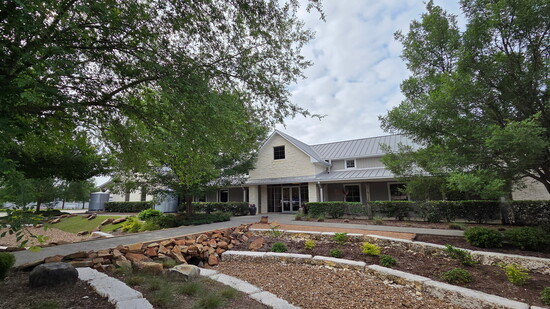
Our groundwater, which lives in an invisible world underneath us, is one of Texas' most important resources, and it impacts everything from growth and housing to infrastructure and sustainability. Lone Star Groundwater Conservation District is working to help residents, students, businesses, and neighborhoods think differently about groundwater, moving it from out of sight to the front of mind. Long before a crisis hits, the District has focused on planning to help Montgomery County prepare for the future.
Most people rarely think about groundwater. Water just arrives as soon as they turn on a faucet, sprinklers activate automatically, and pipe systems quietly run in the background of everyday life. Yet behind walls, beneath concrete, neighborhoods, roads, golf courses, schools, and businesses is an enormous hidden system that supports nearly every part of everyday life. The District's work centers around protecting the unseen resource while balancing the realities of one of the fastest-growing regions in the state.
Groundwater Conservation Districts exist to conserve, preserve, and protect aquifers and underground water resources. In Montgomery County, the District was created in 2001 through approval by local voters as development in the area accelerated. Since then, growth has transformed the county, creating new water demands. Sarah Kouba, General Manager of the District, explained that groundwater remains the cleanest and easiest-to-access source of water for many communities, making it essential.
The challenge is that groundwater is both invisible and deeply interconnected. Water beneath one county line does not simply stop and wait for another jurisdiction to take over. “The aquifer doesn’t care about your county boundary lines,” Kouba explained.
Montgomery County works alongside neighboring groundwater districts and state planning groups to monitor usage, evaluate future conditions, and project what the aquifer should look like decades from now.
Part science lab, part strategy session, the District relies heavily on hydrogeologists, monitoring systems, groundwater models, and long-term forecasting. Kouba frequently uses the image of a straw in the ground to simplify how wells operate and how groundwater is pulled from the aquifer. The District monitors water levels during both the high-demand summer months and the lower-demand winter months.
At the same time, the District is trying to make groundwater education feel less intimidating. One of the District’s largest initiatives right now is its rainwater-harvesting barrel program, which encourages homeowners to collect rainwater directly from their gutters for landscaping and irrigation. Residents can purchase subsidized rain barrels through the District to reduce unnecessary groundwater use and become more aware of their own consumption habits. Kouba pointed out that a single rain barrel may seem small on its own, but hundreds or thousands of households making the same decision can create a measurable reduction in groundwater demand over time. The District also notes that harvested rainwater is often healthier for plants while reducing strain on public water systems.
Another initiative helping make groundwater education more engaging is the District's scholarship program for local high school seniors. The program teaches students about groundwater management, conservation, and alternative water supplies before encouraging them to become advocates within their own communities. Students help promote the rain barrel program while educating locals about conservation practices, turning participants into what the District informally calls “water heroes.”
While many conservation efforts happen at the residential level, the District is also looking toward larger infrastructure solutions through its growing “purple pipe” campaign. Purple pipe systems use reclaimed water for irrigation instead of fresh potable groundwater. Kouba explained that introducing these systems early during development planning is far easier and more affordable than attempting to redesign infrastructure later. Schools, commercial developments, landscaping systems, golf courses, and large-scale neighborhoods all represent opportunities for smarter long-term water use. That focus on proactive planning is especially important as new subdivisions and large-scale development projects create increasing demand every year.
Kouba stressed that conservation should not begin only once restrictions or crises appear. "It does not require regulation for individuals to always be good stewards," she said. Everyday habits still matter, whether it involves turning off running faucets, repairing broken sprinkler heads, avoiding unnecessary waste, or paying closer attention to how water resources are managed. The District encourages residents to attend local water meetings, ask questions, and become more informed about where their water comes from.
One misconception the District frequently addresses is the belief that major flooding events automatically replenish the aquifer. Kouba explained that while flooding may impact the upper water table in some areas, the Gulf Coast aquifer functions differently than other aquifers in Texas due to its scale and geology. Heavy rains alone are not a simple solution for long-term groundwater replenishment; conservation and careful planning are important. The District also works closely with regional partners like the San Jacinto River Authority to encourage conjunctive use, meaning communities utilize both groundwater and alternative surface water resources when possible.
For something hidden underground, groundwater plays an enormous role in shaping the region's visible future. Every new neighborhood, school, business, and roadway ultimately depends on a resource that most residents never see until it comes out of a faucet. Become a "Water Hero" and look into a rain barrel or support the scholarships and conservation campaigns. The Lone Star Groundwater Conservation District is on a journey to turn an invisible world into something communities understand and help protect for generations to come.