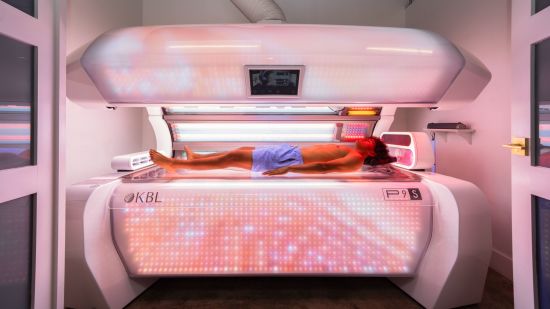
Give me 5 minutes and I think I might convince you that sunbeds are the future of health and wellness.
By Brian De Mint
For decades, sunlight has been caught in a strange cultural tug-of-war.
On one side, we instinctively know we feel better after spending time in the sun. We sleep better, our mood improves, and we feel more energized. On the other side, we've been taught to avoid sunlight whenever possible.
Somewhere along the way, we stopped asking an important question:
What happens when humans spend most of their lives indoors?
As someone who has spent years in the wellness industry, I've watched a growing movement of health-conscious people begin to rethink their relationship with light. Not artificial light from phones, computers, and office buildings—but the natural light spectrum our bodies were designed to receive.
This shift is one reason I believe modern sunbeds represent an important part of the future of holistic wellness. After all, the therapeutic use of UV light in medicine dates back to the late 1800s. However, as healthcare became increasingly focused on pharmaceuticals throughout much of the twentieth century, light-based therapies gradually fell out of favor and were largely forgotten by the mainstream.
In more recent decades, sunbeds became associated primarily with cosmetic outcomes. With that came generations of misuse and overuse. As with any therapeutic modality, dosage matters. Unfortunately, many people's perception of sunbeds is still shaped by the "fake and bake" culture of previous decades rather than by today's understanding of light biology and responsible exposure.
Today, we're entering an era where people are becoming more proactive about their health and increasingly willing to question long-held assumptions. Not only has our understanding of the therapeutic applications of UV light expanded significantly over the past several decades, but the technology itself has evolved as well.
The most exciting developments have very little to do with cosmetic outcomes and everything to do with supporting the body's natural biological systems.
Here are three reasons why.
1. People Are Rediscovering the Importance of Vitamin D
One of the most common questions I hear is:
"Can sunbeds help support Vitamin D levels?"
The answer is yes—when using UVB-producing sunbeds designed for that purpose.
Vitamin D isn't simply a vitamin. It functions more like a hormone precursor and plays a role in immune function, bone health, muscle performance, mood regulation, and overall wellness.
Yet despite living in one of the sunniest states in the country, many Californians still aren't receiving adequate Vitamin D.
Studies cited by the National Institutes of Health suggest that approximately 40–50% of Californians may be deficient or insufficient in Vitamin D, despite abundant year-round sunshine. The reality is that modern indoor lifestyles often prevent people from receiving the light exposure their bodies were designed to experience.
We work indoors.
We drive indoors.
We exercise indoors.
We relax indoors.
The result is that many people receive far less sunlight exposure than previous generations.
This is causing many wellness-minded individuals to take a second look at the role sunlight has played throughout human history.
For thousands of years, daily sun exposure wasn't a wellness practice—it was simply part of life.
Today, modern sunbeds provide a controlled and consistent option for those looking to incorporate healthy light exposure into their wellness routine year-round.
The future of wellness isn't about avoiding nature.
It's about reconnecting with it intentionally.
2. Light Is Emerging as One of the Most Powerful Wellness Tools
A growing body of research is helping us understand something ancient cultures seemed to intuitively know:
Light influences human biology.
Today, wellness enthusiasts are embracing therapies such as red light therapy, infrared sauna therapy, circadian light exposure, cold therapy, and breathwork.
What do these approaches have in common?
They work with the body's natural systems rather than against them.
Sunbeds are increasingly being viewed through this same lens.
In fact, the newest generation of wellness-focused sunbeds looks very different from what most people imagine.
At Salt & Light Wellness, our Vitamin D Hybrid Sunbeds are designed to more closely mimic the balanced spectrum of midday sunshine. They utilize a carefully calibrated UVA-to-UVB ratio while simultaneously incorporating red light technology.
Why does that matter?
Because natural sunlight is not a single wavelength. It is a complex spectrum of light that humans have evolved alongside for thousands of years.
The UVB portion of sunlight is responsible for stimulating the body's natural Vitamin D production process. Balanced UVA exposure mirrors what we naturally encounter outdoors. The addition of red light introduces another beneficial wavelength already embraced throughout the wellness industry for supporting skin health, recovery, and overall cellular wellness.
Rather than viewing sunlight as something to fear, many wellness professionals are beginning to recognize the importance of balanced, responsible exposure.
As our understanding of light biology continues to grow, I believe we'll see sunbeds become part of a larger category of light-based wellness therapies—alongside red light therapy, infrared therapies, and other technologies designed to support human performance and longevity.
3. Holistic Wellness Is Moving Toward Personal Responsibility
Perhaps the biggest reason sunbeds represent the future of wellness is philosophical.
The wellness movement is increasingly shifting away from reactive healthcare and toward proactive lifestyle choices.
People are asking different questions.
Instead of asking:
"What medication do I need?"
They're asking:
How am I sleeping?
How much natural light am I receiving?
Am I moving my body?
Am I managing stress?
Am I spending time outdoors?
Am I supporting my body's natural rhythms?
These are holistic questions.
And sunlight naturally belongs in that conversation.
Humans evolved under the sun. Our circadian rhythms, hormone production, mood regulation, and countless biological processes are influenced by light exposure.
Yet modern life often separates us from one of the most fundamental environmental inputs our bodies need.
Today's wellness-minded individuals aren't looking for quick fixes.
They're looking for sustainable habits that align with how the human body was designed to function.
Sunbeds offer one more tool that can help bridge the gap between modern lifestyles and our biological roots.
Frequently Asked Questions About Sunbeds and Wellness
Are modern sunbeds healthy?
Modern wellness-focused sunbeds are designed to provide controlled light exposure and, when used responsibly, can be part of a balanced wellness routine. Today's Vitamin D-focused systems differ significantly from older technologies and are increasingly being used for their wellness benefits rather than cosmetic outcomes.
Can sunbeds help support Vitamin D production?
Yes. UVB light is the portion of sunlight responsible for triggering the body's natural Vitamin D production process. Certain sunbeds are specifically designed to include UVB wavelengths for this purpose.
What makes a Vitamin D Hybrid Sunbed different?
A Vitamin D Hybrid Sunbed combines a balanced UVA-to-UVB spectrum with red light technology, creating a light environment that more closely resembles natural midday sunshine while also incorporating wavelengths commonly used in wellness therapies.
Why are wellness centers offering sunbeds again?
Many wellness centers are expanding beyond traditional fitness and spa services to include light-based therapies that support natural biological functions. Sunbeds are increasingly being viewed as part of that broader wellness category.
The Bottom Line
The future of wellness isn't necessarily about discovering something new.
Sometimes it's about rediscovering something we've had all along.
Sunlight has shaped human biology since the beginning of human history. As science continues to explore the relationship between light and health, more people are recognizing that responsible light exposure may be one of the simplest—and most overlooked—wellness practices available.
The conversation around sunbeds is changing.
For those pursuing a more natural, holistic approach to health, the future may not lie in avoiding sunlight—but in learning how to use it wisely.
P.S. If I was unable to make the case to you above, perhaps this list will seal the deal. Five years ago the "common knowledge" was that sunbeds are bad for you. But since the 1890's doctors around the world have been using sunbeds to treat the following. The efficacy of these treatments are back by literally hundreds of studies from reputable research entities.
Psoriasis
Vitiligo
Atopic Dermatitis (Eczema)
Chronic Hand Dermatitis
Contact Dermatitis
Seborrheic Dermatitis
Lichen Planus
Parapsoriasis
Prurigo Nodularis
Chronic Pruritus (Chronic Itching Disorders)
Chronic Urticaria (Selected Cases)
Polymorphic Light Eruption
Actinic Prurigo
Leukoderma (Certain Forms)
Alopecia Areata
Morphea (Localized Scleroderma)
Localized Scleroderma
Granuloma Annulare
Subcorneal Pustular Dermatosis
Cutaneous T-Cell Lymphoma
Mycosis Fungoides
Early-Stage Cutaneous Lymphoma
Vitamin D Deficiency
Nutritional Rickets
Rickets
Osteomalacia
Secondary Hyperparathyroidism (Vitamin D Deficiency Related)
Lupus Vulgaris (Cutaneous Tuberculosis)
Certain Chronic Skin Infections
Certain Chronic Wounds
Acne Vulgaris
Pityriasis Lichenoides
Pityriasis Lichenoides Chronica
Pityriasis Rosea
Graft-versus-Host Disease (Cutaneous)
Mastocytosis (Cutaneous)
Lichen Sclerosus
Disseminated Superficial Actinic Porokeratosis
Keratosis Lichenoides Chronica
Hydroa Vacciniforme
Pityriasis Rubra Pilaris
Palmoplantar Pustulosis
Dyshidrotic Eczema
Nummular Eczema
Chronic Actinic Dermatitis
Eosinophilic Dermatoses
Pruritic HIV-Associated Skin Disorders
Uremic Pruritus
Polycythemia Vera–Associated Pruritus
Aquagenic Pruritus
Sclerodermatous Skin Disorders
Necrobiosis Lipoidica
Sarcoidosis (Cutaneous Forms)
Cutaneous Lupus Erythematosus
Discoid Lupus
Localized Graft-versus-Host Disease
Scleromyxedema
Porokeratosis
Seasonal Affective Disorder (SAD)
Major Depressive Disorder (Some Cases)
Depressive Symptoms Associated with Low Sunlight Exposure
Low Mood Associated with Winter Light Deprivation
Circadian Rhythm Sleep Disorders
Insomnia Related to Circadian Dysregulation
Jet Lag
Shift Work Sleep Disorder
Multiple Sclerosis
Rheumatoid Arthritis
Type 1 Diabetes (Risk Reduction Association)
Type 2 Diabetes (Some Evidence)
Metabolic Syndrome
Hypertension
Osteoporosis
Autoimmune Thyroid Disease
Inflammatory Bowel Disease
Crohn's Disease
Ulcerative Colitis
Systemic Lupus Erythematosus
Fibromyalgia
Chronic Fatigue Syndrome
About the Author
Brian De Mint is the founder of Salt & Light Wellness, a holistic wellness company dedicated to helping people reconnect with the natural elements that support vibrant health—including sunlight, red light, heat, cold, minerals, movement, and recovery. He is passionate about making wellness simple, accessible, and rooted in both timeless wisdom and modern science.