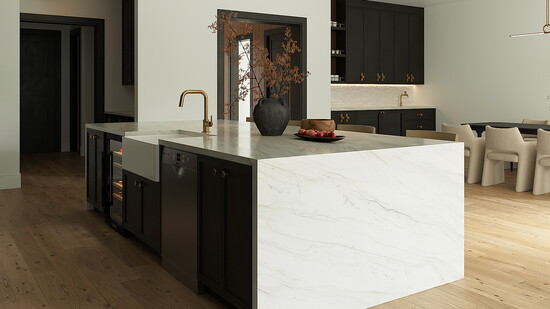
The earliest stage of a project feels much like a painter facing a blank canvas. There is a quiet pause before anything takes shape—where nothing is finished, yet everything already matters. It is within that moment that the design work truly begins.
“When I’m handed architectural plans, I see possibility before anything else,” says Jaydin Nielsen, founder and principal designer of Nita & Hearth. “It’s the moment where intention has the most influence, before decisions start feeling permanent.”
Designing from the ground up means being involved before walls exist, before concrete is poured, before a home begins to introduce itself. It is the stage where design has the power to shape how a home will actually feel to live in, not just how it will look in photographs.
Early involvement opens the door to a more nuanced approach to design. Light, movement, and the subtle ways people occupy a space become central considerations. Some rooms invite stillness, others energy. Proportion, rhythm, and flow work quietly in the background, shaping how a home is experienced long before any decorative layer is added.
“Interior design isn’t just about what you see at the end,” Nielsen explains. “It’s about how a space supports real life, how it feels to move through it, and how those choices show up every single day.” When design enters the process too late, many of the most influential decisions have already been made. Ceiling heights are set. Windows are placed. Electrical plans are finalized. What follows is not a lack of care, but a missed opportunity to shape the home from the inside out.
Some of the most lasting design decisions are the ones that quietly shape daily life. Door placement. Kitchen flow. Lighting that adapts from early mornings to slow evenings at home. These details rarely draw attention to themselves, yet they influence how a space is experienced, often in ways homeowners only notice once they are living there.
Design works best as a shared conversation. Early alignment between architects, builders, and designers allows the interior and exterior to evolve together. When that alignment happens from the start, the interior and exterior begin to speak the same language. Materials feel connected, transitions feel natural, and the home carries a sense of ease, even when it is newly built. “Collaboration is everything,” says Nielsen. “When the architect, builder, and designer are aligned from the start, the home doesn’t feel overdesigned. It just feels right.”
At its core, designing from the ground up means creating homes that feel intuitive and personal. The focus shifts away from chasing trends or perfection and toward spaces that feel layered, comfortable, and shaped by everyday life. Homeowners are moving away from stark, ultra-modern spaces and toward environments that feel personal, layered, and grounded, with a growing appreciation for craftsmanship, character, and meaning. Spaces that support both daily rhythms and deeper connection. “People are craving spaces that feel human,” Nielsen shares, “homes that can hold quiet moments just as comfortably as they hold a room full of people.” This shift often aligns with homeowners who value intention over immediacy, appreciating patience, collaboration, and the understanding that the most meaningful homes are shaped over time.
“When the architect, builder, and designer are aligned from the start, the home doesn’t feel overdesigned. It just feels right.”
When interior design is excluded from early planning, challenges often emerge later that are costly and difficult to undo. Lighting layouts, ceiling details, storage solutions, and room proportions can become locked in before they are fully considered, turning thoughtful opportunities into revisions. Renderings play an important role in preventing those missteps. When so much of a home exists only on paper, hyper-realistic visuals help translate ideas into reality early on, allowing decisions to feel informed, confident, and free of guesswork.