Two Pains That Seemed to Have Nothing in Common
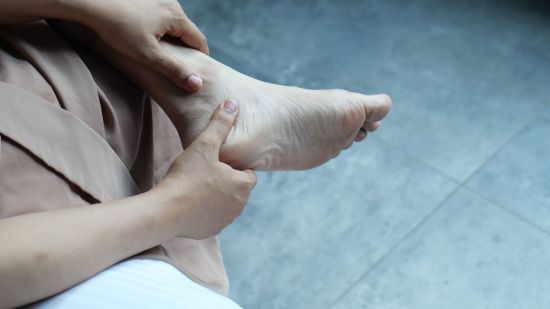
A woman in her 40s came in with two complaints: pain in her right big toe and pain in her left thumb. On the surface, those look like two very different problems on opposite sides of the body.
Her big toe barely moved. She had about 10 degrees of extension (bending the toe up) and about 10 degrees of flexion (curling it down). Looked at on its own, that could easily be labeled hallux rigidus, or a “stiff big toe.”
She had also started having more headaches and jaw pain, problems that had been resolved before.
The Traditional Approach
A body-part approach would focus on the toe: tight tendons, limited range, so stretch it. That usually means a few weeks of toe stretches, toe curls and calf stretches. Sometimes that helps for a while. Often it never reaches the reason the toe got stiff in the first place.
Why We Looked Somewhere Else
We had worked with her for a while, so we knew this wasn’t normal for her. Several new symptoms showing up together told us there was likely something deeper connecting them.
So we evaluated her using visceral techniques, which assess how the organs and the connective tissue around them are moving.
What We Found, and What Changed
First, we found that her cecum, the start of the large intestine, was tight and stuck to the small intestine. We worked on it, then rechecked her big toe. Extension had gone from about 10 degrees to about 20 to 30 degrees.
Next, we found tension in the lower colon on the left side. After treating it, her big toe extension reached about 40 degrees with very little pain, and her thumb pain started to ease.
Finally, we treated her right kidney. There are fascial connections running from the kidneys down toward the arch of the foot.
By the end of that one session:
Big toe extension was about 40 degrees (up from about 10).
Big toe flexion was about 30 to 40 degrees (up from about 10), with little pain.
Her left thumb pain was gone.
We never touched her toe. We never touched her thumb.
Why This Works
The body is wrapped in a continuous web of fascia, connective tissue that links muscles, joints and organs. When an organ gets tight or stuck, it can pull on that web and change how distant areas move. The toe was where she felt the problem. It wasn’t where the problem started.
That is the heart of visceral manipulation and systems-based physical therapy: let the body show you where the most important areas to treat are, instead of chasing the loudest symptom.
Is This Right for You?
Not every stiff toe is a gut problem. But if you have pain that hasn’t responded to stretching and strengthening, or several problems that showed up around the same time, it is worth asking whether something deeper is connecting them.
If you are in Keller, Northlake or North Fort Worth and you have been stretching the same sore spot for months, a whole-body evaluation at R3 Physio, including visceral manipulation, may help you find the real driver.