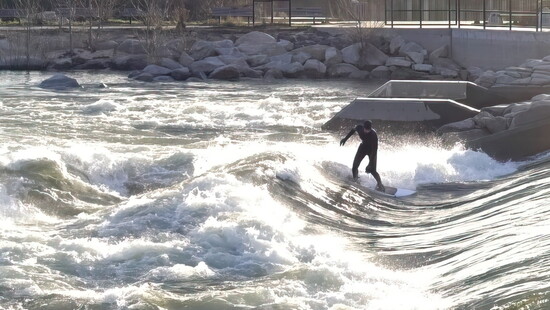
On certain winter mornings, when frost rims the Greenbelt and the foothills glow in pale sunlight, the last thing you expect to see on the Boise River is a surfer. And yet, slip behind Esther Simplot Park or stand along the footbridge above the Boise Whitewater Park, and there they are—locals heading straight for a wave that doesn’t hibernate.
Over the past decade, river surfing in Boise has evolved from a warm-weather novelty into something far more rooted. Winter hasn’t slowed it down. If anything, it’s sharpened it. The crowd grows smaller, the sessions more deliberate, and the people who show up tend to be the ones for whom this wave has become part of a personal rhythm: a workout, a reset, a way to stay moving when the season asks most people to retreat indoors.
A Wave That Doesn’t Close for the Season
The Boise Whitewater Park’s engineered hydraulic system plays a big role in its year-round appeal. Through winter, the City of Boise continues to run its two programmed wave features on a rotating schedule:
Sunday noon → Wednesday noon: Wave/Hole
Wednesday noon → Sunday noon: Green Wave
Each mode draws its own mix—surfers, kayakers, stand-up paddlers—but the rotation ensures there is something surfable most days, weather permitting. Irrigation flows, maintenance windows, and cold-season river levels can influence how the wave behaves, but consistency is part of the draw. Unlike ocean surfing, locals don’t need tide charts or swell forecasts. If the wave is turned on and you can tolerate the temperature, the river has something to offer.
That reliability is part of what has placed Boise on the broader map of inland surf culture. Smithsonian Magazine recently highlighted how a landlocked city ended up with one of the country’s most recognizable urban wave parks and noted that Boise’s year-round participation often surprises visiting surfers from coastal states.
Why Winter Doesn’t Stop the Regulars
Ask anyone who has surfed the wave in January and you’ll hear variations of the same thing: the cold is temporary, the focus lasts. The first minute might sting—boots filling with water, gloves stiffening—but then the body adjusts. The river demands total concentration, and staying on the wave requires micro-adjustments that leave little room for anything else. The Idaho Farm Bureau, in its feature on the rise of river surfing, put it plainly: winter sessions depend on gear and grit. A thick wetsuit isn’t optional.
But what keeps people returning isn’t toughness. It’s what the experience clears away. Winter surfing forces presence. There’s no mental space for grocery lists, inboxes, or headlines. The water is cold enough to make the moment singular. For many, that’s the reward.
A Community That Knows Its River
Winter thins out the crowd, but it doesn’t diminish the camaraderie. If anything, it distills it. Surfers take turns in an informal rotation, occasionally pausing to help someone new navigate the slick ramp or understand when to drop in. Cyclists and walkers pause on the bridge above the wave. A few minutes of watching someone carve across a river wave with snow on the banks is enough to make almost any passerby stop, stare, and ask a question or two.
Local river-surf groups have helped shape this small but steady community, offering safety notes, beginners’ meetups in warmer months, and reminders about winter etiquette—short sessions, respect for the line, and awareness of changing river flows. While summer attracts crowds, winter surfaces the people who know the park well: the rhythms, the pushes of water that come with overnight freezes, the subtle shifts in the hydraulic when the air is below freezing.
Fitness That Doesn’t Hibernate
For a health and wellness issue, winter surfing captures something distinct about Boise’s relationship with the outdoors. Here, activity doesn’t shut down for the season. Runners take to the foothills in studded shoes. Cyclists swap bikes for fat tires. Nordic skiers fill Bogus Basin’s upper lot. And a small but committed cluster of surfers keeps paddling into the river.
Thinking of Trying It?
The winter learning curve is steeper, but many surfers began with cold-season curiosity. Before stepping in, experienced locals emphasize a few basics:
- Wear proper gear: A 5–6 mm wetsuit, hood, gloves, and boots are essential.
- Start small: Short sessions help the body acclimate to cold.
- Observe: Watch others to understand timing and etiquette.
- Check flows: Winter water levels fluctuate.
- Know the schedule: The mid-week wave rotation shapes the ride.
Winter softens the landscape, but not the people who choose to step into the river. Instead, it sharpens them—reminding anyone who’s willing that sometimes the best way to wake up is simply to wade in. For more information about schedules, safety, and features is available at Boise Whitewater Park.