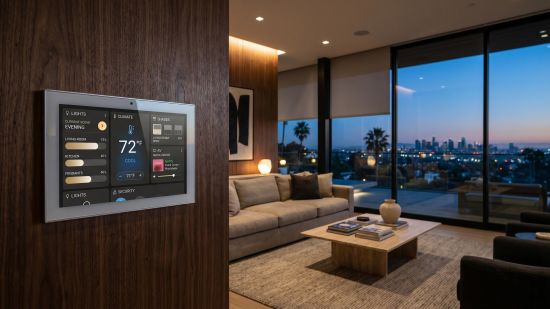
Buying or building a new home comes with hundreds of decisions, and technology should be part of that conversation earlier than many homeowners realize. Planning your smart home installation before purchasing a collection of individual devices can help prevent compatibility problems, unnecessary expenses, and frustrating upgrades later. Instead of thinking about one smart thermostat or one security camera at a time, think about how your lighting, security, network, audio/video, climate, and automation could eventually work as one connected system.
What smart home technology should a new homeowner install first? Security, lighting, climate control, and a centralized control system are excellent places to begin. Cameras and video doorbells can improve awareness around the property, automated lighting adds convenience and efficiency, and smart climate control can adapt to your routine. In Las Vegas homes, automated shades and climate-related technology can also become valuable additions when dealing with intense sunlight and summer heat.
One of the most overlooked pieces is the home network. Today's TVs, streaming devices, security cameras, smart lighting, automation processors, phones, tablets, and other connected products all depend on reliable connectivity. Before filling a new home with smart technology, it's important to make sure the wired and wireless network is designed to support it. CEDIA also recommends considering future expansion from the beginning rather than building a system that can only handle today's needs.
You don't have to automate your entire house on day one. The important thing is having a plan. When should you call a smart home integrator? Ideally, as early as possible—especially during a new build or major remodel when wiring, equipment locations, networking, speakers, lighting, shades, TVs, and security can be considered before the walls are finished. Good planning today can make upgrading your home much easier tomorrow.