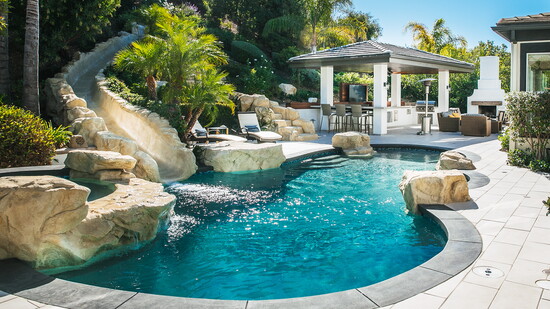
After years of walking properties throughout the Conejo Valley—up quiet cul-de-sacs in Thousand Oaks, along winding drives in Westlake Village, and into backyards with spectacular promise—I’ve learned something reassuring: Most homeowners already know what they like. They just don’t yet know how to translate it into a space that truly works.
Backyards here are full of potential, but they’re rarely simple. Slopes, oak trees, sun exposure, wind corridors, HOA guidelines and irrigation realities all conspire to turn “We just want something beautiful” into a far more nuanced conversation—before we even talk about how people actually live.
One of the first questions I always ask isn’t about materials or style. It’s this: How do you imagine spending time here? Quiet mornings with coffee? Family dinners that stretch into the evening? Children running barefoot while adults linger near the fire? These answers shape everything.
What I’ve learned designing backyards in this area is that the most successful spaces don’t chase trends. They respond to lifestyle. Travel may inspire certain details—a texture, a planting choice, a way of gathering—but those influences are most valuable when interpreted through the Conejo Valley environment. When a backyard settles into its surroundings, it begins to feel inseparable from the land, the home and the lives unfolding within it.
One of the most interesting challenges I see is scale. Larger properties often have the freedom to include everything—pools, kitchens, fire features, lawns, pathways—but without thoughtful hierarchy, those elements can drift too far apart, leaving some spaces beautifully designed yet rarely used. When areas are connected by proximity and purpose, even expansive grounds feel intimate and alive. At the other end of the spectrum, smaller yards are often underestimated. With the right design, they can become private, layered retreats—secret gardens that feel intentional and surprisingly generous.
Another frequent issue is flow. Outdoor spaces should move you naturally—from the house outward, from sun to shade, from active to restful. When that flow is missing, homeowners tend to use only one corner of the yard while the rest becomes beautifully landscaped but largely ignored. That’s always a missed opportunity.
Then there’s the question of longevity. Families grow. Children grow. How a backyard functions today may look very different 5 or 10 years from now. The best designs allow for that evolution—spaces that feel complete now, but flexible enough to adapt later.
At Cat in a Hammock, we approach each project as a collaboration—between our design team, our build crews and the homeowners themselves. Design and construction need to speak to each other fluently. A beautiful idea that can’t be built well, or maintained realistically, rarely brings long-term joy. Our role is to guide the process thoughtfully, balancing creativity with practicality, and vision with execution.
There’s also a lighter truth I’ve learned along the way: No one ever regrets good lighting. It’s the quiet hero of outdoor design. The way a path glows in the evening or how a tree is softly lit after sunset often determines whether a backyard feels magical or merely functional.
Ultimately, what makes a backyard feel like home isn’t the size of the pool or the price of the stone. It’s how naturally life unfolds there. When spaces are designed with intention—when they respect the land, the climate and the rhythms of daily life—they become the backdrop for everyday moments and lasting memories.
What I’ve learned, above all, is that the best backyards in the Conejo Valley don’t try to impress. They invite. They endure. And on a Tuesday evening, when the light fades and the day finally exhales, they remind us why we chose to live here in the first place.
Learn more at CatinaHammock.com.
Ultimately, what makes a backyard feel like home isn’t the size of the pool or the price of the stone. It’s how naturally life unfolds there.