Most people don’t realize how hard they’re working just to feel normal. From the outside, everything looks right. Responsibilities are handled, meetings are led, results are there. Life is moving forward as it should. But beneath that, there’s often a quieter reality, one that’s easy to ignore. Focus takes more effort than it used to. Energy doesn’t last the same way. Stress lingers longer than it should. The natural response is to push harder, do more, stay disciplined. For a while, that works until it doesn’t. What becomes clear is that the issue is rarely a lack of effort. In many cases, it’s the opposite. The brain and body are already working overtime, compensating in ways that aren’t always visible. Greg Heckroth, Founder of Genesis Brain Institute, shared, “High functioning does not always mean optimized.”
That idea reframes the conversation around performance. At Genesis Brain Institute, the starting point isn’t about doing more, it’s about understanding more. Their physician-led, data-driven model is built on the belief that how the brain, nervous system, and body work together shapes performance. “We believe the way your brain, nervous system, and body are working together shapes how clearly you think, how well you recover, and how strongly you perform,” Greg explained. This shifts the focus from surface-level solutions to understanding the system.
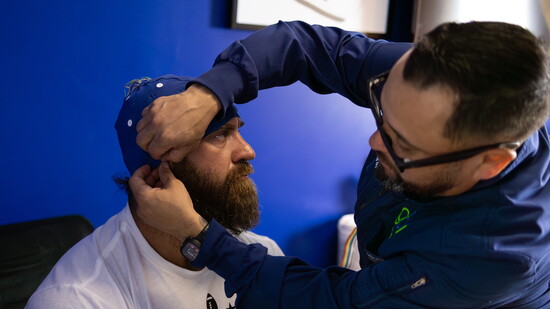
That process begins with Quant360, a comprehensive baseline designed to evaluate the body as a whole. Instead of focusing on a single symptom, it looks at cognitive function, nervous system regulation, balance, coordination, and internal markers that influence everything from focus to recovery. It also includes tools like qEEG brain mapping, a noninvasive way to measure how the brain is functioning rather than relying on assumptions. “Understanding a true baseline matters because you cannot improve what you have not fully understood,” Greg noted. What this analysis reveals is not dysfunction, but inefficiency. “The symptom is not always the full story,” he shared. Someone who appears to be doing well may be using more effort than necessary to maintain focus, regulate stress, or move through their day, quietly limiting clarity, resilience, and performance.
What makes this approach compelling is not just how it applies to performance, but the heart behind it. They work with executives, entrepreneurs, athletes, and high performers who want to think clearly, recover better, and perform at a higher level. But what moves them just as much are the people and families who come in looking for hope. It may be parents trying to understand how their child’s brain is functioning, a teen feeling overwhelmed, a parent who knows something is off, or someone navigating pain or concussion symptoms.
“This approach is really for anyone who wants answers, clarity, and hope,” Greg shared. Because performance isn’t just about output, it’s about capacity: the ability to think clearly, stay steady under pressure, recover effectively, and move through life without everything requiring more effort than it should.
At Genesis Brain Institute, their model isn’t built on generic protocols, but on individualized understanding. “Every brain is individual, every body is individual, and every person’s story is personal,” Greg explained. Combining data with clinical insight and a multidisciplinary approach, they’re able to see the full picture: what’s working, what’s overworked, and what may be quietly limiting performance. When that clarity is achieved, the path forward becomes intentional. Focus becomes easier, energy more consistent, and recovery more efficient, shifting performance from something that is forced to something that is supported.
Perhaps the most powerful takeaway is that you don’t have to wait until something breaks to start paying attention. “Once you know your baseline, there is often far more potential than you realize.” Because when you understand how your brain and body are functioning, everything begins to shift—not just in how you perform, but in how you think, feel, and move through your life with greater clarity, resilience, and control.
“Every brain is individual, every body is individual, and every person’s story is personal.”