Mother’s Day Reflection: Strong Moms Deserve Strong Fuel
Collagen vs. Whey Protein: What Women 40+ Need to Know
Mother’s Day always makes me pause and give respect to the women who helped shape the foundation.
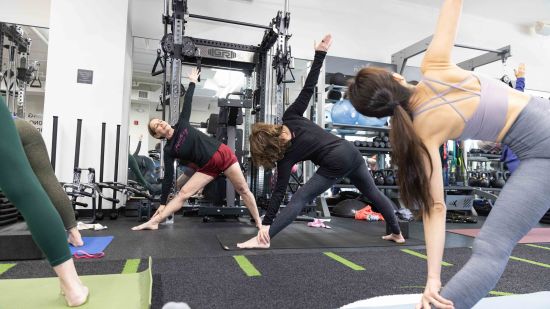
I still remember being a little kid back home in the early 90s, watching my mother do step aerobics. That was the era. Step boards, rhythm, sweat, discipline, and women making fitness happen in the middle of life, work, family, and everything else pulling at them.
Fast forward to today, and women are not just stepping anymore.
Women are lifting heavy.
Women are doing Pilates.
Women are bodybuilding.
Women are powerlifting.
Women are training for longevity, strength, confidence, mobility, and wellness.
And honestly, that deserves respect.
So this one is for the moms, especially the women 40 and up who are still showing up, still pushing, still carrying families, careers, households, and now heavier dumbbells too.
But here is the part we have to say respectfully:
If the training has leveled up, the fueling has to level up too.
A lot of women are working harder in the gym than ever before, but still under-eating protein or relying on supplements that may not match the actual goal. Collagen and whey protein both have their place, but they are not the same thing.
If the goal is to support muscle, recovery, strength, and overall protein intake, whey protein is usually the stronger first choice. Collagen can be useful, but it should be viewed more as a specialized add-on than a replacement for a complete, high-quality protein source.
For older adults, expert recommendations commonly land around 1.0 to 1.2 grams of protein per kilogram of body weight per day, with a practical meal-based target of roughly 25 to 30 grams of high-quality protein per meal to better support muscle maintenance as we age [1,2].
Let's keep in mind that this is just a start!
If you are training consistently, lifting weights, dieting, or trying to preserve/build muscle, 1.4–1.6 g/kg/day may be more appropriate. For harder training blocks, fat loss phases, or higher-volume resistance training, some individuals may benefit from moving closer to 1.6–2.0 g/kg/day, assuming no medical restriction. Things we carefully review and consider here with our nutrition coaching at Nesfield Performance.
That does not mean you need to eat like a professional athlete, but it does mean your protein should be calculated with more intention. The same way your training has evolved, your recovery needs to evolve with it.
That matters because age-related muscle loss becomes more relevant over time. Preserving muscle supports strength, mobility, function, independence, and the ability to keep doing the things we love. So the better question is not, “Which powder sounds healthier?”
The better question is:
What job do I need this protein to do?
For women 40+ who want to support muscle retention, training recovery, and strength, protein quality matters [1,2].
Whey stands out because it is rich in essential amino acids and provides a strong leucine signal, which is important for stimulating muscle protein synthesis [3]. In a randomized controlled trial in healthy older women, whey protein increased both acute and longer-term muscle protein synthesis more than collagen peptides, both with and without resistance exercise [4].
So if the goal is preserving or building muscle, whey has the stronger evidence base.
Collagen fits differently.
Collagen is a major structural protein found in connective tissues such as skin, cartilage, tendons, and ligaments. However, nutritionally, collagen is relatively poor in essential amino acids and is low in tryptophan, which limits its value as a primary muscle-support protein [5].
That does not make collagen useless. It just means collagen should not automatically replace whey or another high-quality protein if the main goal is muscle support or meeting daily protein needs [4,5].
Where collagen may be more useful is in the skin and connective-tissue conversation. A 2023 systematic review and meta-analysis found that oral hydrolyzed collagen supplementation improved skin hydration and elasticity in the included trials, although the authors also noted bias in the underlying studies and the need for better-quality research [6].
So collagen may be reasonable if someone’s top priority is skin-related outcomes, but that is still a different use case from using whey to support muscle.
Clean Takeaways
To all the moms still making it happen: keep lifting, keep moving, keep recovering, and keep taking your health seriously.
If you are a woman over 40 and your goal is muscle, recovery, strength, and overall protein quality, whey protein is usually the better first-choice option [3,4].
Collagen may be worth considering later as a secondary supplement for skin or connective-tissue goals, but it should not be treated as an equal substitute for whey when muscle support is the priority [4–6].
The same way fitness has evolved beyond step aerobics into Pilates, bodybuilding, strength training, powerlifting, and advanced wellness spaces, nutrition has to evolve too.
Train with intention.
Refuel with intention.
Recover with intention.
Moms deserve that level of respect and nurturing!
About the Author
Chris Njoku Moser is a Personal Trainer and Nutrition Coach at Nesfield Performance. His coaching focuses on evidence-based training, practical nutrition strategies, and helping clients cut through health industry misinformation to build sustainable habits that support long-term performance and recovery.
About Nesfield Performance
Nesfield Performance is a performance and wellness studio based in Bethesda, Maryland, dedicated to helping individuals build stronger, healthier, and more resilient bodies. Through a holistic approach that integrates strength training, movement education, nutrition guidance, recovery strategies, and mindset development, the team focuses on long-term health rather than quick fixes.
References
[1] Deutz, N. E. P., Bauer, J. M., Barazzoni, R., Biolo, G., Boirie, Y., Bosy-Westphal, A., Cederholm, T., Cruz-Jentoft, A., Krznariç, Z., Nair, K. S., Singer, P., & Teta, D. (2014). Protein intake and exercise for optimal muscle function with aging: Recommendations from the ESPEN Expert Group. Clinical Nutrition, 33(6), 929–936. https://doi.org/10.1016/j.clnu.2014.04.007
[2] Paddon-Jones, D., & Rasmussen, B. B. (2009). Dietary protein recommendations and the prevention of sarcopenia. Current Opinion in Clinical Nutrition and Metabolic Care, 12(1), 86–90. https://doi.org/10.1097/MCO.0b013e32831cef8b
[3] Gorissen, S. H. M., Crombag, J. J. R., Senden, J. M. G., Waterval, W. A. H., Bierau, J., Verdijk, L. B., & van Loon, L. J. C. (2018). Protein content and amino acid composition of commercially available plant-based protein isolates. Amino Acids, 50(12), 1685–1695. https://doi.org/10.1007/s00726-018-2640-5
[4] Oikawa, S. Y., Kamal, M. J., Webb, E. K., McGlory, C., Baker, S. K., & Phillips, S. M. (2020). Whey protein but not collagen peptides stimulate acute and longer-term muscle protein synthesis with and without resistance exercise in healthy older women: A randomized controlled trial. The American Journal of Clinical Nutrition, 111(3), 708–718. https://doi.org/10.1093/ajcn/nqz332
[5] Campos, L. D., Santos Junior, V. A., Pimentel, J. D., Carregã, G. L. F., & Cazarin, C. B. B. (2023). Collagen supplementation in skin and orthopedic diseases: A review of the literature. Heliyon, 9(4), e14961. https://doi.org/10.1016/j.heliyon.2023.e14961
[6] Pu, S.-Y., Huang, Y.-L., Pu, C.-M., Kang, Y.-N., Hoang, K. D., Chen, K.-H., & Chen, C. (2023). Effects of oral collagen for skin anti-aging: A systematic review and meta-analysis. Nutrients, 15(9), 2080. https://doi.org/10.3390/nu15092080