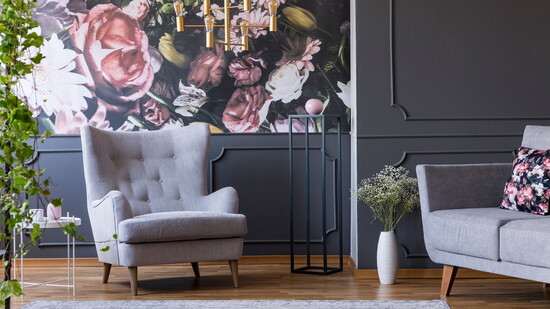
In the interior design world, 2026 is shaping up to be a year defined by three key
elements: color, pattern, and texture—a collective sigh of relief after years of playing it
safe with neutrals. While most aren’t diving headfirst into full-scale maximalism, we’re seeing a clear shift toward intentional richness, with more thoughtful use of color, pattern, and layered materials.
Color is back, but in a smart, confident way. Rather than feeling chaotic, palettes are carefully considered and richly saturated. As soft blues and cool grays fade into the background, sophisticated jewel tones are stepping into the spotlight, bringing depth and personality to interiors. Pattern is growing larger in scale and taking on a more prominent role. No longer confined to throw pillows, it’s making its way onto statement furniture, walls, and artwork through bold textiles and wallcoverings that command attention. Layering tactile materials is what brings it all together. Velvets, mohair, and grasscloths help balance and support these bolder colors and patterns, adding warmth and visual interest throughout the room.
Perhaps the most exciting shift is how clients are embracing color and pattern across all
design styles, not just contemporary spaces. Even in our most traditional projects, we’re seeing entire rooms wrapped in floor-to-ceiling trim, classic tongue-and-groove paneling, and fully color-drenched finishes. There’s no better way to make classic furnishings and antiques truly shine. We love pairing a timeless walnut chest with modern art, or reimagining a classic Louis chair in a punchy, unexpected fabric.
As color, pattern, and texture become more expressive, the finishes we choose are evolving right alongside them. Color is playing a larger role not just in paint and textiles, but in the woods and metals that anchor a space. Wood tones, in particular, are warming back up. After years of pale oaks and washed-out finishes dominating the market, we’re seeing a return to richer, deeper woods—walnut, chestnut, stained white oak, and even moments of mahogany—used to ground a space and add visual weight.
These warmer tones pair beautifully with saturated color palettes and layered textures,
bringing depth and a sense of permanence that lighter woods often lack. This shift is also bringing antiques back into the equation in a meaningful way. As clients move toward warmer woods and more character-rich finishes, vintage and antique pieces feel less like outliers and more like natural anchors within a space. A timeworn chest, an inherited table, or a collected case piece now feels intentional rather than old- fashioned—adding soul, contrast, and authenticity to rooms that balance modern elements with history. Metal finishes are following suit as well. Cooler chromes and brushed nickels are giving way to warmer metals—antique brass, bronze, and aged
finishes—that complement these darker woods and reinforce the overall move toward interiors that feel richer, more collected, and more timeless. Even better, these metal textures can now be thoughtfully mixed within a space: a bronze lamp paired with a brass cabinet handle, or an aged gold mirror hung above an antique copper console. When done intentionally, mixing metals adds dimensionality and visual interest without ever feeling chaotic.
At its core, 2026 design is about confidence—confident color, confident pattern, confident layering, and confident mixing of old and new. Homes are becoming more expressive and less formulaic, reflecting the people who live in them rather than a prescribed aesthetic. The result is interiors that feel richer, warmer, and more personal—spaces that are not just designed to be seen, but designed to be lived in.
"In 2026, interiors are about confidence and personality. Whether it’s rich jewel tones, layered textures, warm woods, mixed metals, or treasured antiques, every choice should feel intentional. The best spaces aren’t just beautiful, they tell a story about the people who live in them."
—Ryan Williams, Owner, Artisan Design Studio, Roswell, GA
As design becomes more expressive, homeowners have a real opportunity to create spaces that feel elevated today while also strengthening a home’s market position for the future. From a real estate perspective, strong design can support value and buyer interest, but the most successful homes are the ones that balance individuality with broad appeal.
Homes that feel cohesive and thoughtfully executed tend to resonate more quickly with buyers during showings. While buyers may not remember every finish or fabric, they remember how a home feels and whether it seems easy to live in. Design choices that enhance the architecture and flow of a home often translate to stronger interest and smoother decision making.
Color is most effective in resale when it defines a space without overwhelming it. Saturated tones can work especially well in rooms with a clear purpose such as dining rooms, studies, or powder rooms, where they read as intentional and polished. In primary living areas, a more restrained approach often helps buyers imagine their own furniture and future updates, which can reduce hesitation.
Pattern can also play a role in elevating perceived value when it is used selectively. A well-placed wall treatment or upholstered element can add character and signal a level of care and investment. From a buyer’s standpoint, pattern is most appealing when it feels like a feature rather than a commitment that must be carried throughout the home.
Texture Consistently performs well in the resale market. Natural materials and layered finishes tend to communicate quality and longevity; qualities buyers respond to across price points. These elements add depth and warmth without feeling tied to a specific trend, making them a safer design investment.
Architectural details remain one of the strongest contributors to long term value. Millwork, paneling, built-ins, and thoughtful trim create a sense of permanence and craftsmanship that buyers recognize immediately. These features elevate a home’s baseline appeal and allow cosmetic elements to be updated over time without diminishing the overall character.
When homeowners are updating with resale in mind, working with a designer can make a meaningful difference. Designers like Ryan approach projects with an understanding of how families actually live, not just how spaces look. Thoughtful layouts, durable material choices, smart storage solutions, and flexible spaces all support daily life while quietly strengthening resale appeal. This kind of planning helps homeowners avoid costly missteps and ensures updates feel both livable now and market ready later.
Where caution comes into play is with highly personalized or bold design statements that dominate large, open areas, or require significant effort to change. While personality is important, elements that feel too specific can narrow the buyer pool. When preparing for resale, editing or softening select features often preserves design integrity while increasing marketability.
Homes that perform best in the market are not generic, but they are welcoming. When design choices support function, flow, and architectural character, they become an asset that enhances both lifestyle and resale value.
For more info on local resale estate contact : HelenLoiacono.com