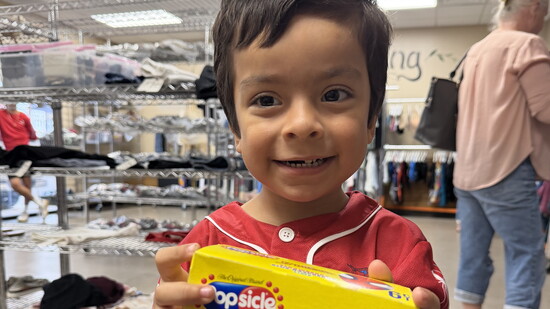
For families facing difficult seasons, a bag of groceries can mean much more than food on the table. It can mean relief, stability and the reassurance that someone in their community cares.
That belief is at the heart of Harvest Compassion Center, a Valley nonprofit providing food, clothing and essential resources in an environment designed around dignity, compassion and choice.
The organization’s story began with the legacy of Mitchell Swaback, who passed away at age 23 in August 2004. Known for his passion for serving others, Swaback inspired his family to establish the Mitchell Swaback Foundation later that year. The organization eventually became Mitchell Swaback Charities, Inc., doing business as Harvest Compassion Center.
In 2011, the first Harvest Compassion Center opened in North Phoenix. Today, HCC operates four Valley locations in North Phoenix, West Phoenix, Maryvale and Tolleson, serving Arizona residents without income or ZIP code restrictions.
But what makes the experience distinctive is not simply what families receive—it is how they receive it.
Rather than distributing prepacked boxes, HCC invites clients to shop its Mini-Mart alongside a volunteer, selecting shelf-stable groceries, fresh produce, refrigerated and frozen foods, hygiene products, diapers and other necessities based on their individual needs.
The philosophy is captured in HCC’s motto, “Food Banking Reimagined.”
Choice, the organization believes, creates dignity. That attention extends to its Clothing Boutique, where donated items are carefully sorted, washed, hung and labeled before reaching the shelves.
For families stretched by the rising costs of housing, utilities, medical care and everyday necessities, that support can provide an important lifeline.
One young mother who recently visited HCC shared that she had been watering down her baby’s formula because she could not afford another can. She had also been skipping meals so her children could eat.
During her visit, she chose fresh produce, protein, snacks, formula and hygiene essentials before receiving diapers and wipes and shopping for clothing for her family.
At her car, she tearfully told the staff, “Tonight, my kids will have full bellies, and I don’t have to choose between buying diapers and formula or buying food.”
Stories like hers are why HCC describes its work as being about far more than groceries. The organization strives to know the people it serves, build relationships and connect families with trusted community partners when additional support is needed.
That work is powered largely by the community. HCC receives no government funding and operates with a staff of just 18, supported by more than 2,000 volunteers annually. In 2026, the organization expects to serve approximately 25,000 families.
Community members help stock shelves, assist families while shopping, organize clothing, host food and diaper drives and donate gently used clothing and shoes. Through the FEED1 program, a $28 monthly gift helps provide a family with a reusable grocery bag filled with food, hygiene products and baby essentials.
At its core, Harvest Compassion Center is built around a simple idea: neighbors taking care of neighbors.
Whether through a volunteer shift, a bag of donated clothing or a financial gift, every contribution becomes part of something larger—a community where asking for help can be met not only with resources, but with respect, encouragement and hope.