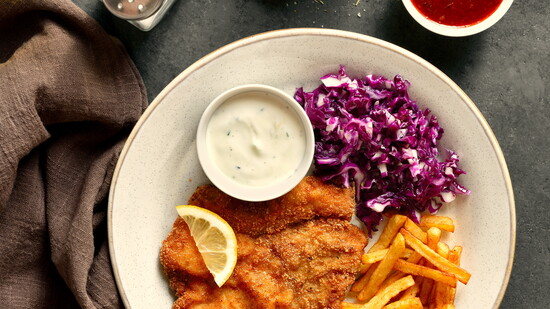
I get a kick out of schnitzel. It’s a fun word to say—the way you have to maneuver your tongue and jaw to get it out with conviction, whether in Wiener or another variation. It’s delicious to eat. The term comes from the Middle High German snitzel, meaning “slice,” referring to thin cutlets used for cooking. Today, the word is most famously associated with “Wiener,” and in fact, Wiener schnitzel is the iconic Austrian dish, dating to at least the early 19th century. By law, in Austria, it must be made with veal.
These days, given the cost of veal and ethical concerns about it, pork is more often “schnitzeled”—the technique of pounding meat into a thin cutlet, breading it and pan-frying it until golden brown. Chicken is another popular option.
Using either is not a new concept. Back in the day, veal was expensive, too. So as the schnitzel technique spread across Central Europe, pork became the everyday choice, with chicken a somewhat distant second. Both were cheaper, widely raised and deeply embedded in German and Eastern European cooking traditions.
Braised red cabbage is one of the most traditional accompaniments to schnitzel. Its apple, vinegar, clove and sugar elements balance the richness of the fried meat. And the textural contrast—the crispness of the schnitzel and tenderness of the cabbage—is appealing.
German, Austrian and Eastern European immigrants brought schnitzel and braised red cabbage with them to America, where the combination became a Sunday staple in their communities.
Today, pork or chicken schnitzel with red cabbage remains a beloved comfort classic, particularly during the colder months. A recipe follows that works for either.
Ingredients
-
4 boneless pork cutlets (or thin-sliced pork loin) or 2 boneless chicken breasts, cut in half
-
1 cup all-purpose flour
-
2 eggs, beaten
-
1 1/2 cups breadcrumbs (plain or panko)
-
1 teaspoon salt
-
1/2 teaspoon black pepper
-
1/2 teaspoon paprika
-
1/2 cup neutral oil (vegetable, peanut, sunflower or avocado)
-
1 head red cabbage, cored and thinly sliced
-
1 red apple, cored and halved
-
4 whole cloves
-
1 small red onion, sliced
-
3 tablespoons butter
-
3 tablespoons red wine vinegar
-
1/3 cup apple cider vinegar
-
2 tablespoons plus 1/2 teaspoon brown sugar
-
1/4 cup water or apple juice
-
1 bay leaf
-
Salt and pepper, to taste
Instructions
-
Pound cutlets to 1/4-inch thickness for even cooking. Season with salt, pepper and paprika.
-
Set up three bowls: one with flour, one with beaten eggs and one with breadcrumbs. Dredge each cutlet in flour, dip in egg and coat fully in breadcrumbs.
-
Heat oil in a large skillet over medium-high heat. Fry schnitzel 3 to 4 minutes per side until deep golden and crisp. Drain on paper towels and keep warm.
-
Stud apple halves with the whole cloves.
-
Melt butter in a pot over medium heat and sauté onion until soft. Add cabbage and clove-studded apple halves; cook 3 to 4 minutes until slightly wilted.
-
Add vinegars, brown sugar, bay leaf and water (or apple juice). Stir well to coat the cabbage.
-
Cover and cook on low heat for 30 to 35 minutes, stirring occasionally, until cabbage is tender and glossy. Season with salt and pepper.
-
Discard apple halves and bay leaf.
-
Plate schnitzel with a generous spoon of braised red cabbage and serve with lemon wedges, if desired.
Consider this foundation a starting point for your own culinary creativity.
A traditional German variation dating to the 1880s tops Wiener schnitzel (pork or chicken works just as well as veal) with a fried egg, anchovies and capers, often finished with a lemon-caper sauce. The dish is prized for its rich contrast of textures and flavors — crispy schnitzel, a runny egg, salty anchovies, briny capers and bright lemon acidity.
You could also swap out everything except the egg for pickled red onions, or skip the egg entirely and slather an apple-mustard relish over the cutlet. Use your culinary imagination to craft your own bespoke schnitzel.
About Chef David Burke
Brooklyn-born chef and restaurateur David Burke, who was raised and continues to live in New Jersey, is known for playful, precision-driven modern American cooking and elevated comfort classics. His restaurants span New Jersey and beyond, including Red Horse by David Burke at The Bernards Inn and The Station Tavern in nearby Bernardsville.
To learn more, explore his restaurants, or get in touch, visit chefdavidburke.com and follow his culinary adventures on Instagram @chefdavidburke.