David Junger
Deputy City Manager
Can you share a defining moment or early experience that sparked your commitment to leadership? How has that sense of purpose shifted or deepened as you’ve grown, both personally and in your career?
As of May 2026, I will have had the pleasure of working for the City of Decatur for 36 years. My career began as an intern at Georgia State University in the Criminal Justice program. In 1990, approximately one week prior to graduation, I was offered a police officer position, and I was thrilled to have an opportunity to join the City of Decatur police department. I grew up not far from the City of Decatur, in what is frequently referred to as “Greater Decatur”. It did not take long for me to realize that working in local government is where infrastructure, equity, public safety, and daily quality of life intersect most directly. I’ve had many experiences working on issues to address community concerns and public safety while also providing quality city facilities for both the community and city staff. In my various roles, I’ve made and continue to make a positive impact for employees by improving facilities and continuing to provide the tools and equipment they need to perform their work efficiently and effectively.
As my career has progressed, my sense of purpose has evolved from strictly problem-solving to stewardship and systems thinking. Early on, my focus was often on delivering projects well, getting improvements or facilities built correctly, improving traffic flow, or implementing a plan. Over time, my perspective broadened, and I began thinking about long-term network effects, institutional knowledge and capacity, funding mechanisms, long-term maintenance, and how to scale impact beyond individual projects. My thoughts changed from “How can we fix this corridor?” to “How can we build a city that consistently delivers safer, more equitable outcomes for all of our community?”
On the personal side, my growth has come through a stronger appreciation for compromise, consensus-building, stakeholder engagement, and the complexity of public decision-making. Early in my career, my convictions were rooted in a clearer sense of right and wrong. With experience, I have gained a deeper understanding of how competing priorities such as budget constraints, political considerations, and differing community perspectives shape outcomes. My commitment has evolved from pursuing ideal solutions to navigating constraints effectively while still advancing core values such as safety, accessibility, and public trust.
Another core value of mine is building strong relationships. The work we do each day depends heavily on collaboration with colleagues at DeKalb County, the State of Georgia, MARTA, and the many utility providers who serve our area. When challenges arise, those established relationships create opportunities to solve problems and deliver meaningful improvements for our community.
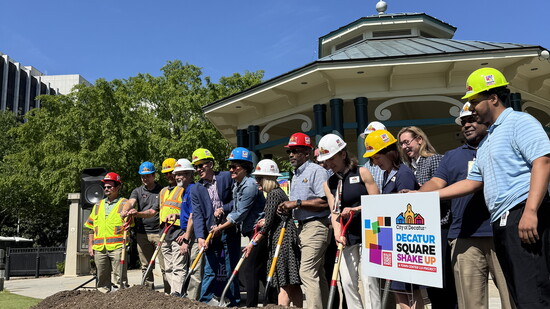
A strong example is the Decatur Square Transformation project. This effort required extensive coordination with MARTA during both the pre-construction phase and throughout active construction. MARTA has been an essential partner in delivering a high-quality project that improves the Decatur Square while minimizing day-to-day impacts on transit riders.
The communications teams from both MARTA and the City of Decatur worked diligently to ensure construction activities were completed safely while reducing disruption to riders and downtown businesses. Those strong working relationships allowed everyone to stay focused on the shared goal of creating a beautiful public space in a short timeframe while preserving the energy, character, and vitality that make Decatur such a special community.
When you think about the long-term impact of your leadership, what kind of legacy do you hope to leave — and how do you hope people in your community will describe your influence years from now?
I strive for a legacy of sustained stewardship, institutional leadership, and practical community impact.
While working in law enforcement for 15 years, I would say there was a clear focus on public safety, accountability, and direct service to residents. Our community policing approach and philosophy in the Decatur Police Department emphasized the day-to-day realities of community needs, which included protecting the community, solving problems under pressure, and building trust with the community.
Over nearly four decades of service, I have seen the City of Decatur organization work intentionally to break down silos and strengthen collaboration across all departments. We have consistently sought to minimize the barriers that often prevent organizations from reaching their highest potential. Instead, the City strives to create an environment where departments share a common vision and work collectively toward goals established by the community through strategic plans and project-based planning efforts.
A meaningful legacy is being part of an organization that creates the conditions for departments, employees, and future leaders to succeed long after any one individual has moved on. I believe we have made important investments in our staff, equipment, and facilities to strengthen the institution.
That institution extends beyond our city departments; it includes every member of our community. When the City of Decatur is strong, collaborative, and forward-looking, the entire community benefits.
The community may see streets and sidewalks improved, facilities modernized, services delivered efficiently, and projects completed, but I truly hope that my legacy is not only what has been built but rather how we all worked together to construct a greater community.
I hold dear the value of our culture where staff can meet rising expectations, where residents can receive quality services, and where the city is positioned to grow responsibly.
I hope that my legacy is one of a servant leader who spent 36+ years strengthening the people, systems, and infrastructure that allow the City of Decatur to serve its community well. I believe firmly in the Athenian Oath, where each day when we come to work, our actions strive to transmit the city "not only, not less, but greater and more beautiful than it was transmitted to us".
“Each day, our work should leave the city greater and more beautiful than it was when we received it.”