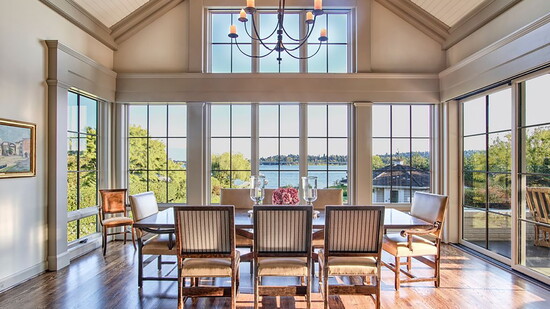
In an era shaped by digital overload, fractured attention spans, and increasingly isolated daily routines, architect Mark Elster believes the home has become more important than ever — not simply as shelter, but as a place that helps families reconnect with one another in meaningful and lasting ways.
“In a world grappling with the isolating effects of social media and digital overload, we believe the home should serve as a powerful antidote,” says Elster, principal of AOME Architects. “The families we work with seek a true refuge from the helter-skelter pace of modern life — a place where they, their children, and their friends can reconnect meaningfully across generations.”
That philosophy increasingly resonates in a culture often focused on immediacy, productivity, and constant acceleration. Many families are quietly searching for something increasingly rare: spaces that slow the pace of life enough for meaningful moments to happen naturally again.
Not simply larger homes.
Not trend-driven luxury.
But environments where conversations linger, generations gather naturally, and people feel emotionally connected to one another.
“Whether designing primary residences, second homes, or legacy retreats, we craft intentional gathering spaces that foster the genuine social interactions we all crave,” Elster explains.
Throughout the firm’s work, gathering spaces are intentionally designed to feel emotionally connected even within generously scaled homes. Kitchens flow naturally into living spaces. Rooms feel expansive while still maintaining warmth and intimacy. Natural materials soften sound, shape atmosphere, and encourage a deeper sense of comfort and belonging.
“Even in generously scaled homes, we ensure your living areas, great rooms, and kitchens maintain a distinctly human scale and an enduring sense of intimacy,” says Elster. “These spaces are carefully proportioned so that large groups feel warmly connected rather than lost in volume.”
That understanding comes not simply from architectural expertise, but from years of observing how families evolve over time. Children grow up. Parents age. Traditions deepen. Homes quietly become repositories for memory, identity, and emotional continuity across generations.
We spend time together for many reasons. Sometimes out of need. Sometimes out of convenience. Sometimes simply because we belong to one another. Yet what many families only fully understand later is how deeply those ordinary moments become cherished over time.
The conversations around kitchen islands.
Stories shared during holidays.
Quiet mornings with grandparents.
Summer evenings stretching a little longer than expected.
Without fully realizing it in the moment, children absorb these experiences deeply. As they grow older, those memories often become some of the most meaningful emotional anchors in their lives.
Throughout the design process, Elster believes homes must evolve alongside the families living within them.
“We thoughtfully consider how your home must evolve with your family over time,” he says. “Today’s playroom may become tomorrow’s study or quiet retreat, guest suites may comfortably support aging parents, and flexible areas can accommodate both lively multigenerational gatherings and peaceful everyday living.”
In many ways, the most successful homes today are not the ones that impress most loudly, but the ones that quietly improve the quality of life over decades.
Homes where people linger and memories of the future are made.
Where multiple generations naturally gather.
And where architecture itself becomes less about performance and more about belonging.
In the end, perhaps the true luxury of modern living is not simply space.
It is feeling deeply connected within it.