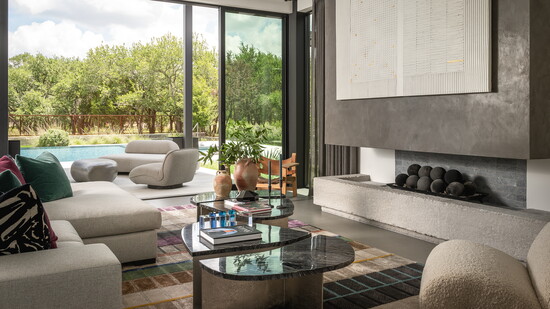
Nineteenth-century British designer William Morris said it best, and it's a philosophy that has guided both my work and my own home for years: “Have nothing in your house that you do not know to be useful or believe to be beautiful.” And better if it’s both!
At TIPLER Design, much of our work moves between resort-style residences, clubhouses, and amenity-driven spaces across Texas—environments that are constantly in motion. They are designed to be lived in fully, absorbing use without losing their sense of refinement. Over time, that experience has shaped a clear perspective: Durability and beauty must coexist.
“Custom” can sound intimidating, but in the furniture world, it simply means tailoring a piece to fit your lifestyle. When working with a design firm that sources directly from manufacturers, these pieces are often surprisingly comparable in price to many retail furnishings.
For example, we are able to adjust seat depth, back height, fabrics, and cushion construction in a sofa. While down-filled cushions may sound luxurious, they often require constant fluffing and can quickly lose their shape under the weight of climbing children and napping pets. Performance cushion blends provide a soft, inviting seat while better maintaining their form over time.
Fabric technology has evolved dramatically. Hospitality-grade performance fabrics have become household staples. Crypton is the most recognized brand name, but there are now numerous performance textiles that resist stains, repel moisture, and clean beautifully.
That said, not all “performance” fabrics are created equal. Outdoor fabrics are often marketed as the ultimate solution for family homes, but their primary purpose is resisting sun exposure and fading. Many lack the backing systems that help prevent spills from penetrating cushion interiors.
Likewise, while performance velvets can be durable with a moisture barrier, they may not be the best choice for households with shedding pets. Speaking from personal experience, a green velvet sofa and a hairy dog can create a full-time vacuuming schedule.
When selecting upholstery, I also encourage clients to think beyond current trends. Highly textured, nubby fabrics are having a moment, but they can be difficult to clean and especially vulnerable to sharp claws. I also generally avoid textiles and fibers containing viscose in any family-friendly or high-traffic environment—including rugs. Whenever possible, I recommend investing in a quality wool rug, ideally hand-knotted. While the initial cost may be greater, wool is naturally flame retardant, resistant to odors, and exceptionally forgiving when it comes to everyday wear and cleaning.
I often say to clients, usually with a bit of humor, “buy once, cry once”—a reminder that a thoughtful investment typically performs better and contributes to less environmental waste.
Unfortunately, there are no truly maintenance-free products, though many—including natural materials—are remarkably durable. In fact, some of the man-made products we consider nearly indestructible were inspired by natural ones. Quartz countertops, for example, are derived from quartzite. For our Driftwood Showcase Home, designed around entertaining and everyday family life, we selected natural quartzite for the kitchen countertops. This home regularly hosts club events, tours, dinners, and gatherings, making it one of the hardest-working homes we’ve designed.
We loved the look of concrete floors but needed a surface with greater slip resistance and a more consistent appearance over time. We opted for large-format porcelain tile that captures the aesthetic of concrete without the porosity or slickness, offering the best of both worlds.
Thoughtful planning extends beyond material selections. Integrated storage—like built-ins, ottomans, and woven baskets—quietly conceals everyday clutter. For families with young children, rounded furniture profiles (especially for coffee tables) are a thoughtful consideration, allowing spaces to evolve gracefully through different stages of life.
Here in the Hill Country, life naturally blurs the line between indoors and outdoors—wet dogs and children running in from the pool, muddy boots by the door, guests lingering over a glass of wine long after dinner has ended. Good design should not fight those moments. It should support them.
Tipler.com | @tiplerdesign
Over time, our experience has shaped a clear perspective: Durability and beauty must coexist.
There are no truly maintenance-free products, though many—including natural materials—are remarkably durable. In fact, some of the man-made products we consider nearly indestructible were inspired by natural ones.