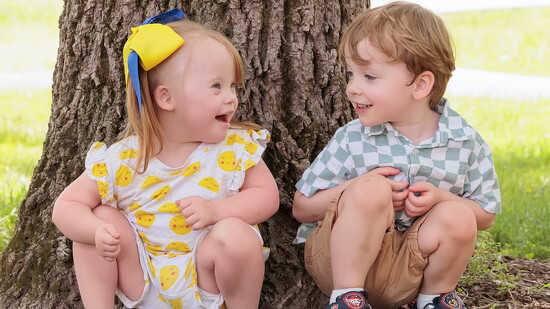
Fifty years ago, seven mothers of children with Down syndrome gathered around a table with a simple but powerful goal: to create a better future for their children.
It was 1976, and support for families was scarce. Parents often received devastating and inaccurate messages from medical professionals, with some being told their child would never walk, read or have a meaningful life. Many were even encouraged to place their babies in institutions.
“These families decided that was unacceptable and said, ‘No, we’re taking our babies home,’” says Erin Suelmann, executive director of the Gateway Down Syndrome Association (GDSA), formerly the Down Syndrome Association of Greater St. Louis. “They believed their children had value, potential and the right to belong.”
From that determination, the GDSA was born.
What began as a small group of seven determined mothers has grown into an organization that now serves nearly 2,300 individuals with Down syndrome and their families throughout Eastern Missouri and Southern Illinois. The GDSA provides programs and support at every stage of life while partnering with schools, healthcare providers, businesses and community organizations to build a more inclusive world.
In 2026, the GDSA is celebrating a milestone: 50 years of serving, supporting and celebrating individuals with Down syndrome and their families. The celebration will culminate at the organization's 50th Anniversary Gala on Saturday, Nov. 14, 2026, at The Royal Sonesta Chase Park Plaza St. Louis.
For Erin, the mission is also deeply personal. Her brother, Andrew Suelmann, who is now 40 years old, has Down syndrome.
“My parents had a very negative experience when he was born,” she says. “They were told they could place him for adoption and that they didn't have to take him home, but that was not an option for them. Fortunately, so much has changed. There's a much greater awareness of the joy, contributions and fulfilling lives people with Down syndrome can lead.”
She credits her brother with shaping who she is today.
“Andrew is the nicest man I know—kind, caring and incredibly thankful,” she says. “I would not be the person I am without him. Almost everyone who has someone with Down syndrome in their life will tell you they are better because of that relationship. They teach you to slow down and see the beauty around you.”
Down syndrome is a genetic condition caused by the presence of an extra chromosome. It occurs in approximately one in every 691 live births, making it the most common chromosomal condition. While individuals with Down syndrome may experience developmental delays and certain health challenges, advances in medical care and increased opportunities for inclusion have dramatically changed outcomes over the past five decades.
In 1976, the average life expectancy for a person with Down syndrome was just 25 years. Today, many people with Down syndrome live into their 60s and 70s, attend school, hold jobs, live independently and contribute to their communities in countless ways.
Yet, Erin says there is still important work ahead.
“We're still educating healthcare professionals and working to ensure families receive accurate, up-to-date information when they receive a diagnosis. Every family deserves hope, support and the opportunity to see what's possible,” she says.
As GDSA reflects on its first 50 years, the organization remains committed to the vision that inspired those seven mothers in 1976: a world where every person with Down syndrome is valued, included and celebrated.
Erin says, “The story of Gateway DSA is really the story of thousands of individuals with Down syndrome and the people who love them. Our legacy is built on connection, advocacy and the belief that every person belongs.”
“Our legacy is built on connection, advocacy and the belief that every person belongs," says Erin Suelmann, GDSA executive director.