“Plan accordingly.”
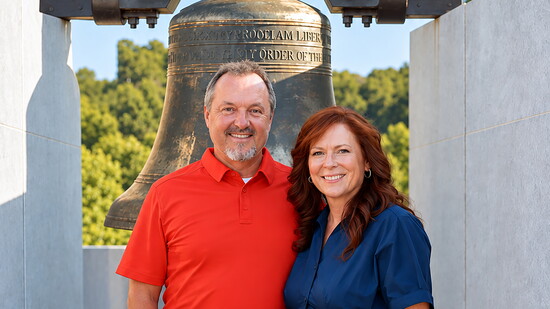
My husband, Bryan, has used this phrase almost daily for years. It has become something of a family motto in our house.
If the weather forecast says rain is coming, plan accordingly and grab an umbrella or raincoat. If traffic will be heavy during your commute, plan accordingly by leaving a little earlier or finding another route. If you know you have a busy week ahead, plan accordingly and prepare what you can in advance.
Of course, life doesn’t always give us a weather forecast.
Life is full of uncertainties—some good, some difficult and some that completely change the direction we thought we were headed. We can’t predict every challenge, but accepting that challenges will come lets us prepare as best we can.
At the beginning of this year, Bryan was laid off after 26 years with the same company. He still has some time before retirement, so this wasn’t part of “the plan.”
Over the years, he made it through several rounds of layoffs, and we thought he was in a relatively safe position. But after 26 years, the job and the company had changed dramatically. Eventually, the unexpected happened.
So, we did what Bryan has always said to do: we planned accordingly.
We looked at our budget, our savings and our lifestyle and made the adjustments we felt were necessary. We had prepared financially for an emergency, including setting aside savings for the unexpected. But I learned that being financially prepared and being completely prepared are two very different things.
Can you ever really be prepared to suddenly lose a significant portion of your household income?
We’ve all heard about maintaining an emergency fund sufficient to cover several months of essential expenses. That cushion can provide valuable breathing room when income unexpectedly changes. But an emergency fund addresses only one piece of the puzzle.
When you lose a job, your benefits may change or disappear. Health insurance suddenly becomes something that needs immediate attention. Contributions to your employer’s retirement plan stop. Household expenses that once seemed routine may deserve a second look.
Then there is the part that doesn't show up on a financial statement.
After 26 years at a job, it becomes more than a paycheck. It provides routine, purpose, relationships and community. When it ends unexpectedly, there can be a genuine sense of grief. You may find yourself asking, “What now?”
And then there is time.
What do you do when you suddenly have 40 or more hours each week that used to belong to an employer?
In our case, some of that time has gone toward projects around the house that had been waiting far too long. More importantly, it has created opportunities to spend time with the people we love and to think about what we want this next season of life to look like.
The experience has reminded me that financial planning isn't just about preparing for retirement someday. It's about creating flexibility for all the life that happens between now and then.
An emergency fund can't prevent a layoff. Insurance can't prevent an illness. A retirement plan can't guarantee that life will unfold according to schedule. Good planning doesn't eliminate the unexpected—it gives us more choices when the unexpected arrives.
As we navigate this transition, I find myself choosing gratitude.
I’m grateful Bryan had his job for as long as he did. I’m grateful for the security, growth and lifestyle his career provided our family for 26 years. I’m grateful we prepared for the unexpected. And I’m grateful for the new opportunities ahead as we plan accordingly for a new season of life.
There will always be things we cannot control. The goal isn't to have every possible scenario figured out. It's to build enough margin—financially, emotionally and practically—that when life changes, we have room to adjust.
So, when life throws you a curveball, you may not be able to catch it perfectly. But hopefully, you've planned accordingly enough to stay in the game.
The opinions expressed are those of the author as of the date of publication and are subject to change without notice. This material is for informational use only and should not be considered investment, tax, legal or insurance advice. Consult a qualified professional regarding your specific situation.
PYA Waltman Capital, LLC is an investment adviser registered with the U.S. Securities and Exchange Commission. Registration does not imply a certain level of skill or training. More information about PYA Waltman Capital’s investment advisory services can be found in its Form ADV Part 2 and/or Form CRS, which is available upon request. PYA-26-66