In a town known for horses, hospitality and Southern charm, Hitchcock Woods may be Aiken’s greatest treasure of all. More than 2,000 acres of towering longleaf pines and sandy trails create something increasingly rare in modern life: an authentic escape.
Step beneath the canopy and the pace changes almost instantly. Traffic noise fades. Cell phones become less interesting. Sunlight filters softly through the trees while sandy paths wind through ridges, ponds and quiet hollows. The Woods feel less like a park and more like a sanctuary, a natural oasis tucked directly into the heart of Aiken.
But beyond the stillness, Hitchcock Woods is also remarkably alive.
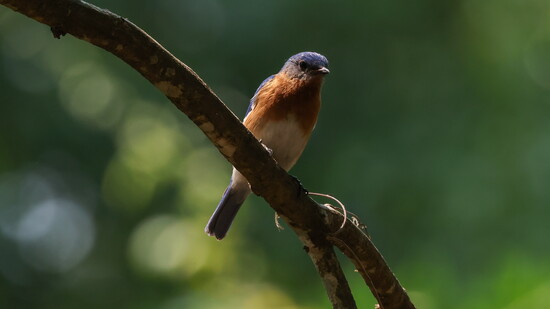
A walk beneath the pines often becomes an exercise in slowing down enough to notice. A flash of electric blue reveals an Eastern bluebird perched along the trail. The unmistakable hammering of a pileated woodpecker echoes through the forest like distant construction work. Fox squirrels, larger and far more dramatic than the gray squirrels found in most neighborhoods, bound across the sandy floor or spiral effortlessly up towering trunks, their silver-gray and black coats blending almost seamlessly into the bark.
Then there is one of the Woods’ most extraordinary residents: the endangered red-cockaded woodpecker.
Unlike most woodpeckers, red-cockaded woodpeckers carve nesting cavities into living longleaf pine trees, a habitat that once covered much of the South but has largely disappeared over the last century. By the late 1900s, the species had declined dramatically and was nearing extinction as old-growth longleaf forests vanished.
Because Hitchcock Woods preserves one of the region’s remaining longleaf pine ecosystems through careful stewardship and prescribed burns, conservationists saw an opportunity. In partnership with wildlife agencies, young red-cockaded woodpeckers were carefully relocated to the Woods to help reestablish a breeding population. Artificial nesting cavities were installed to encourage the birds to settle and thrive. Today, their presence stands as both a conservation success story and a reminder of how important protected natural spaces truly are.
There is something fitting about that story here.
Hitchcock Woods has always been a refuge, not only for people seeking relief from the noise and pressure of everyday life but for wildlife searching for disappearing habitat. In many ways, the Woods serve as a quiet reminder that preservation matters. Slowing down matters. Wild places still matter.
For generations, riders, runners, photographers and nature lovers have come here seeking peace, beauty and perspective. Some arrive for exercise. Others come to clear their minds. Many simply come to wander.
And perhaps that is the true magic of Hitchcock Woods. It does not ask for attention with grand entrances or dramatic overlooks. Its beauty unfolds quietly through filtered sunlight, birdsong, rustling pine needles and the unexpected thrill of spotting a rare woodpecker high above the trail.
In a world constantly urging us to move faster, Hitchcock Woods extends an invitation to do the opposite: breathe deeper, look closer and trade stress for stillness, if only for an hour.
Aiken City Lifestyle Publisher Gayle Bryan provided the wildlife photography featured in “A Walk in the Woods.” An outdoor enthusiast and award-winning wildlife photographer, Bryan captured these images during her personal walks through Hitchcock Woods, documenting the remarkable birds and wildlife that make the beloved urban forest such a treasured local sanctuary.