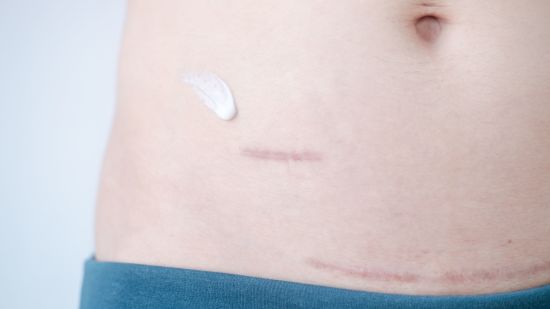
Behind every scar is a story. For some, a scar can rekindle happy memories, such as a C-section scar or happy childhood memory of playing outside. For others, a scar can be a source of pain, both physical as well as mental. Regardless of your motivation there are lots of options to improve the quality, texture, color, visibility and even functional-limitations of your scars!
Options for scar revision can range from conservative to full excision and revision of the scar. The age or maturity of the scar is a significant factor to consider when reviewing options for revision. The older the scar (the longer it has been there), the fewer conservative options remain. In general a scar is considered matured, or fully healed at about 12 months.
So let's start at the beginning and take a surgical scar for example. During a pre-op evaluation, I ask clients about their likelihood of forming bad or poor scars. If you are prone to keloids or hypertrophic scars, I may choose to inject steroids AT THE TIME OF SURGERY to help prevent an over abundant scar production afterwards. I will intentionally choose different suture material that is less reactive to limit the risk of forming poor scarring.
Once the sutures are removed (or there is no longer an open wound for non-surgical scars), the 2 BEST things YOU can do for your fresh scar is: 1) avoid sun exposure by keeping it covered or wearing a mineral-based sun screen and 2) silicone sheeting. I get asked ALL.THE.TIME about Miderma/vitamin E/aloe, etc. What has been proven in academic literature to ACTUALLY work is sunscreen and silicone sheeting. Sun exposure will turn your scars pink/dark, so minimizing your sun exposure will lessen your risk of permanent pigment issues. Silicone sheeting acts as a moisture barrier which creates a safe, wet environment for the wound to heal without crusting.
For patients who have hypertrophic or over-reactive scar production, such that their scar is raised, will often times respond to steroid delivery via injections in addition to silicone sheeting. However, once mature, these scars will not respond as well to the injectable steroids, so the time to hit these scars hard is when they are actively forming.
To help the scar blend in better or to help with depressed scars, a variety of options are available. Creating microtraumas to the scar, whether through laser, dermabrasion or microneedling, will cause the scar to reform and lay down new collagen which will help to blend it into the surrounding areas better. If the scar is depressed, adding a dermal filler to support the scar from below while also stimulating new collagen from the surface is a very effective treatment option.
For pigment concerns, lasers may be helpful to tease out the pink/red tones or even hyperpigmented/darker areas. The laser will also stimulate collagen formation and improve the appearance of the scar over time.
The final option to improve the appearance of scars is to essentially cut it out and replace that old scar with a new fresh scar. This works well for scars with contractures/or significant tethering, more mature scars and for scars where we need to change their direction or orientation. This is often completed in office under local anesthesia. Once the new scar has been formed from excising the old one, we can start with the measures listed above to help prevent another poor-formed scar.
So regardless of the size, length, appearance and age of the scar, there are options to IMPROVE your scar.