LARRY IRELAND
Instructor, HVAC / CTE
Larry Ireland’s parents retired from Chrysler. He tried to follow that road. It was not his future.
HVAC changed everything.
“It gave me financial security and a purpose,” he says. “There’s nothing like walking into somebody’s house when they’re uncomfortable, and walking out because you solved the problem.”
What he paid $15,000 to learn, he now teaches—for free. Through dual enrollment with Macomb Community College, students can earn both a district certificate and a two-year degree.
When Larry himself graduated, a seasoned contractor offered him a 50/50 partnership immediately. That’s not hourly wage territory.
For the skeptics: “Grab a globe and spin it,” Larry says. “Tell me where HVAC doesn’t apply.” Translation: climate control tech is everywhere. And someone has to keep it running.
Larry also names a misconception: trade school isn’t for students who struggle academically. Two of his students graduated top five in their class. “It’s for everybody,” he says. “And not just men, but women as well.”
Larry’s climate control technology program at Mount Clemens Community Schools is the only one of its kind in Macomb County. Any county high school student can attend, tuition-free. Open enrollment starts in June. Contact John Pittman: pittmanj@mtcps.org or 586.469.6100.
MARK LOSINSKI
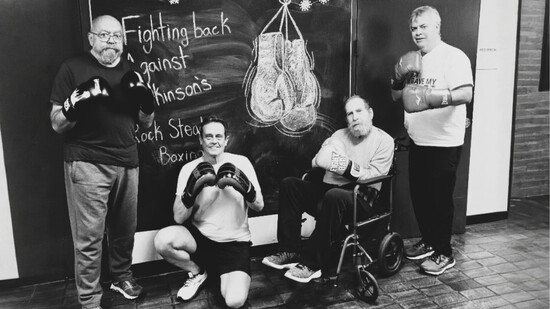
Head coach, Rock Steady Boxing
Parkinson’s is the fastest-growing neurodegenerative disease in the world, affecting nearly one million Americans. There is no cure.
Mark Losinski isn’t waiting for one.
Mark is head coach of Rock Steady Boxing at the Macomb Family YMCA in downtown Mount Clemens. It’s a nationally accredited program designed exclusively for people living with Parkinson’s disease.
Rock Steady Boxing began in Indiana around 2006, when a prominent lawyer with Parkinson’s hired a Golden Gloves boxer to train him. Today it’s a national program.
And Mark, a retired colonel who commanded medical units and served as deputy state surgeon, has added something even the national network envies: a pool.
In water, Mark says “we found the ‘on’ button. They walk around like you and I.” Clients who freeze on land, whose feet stop moving even when their brain says walk, turn figure eights in the water. One man’s wife stood poolside in tears: she hadn’t seen him move like that in thirty years.
Mark opens sessions with a simple question—like “What’s your favorite color to paint a wall?”—that gets brains firing and voices projecting. From there, the session might mean boxing combinations (called out in words and numbers, because Parkinson's changes how the brain processes language), bag work, aquatic therapy, or a session led by a visiting therapist.
Maybe more than anything, if you’ve got Parkinson’s, this is a community. “The program’s not a cure,” Mark says. “But it gives people power.”
Mark tells me every six minutes, someone’s diagnosed with Parkinson’s. “If that’s you," Mark says, "and you’re feeling alone, you’re who this program was built for. Some clients have had it four weeks. Others for twenty years. Everyone is equal the moment they walk in.”
KATHERINE ZIELINSKI
American Kennel Club Master Groomer
You may think pet grooming is about looking good.
Katherine Zielinski wants you to think about it differently.
“Your groomer has their hands on your dog more often than a vet does,” she says. “And because you see your pet every day, you stop noticing the changes. They unfold right in front of you and just become normal.”
Each session, Katherine looks for broken nails and paw pad injuries that dogs pick up outside. "We're looking for lacerations, abrasions, signs of skin infections," she says. Left unchecked, these can lead to serious mobility issues.
"We also notice allergies," Katherine adds. "Sometimes people switch their dog's food and we'll see little spots of yeast coming up. We’ll tell them to change the food again before it becomes a bigger problem."
Katherine’s team has spotted Addison’s disease (a scissor nick on the dog’s tongue wouldn’t stop bleeding) and diabetes. Caught hernias before they herniated. Found eye injuries and ear infections before they became emergencies.
Even the coat is a health report card to groomers. Diet, hormones, and age all show up in the fur.
Her financial case is crisp: “It's the difference between a dental cleaning, and an oral surgeon pulling half your teeth.”
How often does she recommend grooming? Katherine says monthly sessions contribute more than just physical health. Dogs seen regularly are confident and easy to handle. Dogs seen twice a year, by contrast, often need a trainer first.
Katherine also encourages owners to do their own monthly self-check, using the SCENT acronym: Skin, Coat, Ears and Eyes, Nails, Teeth and Toes.
(And if your pet’s still a puppy, Katherine recommends starting grooming at 12 weeks. You can start by getting your puppy adjusted to the sound clippers or even kitchen tongs — "they kind of sound like scissors" — as early as two or three weeks.)
Katherine is a Certified Canine Esthetician, AKC Master Groomer, and owner of HollyWoof Pet Salon (hollywoofsalon.com) on 14 Mile Road in Clinton Township. She also trains the next generation of professional groomers at her Eastside Academy of Dog Grooming in Mount Clemens.
“Every six minutes, someone’s diagnosed with Parkinson’s. If that’s you, you’re who this room was built for. Some clients have had it four weeks. Others for twenty years. Everyone’s equal the moment they walk in.”