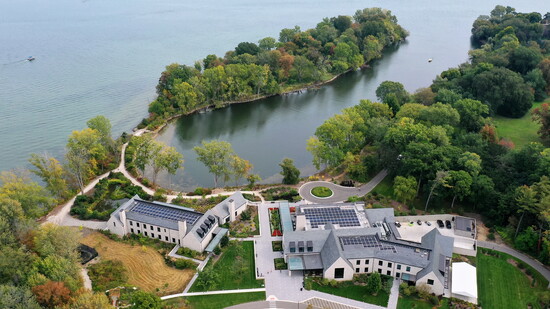
The Edsel & Eleanor Ford House grounds have a whole new look, thanks to an ongoing major initiative whose primary goal is to restore and protect the beloved estate’s natural shoreline and wetlands for generations to come.
The Historic Core Restoration phase, which included restoring one mile of coastline (running from the front of the grounds to the Powerhouse at the back), is now complete. It opened in time for Father’s Day, ahead of schedule, and there is more to come. The goal is to complete the entire project and reopen all areas of the estate to the public by this fall.
“We have been able to restore the one-mile shoreline from an unnatural state into a natural state and restore coastal and forest wetlands, including as many near-shore habitats as we could,” according to Project Manager of Restoration Kevin Drotos. Kevin has served as Landscape and Natural Areas Manager of the Ford House for the last eight years, implementing a strategy to protect the estate’s grounds against invasive species, so it was a natural progression to take on the added role of project manager for the major new installation.
“The result will be a higher quality ecosystem,” says Kevin. “We need to preserve what is here, and restore what we have so it remains true to the intent of the design of the property while always striving for balance so the estate can be enjoyed by future generations. Decisions need to be made in view of variables such as weather patterns and water levels.”
The Shoreline Restoration Project (formerly known as the Lower Lake St. Clair Habitat Restoration Project) is a multi-phased initiative reshaping several areas of the grounds of the 87-acre estate. The project began in 2023, thanks to a $7 million grant from the federal National Oceanic and Atmospheric Administration (NOAA). The process had its origins earlier, in 2015, when Wayne County began reviewing sites in need of shoreline restoration along Lake St. Clair, with its miles of sea wall.
The Edsel and Eleanor Ford House was a leading candidate because of its strong commitment to stewardship of the historic parcel of land, its outreach programs to the surrounding community, including educational programs for schoolchildren, and its universal compliance with ADA Level II (Americans with Disabilities Act) regulations.
If it sounds like a tall order, it was. Kevin holds a BA in Environmental Studies from the University of Michigan and manages a team of seven (including a director and four seasonal staffers) who oversee pruning and plantings throughout the estate. “We care for grounds that are truly a part of Michigan history,” he points out.
“Maintaining it is an interesting blend between historic estate and gardens.”
He prepared a feasibility study for the Shoreline Restoration in 2020, which secured the project's green light.
“We have been able to restore the one-mile shoreline from an unnatural state into a natural state and restore coastal and forest wetlands, including as many near-shore habitats as we could,” Kevin explains.
A key element of the Historic Core Restoration has been the construction of a new berm that has completely transformed how the shoreline looks and functions. The new berm is constructed of a mix of soil, clay, and stones that were graded to protect the shoreline from erosion throughout.
The project required the removal of two and a half acres of concrete that were added with sandbags in 1973 to minimize flooding after Lake St. Clair reached historic high water levels. Gone are approximately 136 old-growth trees along the waterfront (and the potential hazard they posed to visitors from both advanced age and beaver activity).
The new clay-core-engineered berm at the south end of the cove protects a shoreline that has been regraded to a shallower depth. Steeper areas subject to greater wave action have added protection from natural stone and downed trees. A walkway of natural stone has been installed along the top.
The result, Kevin points out, is a berm that is much closer in material use to the natural shoreline that was part of the original estate. “Our goal is to protect the shoreline and plant native trees,” he adds. For every tree removed, the team is planting multiple new trees.
“One of our top priorities has been the use of native plants,” Kevin reports. The plan calls for the establishment of some 200,000 native plugs throughout the grounds, including hundreds of trees and thousands of shrubs.
“The result is higher biodiversity, which means a heightened level of resilience for the landscape, strengthening it against invasive species and/or weather events, as well as increased protection for the shoreline, which is subject to rising and falling wave action and levels of water in Lake St. Clair,” he points out.
The goal is to preserve the estate as a habitat for animals, including more than 200 recorded bird species. Further details are available at www.ebird.com.
Kevin and his team have preserved cuttings from historic Dutch Elm and Ash trees that were originally planted to fulfill Jens Jensen's original landscape design. They have also collected cuttings from the old growth willows that lined the shore. New plantings will have wire mesh to help protect against beavers.
Another major focus has been Bird Island, which has benefited from several restoration techniques. Restoration efforts have involved the removal of concrete. In the past, concrete and cement slabs were placed along the shoreline of Ford Cove to prevent erosion. But their placement negatively affected the natural habitats of many native species.
“By restoring the shoreline to its natural condition, we can support local wildlife and provide a higher level of sustainable care to the estate and its shoreline. We were able to soften the shoreline along the cove side, which receives very low wave energy. The result will be pleasing to the eye, using native plants to stabilize the shoreline all the way to the water’s edge. “Our goal is to protect the shoreline and increase biodiversity; one of our top priorities has been the use of native plants.” More than 100 native species will be installed (such as Cardinal Flower, Blue Flag Iris, Rushes, Sedges, and other grasses).
The lakeside of the island, which is subject to higher wave energy and wind, has been shored up using natural stone in a technique called a Dynamic Revetment that will, over time, shape the shoreline and eventually mimic a natural cobble beach. Dredging will restore water flow between the lake and the cove sides through a small channel at the island's entrance. The final piece is the installation of a boardwalk to maintain Bird Island's wetland ecosystem.
The latest phases of the project follow on from the construction of a wetland boardwalk at the south end of the property that was completed last year. At the project’s conclusion this fall, all areas of the grounds will be opened and accessible to the public once more.
“The result is higher biodiversity, which means a heightened level of resilience for the landscape, strengthening it against invasive species and/or weather events, as well as increased protection for the shoreline, which is subject to rising and falling wave action and levels of water in Lake St. Clair,” Keven reports. “This project allows the Ford Estate to be a model for other organizations in shoreline restoration that uses different techniques to achieve the best possible outcomes, and all of it, in our case, is universally accessible.
“This project reflects our deep, long-term commitment to environmental sustainability and responsible stewardship of the Lake St. Clair shoreline,” Kevin says. His hope is that the work will serve as an example of best practices for shoreline restoration while also serving as an ongoing steward of a property that has a truly unique place in history.
“That is what the Ford Estate legacy is all about.”
For further information about the Edsel and Eleanor Ford House and detailed updates on the Shoreline Restoration Project, including visiting hours, please visit: www.fordhouse.org.
"This project allows the Ford Estate to be a model of shoreline restoration techniques for other organizations.”
NATIVE PLANTS FOR GREATER RESILIENCE
“One of our top priorities has been the use of native plants,” Kevin reports. The plan calls for establishment of some 200,000 native plugs throughout the grounds, including hundreds of trees and thousands of shrubs.
“The result is higher biodiversity which means a heightened level of resilience for the landscape, strengthening it against invasive species and/or weather events, as well as increased protection for the shoreline which is subject to rising and falling wave action and levels of water in Lake St. Clair,” he points out.