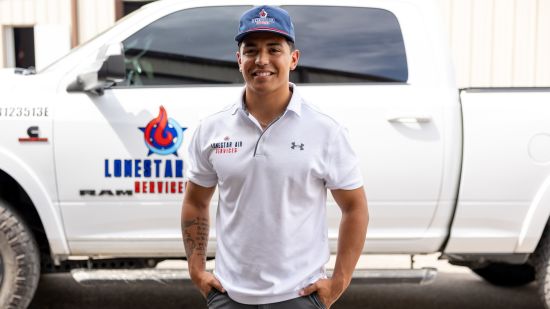
From Army Service to Skilled Trades: A Shared Path at Lonestar Air Services
Two Army veterans discover a familiar connection while building careers in Central Texas.
For many military veterans, transitioning into civilian life means more than finding a new job. It means discovering where their skills, experience, and sense of purpose fit into an entirely different environment.
At Lonestar Air Services, a locally owned heating and cooling company serving New Braunfels and surrounding communities, that transition recently brought two Army veterans together in an unexpected way.
Steven Gongora, owner of Lonestar Air Services, served in the United States Army before eventually building his own HVAC company. When the opportunity arose to bring another Army veteran onto the team, the connection went beyond their shared military background.
As it turned out, both men had served in the same Military Occupational Specialty, commonly referred to as an MOS.
In the Army, an MOS identifies a soldier's specific job and area of training. While thousands of soldiers share the experience of military service, discovering that someone followed the same occupational path creates an additional point of connection.
For Steven, welcoming a fellow veteran into the company was an opportunity to offer something that can be especially valuable during the transition to civilian life: a place to learn, contribute, and build a future.
A New Mission in the Skilled Trades
After completing his military service, Lonestar's newest team member began pursuing a career in heating and air conditioning.
While attending HVAC school, he joined the company as a part time apprentice, gaining practical experience alongside experienced technicians as he worked toward completing his education.
His transition reflects a path that many veterans pursue after leaving the military. The skilled trades offer opportunities to apply qualities developed during service, including discipline, accountability, teamwork, and the ability to adapt to changing circumstances.
Of course, learning a new trade requires an entirely different set of technical skills. Classroom education provides the foundation, while hands-on experience helps new technicians understand how that knowledge applies inside real homes.
At Lonestar, the apprenticeship offers an opportunity to develop both.
The Value of Shared Experience
Military service creates a unique understanding between those who have experienced it.
There is a familiarity with expectations, responsibility, and the importance of relying on the people around you. For veterans entering a new industry, that shared background can make the transition into an unfamiliar workplace feel a little more familiar.
The connection between Steven and his newest apprentice is particularly meaningful because their military experiences included the same occupational specialty.
Although their careers have taken different paths since leaving the Army, they now share another professional connection through the HVAC industry.
For Steven, who began Lonestar Air Services as a one man operation, growing the company has created opportunities to invest in people as well as equipment and infrastructure.
Each new employee represents an opportunity to share knowledge, establish expectations, and help someone develop a career they can take pride in.
Building Something Beyond the Business
The transition from military service to civilian employment looks different for every veteran. Some pursue higher education, others enter corporate careers, and many discover opportunities in industries they had never previously considered.
Skilled trades such as HVAC offer a combination of technical education, practical problem solving, and long term career development.
For locally owned businesses, hiring veterans can also create opportunities for mentorship that extend beyond the workplace.
At Lonestar Air Services, the addition of another Army veteran reflects the company's roots and its commitment to developing the people behind the service.
What began as two soldiers serving in the same occupational specialty has become a new connection built around craftsmanship, continued learning, and a shared commitment to serving others.
Their uniforms may look different today, but the value of service remains.