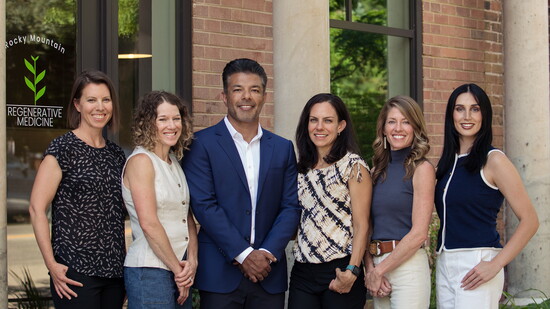
Some stories begin with a leap of faith. Dr. Khoshal Latifzai’s began with several. Born in Kabul to a civil engineer father and a school-teacher mother, he grew up in a city where war edged closer each year. “Eventually, they made the decision that most people hope they’ll never have to make,” he says. “They chose the unknown over the unacceptable.” His family fled first to Pakistan, then to the United States.
In Kansas City, Latifzai entered fourth grade unable to speak English. “My teachers were extraordinarily kind and encouraging,” he recalls. His parents worked multiple jobs, and he and his siblings built routines around discipline and focus. By sixth grade, he was taking high school algebra. That ethos—steady effort, no shortcuts—propelled him through college, Ivy League medical school, and one of the nation’s most competitive emergency medicine residencies.
Years later, settled into a successful ER career in Colorado, another turning point surfaced. “I realized that the work I was doing, as meaningful as it was, wasn’t aligned with the deeper impact I wanted to make,” he says. He stepped off the traditional track and built Rocky Mountain Regenerative Medicine from the ground up in Boulder.
The clinic reflects his belief that modern healthcare often relies on speed rather than understanding. “People become diagnostic codes,” he says, explaining that the system wasn’t built for truly knowing someone. At RMRM, he sought to reverse that dynamic—longer conversations, deeper testing, and a personalized, tech-forward model rooted in prevention, not reaction.
Regenerative medicine offered the philosophy he’d been looking for. “The human body wants to heal itself,” he explains. Instead of interrupting that process with quick fixes, biologic therapies aim to amplify it. Stem cells, for instance, function as the body’s “master repair cells,” but decline with age. At RMRM, the patient’s own cells are collected and expanded under controlled conditions, “where only the strongest cells survive.” When reintroduced, he says, “it’s like releasing a team of highly trained specialists who already know where the work needs to be done.”
These therapies extend beyond injury recovery. They can support cognitive healing, rejuvenate skin, and enhance longevity—especially when paired with hormone optimization, peptides, advanced diagnostics, and hyperbaric oxygen therapy. “The real breakthrough isn’t one therapy,” he says. “It’s the way stem cells, hormones, peptides, hyperbaric oxygen therapy, lifestyle interventions, and advanced diagnostics can be woven together into a personalized, forward-looking plan.”
Technology ties the clinic’s collaborative approach together. Shared platforms keep every provider informed, while frequent biomarker testing offers a clear picture of a patient’s trajectory. Normal doesn’t always mean optimal, he says. The goal is not average health—it’s peak function.
The atmosphere inside RMRM mirrors its philosophy. “We’re not trying to change the entire healthcare system,” he says. “We’re building our own model right here in Boulder, one that feels human and meaningful.”
It’s a model shaped by his parents’ early lessons—courage, grit, and the willingness to choose purpose over certainty. “You can choose the unknown over the unacceptable,” he says. “You can work with what you have, do your best, and build a life that reflects your values.”