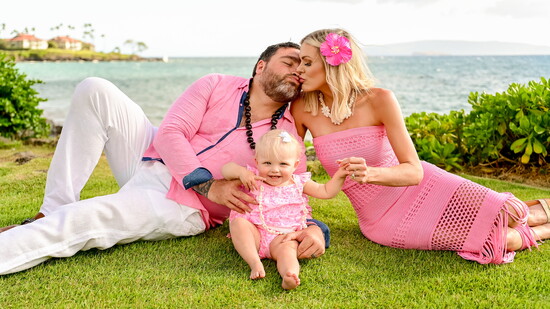
For Christina Payton and Chris Ourganian, helping people isn't just what they do—it's who they are.
Known professionally throughout Naples as Christina Payton, owner of House of Blondes, Christina has built a career helping people look and feel their best. Her husband, Chris Ourganian, owner of Coastal Chiropractic, has dedicated his career to helping patients improve their health, restore mobility, and live with less pain.
While beauty and chiropractic care may seem like very different professions, the couple sees a common thread running through both. Whether it's through confidence, wellness, healing, or self-care, Christina and Chris have built careers centered around improving the lives of others. That shared purpose has become the foundation of their businesses, their family, and their commitment to the Naples community.
At House of Blondes, Christina has created more than a salon. She has built a place where people can relax, recharge, and invest in themselves. Every appointment is an opportunity to help someone feel more confident and leave a little happier than when they arrived.
Meanwhile, Chris approaches wellness from another perspective. Through Coastal Chiropractic, he works closely with patients seeking relief from pain, improved movement, and a healthier quality of life. Together, the couple often jokes that Christina helps people feel their best on the outside while Chris helps them feel their best on the inside.
But for Christina, one of the most meaningful things she does happens outside the salon chair.
Each month, House of Blondes hosts what has become known as "Gift Day."
The concept is simple yet powerful. Members of the community nominate women through the salon's website or through a dedicated link in the salon's Instagram bio. The nominations often tell stories of women who have overcome tremendous challenges, faced difficult circumstances, or spent years putting everyone else's needs ahead of their own.
Once selected, the recipient is treated to a completely customized day of beauty, self-care, and wellness services—entirely free of charge.
There is no package, no limit, and no price tag.
"It's 100 percent donated," Christina explains. "There isn't a value attached to it because that's not the point. We give them whatever they need and whatever will make them feel special."
The entire House of Blondes team participates, donating their time and talents to create an unforgettable experience. Over the years, local businesses have also joined the initiative, contributing wellness treatments, self-care services, and other experiences to make each recipient's day even more meaningful.
For Christina, Gift Day has become one of the most rewarding parts of owning House of Blondes.
"Seeing someone walk in feeling unseen and leave feeling celebrated, appreciated, and confident is incredible," she says. "It's one of my favorite things that we do."
That spirit of giving extends well beyond the walls of the salon.
Christina is a passionate supporter of Path2Freedom, a nonprofit dedicated to helping survivors of human trafficking rebuild their lives and reclaim their futures. In fact, she is currently planning a major fundraiser at House of Blondes to support the organization's mission and raise awareness throughout the community.
The family is also deeply involved with Starability Foundation, a Naples-based nonprofit that empowers individuals with intellectual and developmental disabilities through social, educational, and vocational opportunities.
This year, Christina took that commitment a step further by hiring her first team member through Starability.
"She starts in August, and we couldn't be more excited," Christina says. "Creating opportunities and helping people grow is something that's incredibly important to us."
At home, that same spirit of love and purpose revolves around their daughter, Payton, who recently celebrated her first birthday.
For Christina and Chris, becoming parents has brought a new perspective to everything they do. Watching Payton grow, learn, and experience the world has strengthened their desire to create positive change both in their community and beyond.
"She has completely changed our lives in the best possible way," Chris says. "She reminds us every day of what truly matters."
Of course, no story about the Ourganian family would be complete without mentioning Blondie, Barley, Biscuit, and Benny—the family's four beloved dogs and unofficial mascots.
Blondie, in particular, has become something of a celebrity around House of Blondes. Christina laughs that Blondie considers it her full-time job to report to work and snuggle clients.
"She gets upset if someone won't let her sit on their lap," Christina says. "She thinks every client comes in specifically to see her."
Given that her name is on the building, Blondie probably feels entitled to a few special privileges. As the salon's self-appointed director of client relations, she accompanies Christina to work most often, though Barley, Biscuit, and Benny all make appearances from time to time.
Together, the four pups, one busy toddler, and two purpose-driven entrepreneurs create a home filled with love, laughter, and plenty of joyful chaos.
Whether helping someone regain confidence in a salon chair, recover from pain, find opportunity through employment, or rebuild a life after hardship, Christina Payton and Chris Ourganian share a simple belief: making a difference starts with caring for people.
And from the inside out, they're doing exactly that.
"We're both helping people feel better," Christina says. "Just in different ways."
Stay tuned for more information regarding a fashion show fundraiser Christina is hosting at HoB benefitting Path2Freedom in October! We'll post more details on our Events page in our September Style issue...