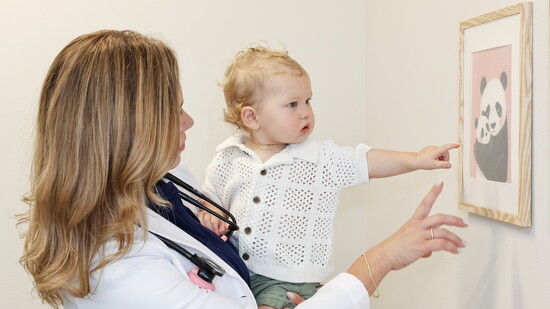
Parenting has never been easy, but it certainly feels more complicated than ever before. Every day, parents are bombarded with advice about what their children should eat, how much they should sleep, which activities they should participate in, and how much screen time is too much. Social media has created a world where parenting is constantly on display, often leaving families wondering whether they are doing enough or doing it right.
During my conversation with Dr. Melinda Hierholzer of Whole Health Pediatrics, I was struck by how different her perspective felt from much of the advice circulating online. There was no discussion of perfection, no emphasis on trendy solutions, and no promise of a magic formula for raising healthy children. Instead, her message centered on something far more reassuring: children thrive when families focus on the fundamentals and give themselves permission to stop chasing perfection.
As both a pediatrician and a mother of four, Dr. Hierholzer understands firsthand that every child is unique. What works beautifully for one child may not work at all for another. That reality often gets lost in today's culture of quick fixes and one-size-fits-all solutions. Families frequently arrive at her office overwhelmed by conflicting information and uncertain about which voices they should trust. Her approach begins by helping parents tune out the noise and return to the basics that have always mattered.
Those basics may sound surprisingly simple. Quality sleep, nutritious food, daily movement, and meaningful connection continue to be some of the most powerful predictors of long-term health. While those habits rarely make headlines, Dr. Hierholzer believes they have a far greater impact on a child's future than any supplement, trend, or viral parenting strategy.
Sleep, in particular, has become one of the most overlooked aspects of childhood health. In a world filled with busy schedules, extracurricular activities, homework, and screens, rest is often treated as optional when it should be considered essential. Children who consistently get adequate sleep are better equipped to regulate their emotions, focus in school, support their immune systems, and navigate everyday challenges. When sleep suffers, many other areas of health begin to suffer alongside it.
Nutrition is another area where Dr. Hierholzer encourages families to take a practical and sustainable approach. Rather than focusing on strict rules or dramatic lifestyle overhauls, she advocates for small changes that can be maintained over time. Helping children develop a healthy relationship with food begins with simple habits such as introducing more whole foods, preparing meals together, and teaching children to understand what they are putting into their bodies. Those lessons extend far beyond childhood and often shape the choices they make throughout adulthood.
The conversation naturally turned toward movement, a topic that has become increasingly important as childhood becomes more screen-centered. Dr. Hierholzer believes some of the healthiest forms of exercise are also the simplest. A child racing across a backyard, riding a bicycle through the neighborhood, climbing a tree, or playing with friends is doing far more than burning energy. Those experiences build confidence, creativity, coordination, and a lifelong appreciation for being active.
One of the most compelling parts of our discussion focused on anxiety, which Dr. Hierholzer is seeing with increasing frequency among children of all ages. Many parents expect anxiety to present as worry or nervousness, but it often appears in less obvious ways. Headaches, stomachaches, sleep disturbances, irritability, and behavioral changes can all be signs that a child is struggling. Modern childhood moves at a relentless pace, and many young people have little opportunity to slow down and simply exist without expectations or obligations.
Dr. Hierholzer believes unstructured time plays an important role in healthy development. Children need opportunities to be bored, to use their imagination, and to learn how to entertain themselves. Those quiet moments are often where creativity develops and resilience is strengthened. Childhood does not need to be filled every hour of every day in order to be meaningful.
That philosophy extends to technology as well. Screens are now part of everyday life, and few families are interested in eliminating them entirely. The greater challenge is teaching children how to develop a healthy relationship with technology while protecting the experiences that matter most. Family meals, outdoor play, conversations, reading, and quality time together continue to provide benefits that no device can replicate.
For our Kids & Pets issue, I was especially interested in Dr. Hierholzer's thoughts on the connection between children and animals. Pets provide much more than companionship. They help children learn responsibility, empathy, patience, and compassion. Caring for another living being teaches lessons that are difficult to recreate elsewhere. The bond between a child and a pet often becomes one of the most memorable and meaningful relationships of childhood.
Perhaps what stood out most throughout our conversation was Dr. Hierholzer's belief that prevention begins long before illness appears. True pediatric care involves understanding how a child sleeps, eats, moves, manages stress, and connects with the people around them. Those daily habits create the foundation upon which lifelong health is built.
As parents, it is easy to feel pressure to do more. More activities. More enrichment. More opportunities. Dr. Hierholzer offers a different perspective. Healthy childhoods are rarely built through grand gestures. More often, they are shaped by the small, consistent moments that happen every day—family dinners, bedtime routines, conversations in the car, walks around the neighborhood, and the simple act of being present.
That philosophy is what sets Whole Health Pediatrics apart. Dr. Hierholzer has created a practice that blends evidence-based pediatric medicine with a whole-child approach, giving families something that has become increasingly difficult to find in modern healthcare: time, accessibility, and a true partnership. Through her concierge-style model, she provides personalized care, longer appointments, direct access to her office, and a focus on prevention, lifestyle, and the overall well-being of every child she serves. Rather than simply treating symptoms, she works alongside families to understand the bigger picture and create a foundation for lifelong health.
For families searching for a pediatrician who values relationships as much as results, Dr. Hierholzer offers a refreshing alternative to the traditional healthcare experience. Her goal is simple: to help children thrive physically, emotionally, and developmentally while giving parents the confidence that comes from having a trusted expert in their corner. As she puts it, every family deserves a pediatrician who knows their child's name, understands their story, and is invested in their future.
To learn more about Dr. Melinda Hierholzer and Whole Health Pediatrics, visit Whole Health Pediatrics or call (941) 352-5437 to schedule a consultation.