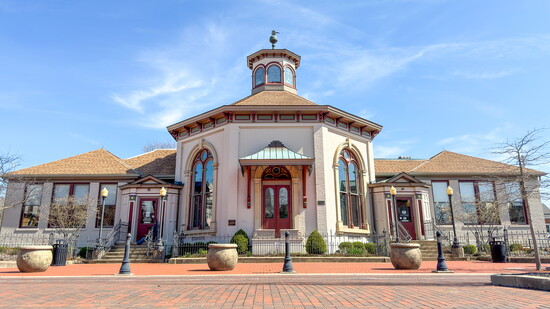
Long before Hamilton became known for its mills, factories and grand homes, it began as a frontier outpost along the Great Miami River. Fort Hamilton was built in 1791 and named for Alexander Hamilton, then Secretary of the Treasury. The fort closed only a few years later after the Treaty of Greenville, but by then, families had already begun settling nearby. Over time, those early roots grew into three distinct neighborhoods that still help tell the story of Hamilton’s rise.
German Village Takes Shape
By the mid-1800s, German immigrants were arriving in Hamilton in large numbers. Many settled east of the Great Miami River, near the canal system that helped fuel the city’s growing industrial strength.
German Village became a close-knit neighborhood of homes, churches, schools and businesses. It was also a neighborhood of contrasts. Business owners and factory leaders often lived in large, impressive homes, while workers and tradesmen built smaller, more modest houses nearby.
“German Village is the oldest established neighborhood in the city,” says Brian Smith, Executive Director of the Butler County Historical Society. “There were business owners, industrialists in the 1860s, beginning to create industrial might Hamilton would have for 100-plus years.”
The neighborhood’s architecture reflects that history, with Gothic Revival, Italianate and Queen Anne influences still visible today.
Dayton Lane Shows Hamilton’s Prosperity
As Hamilton’s industries grew, so did the fortunes of the families behind them. Many of the city’s next generation of successful industrialists built homes along Dayton Lane and Campbell Avenue.
Their wealth came from paper mills, woolen mills, railroads and banking—the businesses that supported Hamilton’s industrial boom. The homes they built were designed to show it.
“There were many homes with towers and turrets,” Brian says. “At the time, making something round was a sign of wealth. There was a great expanse to these homes with wraparound porches and ornamental ironwork. All this is a sign of wealth.”
Decorative brickwork, stained glass, slate roofs and intricately carved interiors made these homes stand out. The Dayton Lane district remains known for its Queen Anne-style architecture.
Rossville Grows Across the River
Across the Great Miami River, Rossville had been settled since the 1850s. But many of its most impressive homes came later, after 1900, as Hamilton’s growth continued westward.
Large brick mansions, decorative porches, ornamental woodwork and carriage houses helped establish Rossville as one of the city’s most prestigious neighborhoods.
By the 1920s, Hamilton had become a leading manufacturing and industrial center. German Village, Dayton Lane and Rossville each grew alongside the city, preserving a different chapter of its story.
Today, all three of these neighborhoods are listed on the National Register of Historic Places. Explore history with a tour through Hamilton, one street at a time.
About This Series
West Chester + Liberty Lifestyle celebrates America250 with stories featuring stops on the Time Travel Trail, sponsored by Travel Butler County. These historic sites highlight the important role Butler County played in the settling of Ohio and the United States. TravelButlerCounty.com