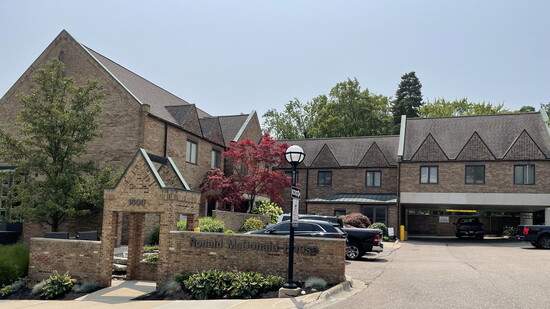
Picture this: it’s late within the hospital walls. Children feel the anxiety of nightfall—not of sleep, but of separation. Of watching parents leave amidst the unknown. Of leaving a sibling behind in the hospital. A family with an infant hospitalized at C.S. Mott Children’s Hospital huddles beside two LED lamps. They carry one lamp to the window and their toddler son hugs his mom, who will remain by the baby’s bedside, goodbye. He and his father walk the 900 feet to the Ronald McDonald House sitting steadfast across the street. They move quickly to their room and scan the hospital windows until they find it: a small, steady glow. They place their lamp on the windowsill in reply, reuniting the family with a gentle beam of light.
Shared by CEO Kim Kelly, this story reflects a profound truth: Ronald McDonald House Ann Arbor does more than provide lodging. It provides comfort and the assurance that families are never far from their hospitalized children. “It isn’t necessarily the nice-to-have to be close—it’s the necessity to be close,” Kelly says.
Located steps from Mott, the House is a home-away-from-home for those navigating life’s most uncertain moments. One of 390 programs worldwide, its mission is rooted in care, comfort, and closeness. In Ann Arbor, the House has 43 rooms—an expansion from its original 23—including 12 rooms within Mott for acute cases. Over 40 years, more than 32,000 families have passed through its doors. While the average stay is 43 nights, one family remained for 450. Each number reflects more than occupancy; it reflects the resilience of these families. This isn’t temporary lodging, but sustained support during prolonged crisis.
While parents move between appointments and long hours bedside, the burdens of life are lifted. Families return to stocked pantries, clean rooms, and prepared meals. It’s a simple but profound relief: not having to think of where to rest, or how to sustain themselves through uncertain days. The playroom and donated toys offer siblings space to let go. Through the Heroes of Hope program, kids choose superhero capes before heading to visit their brother or sister—small costumes carrying big courage. The House marks holidays with activities so families don’t feel they’re missing out while life is paused. Behind it all is trauma-informed care: staff members are trained to meet guests where they are, mindful that “good morning” doesn’t always fit. Instead, it’s: What do you need today?
For Kelly, the impact is found in small moments. She recalls a mother arriving distraught as her child prepared for heart surgery. Kelly asked, “Do you need a hug?” The mother collapsed into her arms. Later, she told Kelly, “I don’t know what I would do without all of you.” The outcomes aren’t always easy, but the mission remains: to stand alongside families, step by step, when they’re carrying more than they ever imagined.
Meeting that mission requires constant adaptation, and time has revealed a difficult truth: there isn’t enough space for every family who needs it. When rooms are full, the organization funds hotel stays. This January alone, over 120 hotel nights were provided. The House has stretched every available space, yet the need remains. Kelly and her team are exploring ways to meet greater demand and better serve families.
Community support is the engine. Donations fund operations, while volunteers bring the House to life—stocking snacks, preparing meals, knitting, lending an ear. The organization operates two hospitality carts at Mott, bringing comfort items directly to the bedside. Support extends beyond the House, including close to 1,000 Comfort Care Bags distributed to NICU families at Trinity Health over the past three years. For those who want to help, Kelly encourages starting simply: come learn the mission or explore the “How to Help” section of the website. Whether through giving, volunteering, or hosting a fundraiser, the goal is the same: remove barriers so families can stay close.
Over time, many families return as volunteers. Kelly has watched fragile patients grow into thriving people who stop by just to say hello. “They become a part of our family,” she says. Kelly often thinks of a message from one grateful member of a family who stayed at the House: “We hope you never need a Ronald McDonald House. But if you do, it’s here.” For thousands of families, that promise—waiting just across the street—has made all the difference.
Learn more, donate, or sign up to volunteer at rmhcannarbor.org.
“We hope you never need a Ronald McDonald House. But if you do, it’s here.”