There’s a moment that happens when you travel enough—not when you arrive, but when you slow down. When you stop seeing a destination as a backdrop and begin noticing how it functions. How people live. How they move through their days. How your presence fits into their world.
That’s when travel shifts from consumption to consideration.
The most meaningful journeys begin with a simple understanding: when we travel, we are stepping into someone else’s home.
A Simple Question That Changed How I Travel
On a recent trip to the Caribbean, I found myself doing what many American travelers do without thinking twice: paying in U.S. dollars. The USD is widely accepted across many islands and often preferred because of its strength. It feels easy. Familiar. Efficient.
But one afternoon, I asked my taxi driver a question I had never asked before: “Do you prefer being paid in U.S. dollars or local currency?”
He paused before answering, and what he shared stayed with me. While U.S. dollars are accepted, they aren’t always preferred. When locals receive USD, they often have to step away from work to exchange it into local currency. That means travel time, long lines, and exchange-rate fees that quietly reduce their earnings.
What felt like convenience for me created extra labor for him.
That small exchange reshaped how I think about financial support while traveling. Supporting a destination isn’t just about spending money; it’s about how that money circulates. Using local currency keeps funds moving immediately within the community, respects people’s time, and preserves value where it matters most.
Sometimes, being a thoughtful traveler starts with asking better questions.
Cultural Awareness Is More Than Courtesy
Respect for a destination also means understanding its rules, customs, and history, especially when they differ from home.
In several Caribbean countries, for example, civilians are prohibited from wearing camouflage clothing. This isn’t a fashion preference; it’s rooted in respect for the military and national security. Travelers unaware of this law can face fines or confiscation, but more importantly, they risk unintentionally signaling disregard for local norms.
Taking time to understand local etiquette—whether related to dress, public behavior, or photography—signals: I value where I am, and I took the time to learn.
Supporting the Places That Welcome Us
Where travelers choose to stay has a lasting impact, often in ways that aren’t immediately visible.
Many locally owned boutique hotels across the Caribbean function as more than accommodations; they serve as cultural gathering spaces. On one visit, I noticed original artwork displayed throughout a hotel’s lobby. Each piece was created by a local artist, accompanied by a description of the artist’s background and the story behind the work. I later learned that the hotel rotates these collections every six months, offering multiple artists a platform for visibility, income, and connection with travelers. Many of the pieces are even available for purchase, allowing guests to take home something far more meaningful than the typical souvenir.
These thoughtful details reflect a deeper commitment to community, one that goes beyond aesthetics and into economic empowerment and cultural preservation.
I’ve also experienced properties where the hotel itself isn’t a barrier but an invitation. In these spaces, locals and visitors gather naturally—to listen to live music, share meals, and enjoy each other’s company. The energy feels different. Less transactional. More communal.
While some larger brands, by design, separate guests from the surrounding community, many boutique properties intentionally blur that line. They create environments where connection is encouraged and culture is lived, not staged.
Choosing to stay in places like these doesn’t just support tourism; it supports artists, musicians, chefs, and entrepreneurs whose work gives the destination its soul. And for travelers, it offers something increasingly rare: the opportunity to feel genuinely welcomed, not just accommodated.
Respecting What Lies Beneath the Surface
Respect for a place also extends below the surface, sometimes quite literally.
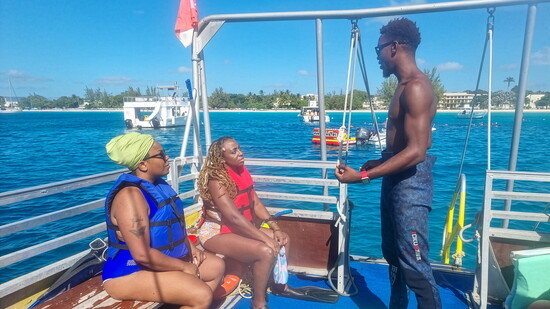
Through partnerships and conversations with local experts in Barbados, I’ve learned about the devastating effects of stony coral tissue loss disease, a fast-spreading marine illness threatening Caribbean coral reefs. To many visitors, reefs are simply beautiful backdrops for snorkeling or boat excursions. For island communities, they are living ecosystems that protect shorelines, support fisheries, and sustain tourism itself.
Hearing directly from local marine professionals shifted how I approach ocean-based experiences, and how I educate travelers. Something as routine as sunscreen choice can have long-term consequences. Certain chemical sunscreens accelerate reef damage, while reef-safe alternatives help reduce harm. Even excursion choices matter, as eco-conscious operators follow practices designed to protect marine life rather than disrupt it.
When travelers understand what’s at stake, their behavior changes. Awareness leads to intention. And intention leads to preservation.
Sustainable travel isn’t about limitation. It’s about responsibility. It’s recognizing that these environments are not attractions. They are homes, livelihoods, and legacies.
Treating Places Like Home
The idea of “home” doesn’t disappear when we travel. If anything, it becomes more important.
Home is where people feel respected. Where routines matter. Where resources aren’t taken for granted. Treating places like home, even when traveling, means being mindful of impact, curious about culture, and humble enough to learn.
It’s choosing local vendors. Understanding laws before arrival. Recognizing that what feels small to a visitor may carry weight for a resident.
True luxury isn’t excess. It’s care.
Leaving Changed, and Leaving Something Good Behind
Island destinations give generously—through culture, beauty, music, and warmth. Traveling well means responding with equal consideration.
When we treat places like home, travel becomes less about escape and more about exchange. We return not only with memories, but with perspective and a deeper appreciation for how interconnected we truly are.
And that, perhaps, is the most meaningful souvenir of all.
Olivia Barr is the founder of Caribbean Island Festivals, a boutique travel concierge that curates immersive Caribbean experiences rooted in culture, community, and connection. To learn more visit www.caribbeanislandfestivals.com.
The most meaningful journeys begin with a simple understanding: when we travel, we are stepping into someone else’s home.
Home is where people feel respected. Where routines matter. Where resources aren’t taken for granted. Treating places like home, even when traveling, means being mindful of impact, curious about culture, and humble enough to learn.