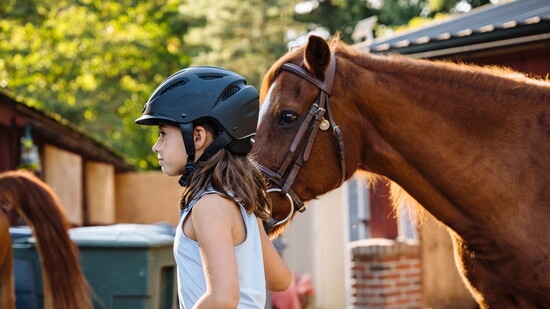
Sitting atop Nod Hill in Avon are the tranquil, carefully maintained grounds of US Horse Welfare & Rescue. Every day, groups of volunteers arrive at 6 a.m. sharp to clean, prep water and feed, and tend to the 15 rescue horses that the organization has taken in since founding in 2016. Some of the horses are seniors, some are thoroughbreds, others were given up by previous owners, and all are receiving lifelong care after being saved from sure death.
USHWR started as a horse rescue, buying as many horses as it could from auction houses at great expense. Now, with the facility at capacity, volunteers focus their efforts on advocacy and keeping horses from entering the pipeline towards death row in the first place. They also work to connect horse owners to farms and families they know will be able to take in horses in need of care. Over their 10 years of operation, they have directly saved nearly 100 horses from entering the pipeline.
It is unfortunately common for horse owners to be forced to give up their animals due to costs or changes in lifestyle, and even the most well-meaning people cannot control what happens to their horse after rehoming. Too many horses end up in places like the New Holland Auction House, where it is frighteningly easy for bad actors to snap them up. Horses purchased in this way can be resold for exorbitant prices; resellers threaten slaughter unless the animal is purchased, preying on people’s empathy. Horses that are not rescued, or aren’t seen as worthwhile at the auction houses, are often transported across the border to be killed. The ones that survive are put through incredible stress as they are moved and rehomed, sometimes multiple times.
“It can be hard,” says USHWR founder Susan Mitchell. Some horses can be uncooperative during a move, and many have health conditions that can be expensive and time-consuming to manage. Mitchell takes great care to vet the people who will be taking in these long-living animals, and it can be a slow process to find someone with the capacity for another animal. It’s part of USHWR’s mission to do this right, and the completely volunteer-led organization is willing to put in the work to ensure horses’ safety.
Even more critically than the rescue of individual horses, USHWR maintains a lobbyist in D.C. who works to get laws on the books to protect horses nationwide. They helped introduce the SAFE act, which will enshrine protections against slaughtering horses for human consumption and preventing the sale of horses for those purposes. This act is still in the process of becoming law, and USHWR is working to keep it moving forward.
Mitchell has been involved with horses since she was young. She fondly remembers pony rides at birthday parties and summer camp experiences. She was forced to step away from the hobby when she went to college, but with her husband’s encouragement, she got back into caring for horses in 2010. She founded the rescue after being put on bedrest following knee surgery, using the time to research the horse slaughter pipeline. She was particularly moved by the story of a young girl who had to give up her horse, but when they miraculously reconnected years later, the horse remembered her.
“Horses have such deep emotion,” Mitchell explains. They have long memories, and a way of connecting with humans – particularly neurodivergent children. She has seen kids with depression or anxiety remarkably soothed, and those with ADHD and autism find great satisfaction and focus. Spending time up at the barn is a perfect way to get away from the overstimulation of technology, as well.
Expanding programs for seniors is a priority. Too many are left alone for long, empty days, but through community outreach, the organization has been able to bring many in for sessions with the horses. Mitchell spoke about the incredible success the programs have for people with Alzheimer's. “I would have spouses come to me and say they haven’t seen their partner smile like that in years.” Their spouses had more good days, and were more aware and social for longer following their horse session.
Mitchell is thrilled to share these stories. “Horses can help everyone,” she says.
The organization is working in the community to increase awareness, both of the dangers of the slaughter pipeline and horses’ incredible nature. At The Ethel Walker School, non-riding students have the opportunity to work with horses. USHWR is also developing programs to help young girls in urban environments, as well as food-insecure adults.
A contingent of wonderful volunteers takes excellent care of the horses, but people have busy lives, and volunteer time is the first thing cut when they have to rebalance. Grants could help support operating costs, but they don’t have a grant writer to seek them out. Instructors are all paid experts. “We want to incentivize people giving their best work,” Susan says. Without the volunteers, costs would be too high.
Lessons and programs are what propel them to keep serving the community and continuing their mission. While every donation is important, the consistency of lessons ensures they can buy feed and maintain the barn, while keeping the pressure on in D.C.
Thankfully, USHWR is supported by an incredible community, allowing it to continue serving its mission. New volunteers are always welcome. Mitchell is immeasurably grateful to all her volunteers and to everyone involved. Horses are wonderful, brilliant creatures with the power to impact people’s lives, and thanks to everyone’s generosity, this organization is able to help keep them safe.