For Michelle Boniface St. John, Maryland’s Thoroughbred industry has never been limited to what happens at the racetrack. Growing up on Bonita Farm in Darlington, she witnessed the network of people, farms, businesses, and communities behind every horse that makes it to the starting gate.
Her family has deep roots in the sport. Her grandfather, Bill Boniface, trained Deputed Testamony, winner of the 1983 Preakness Stakes. Today, St. John serves as Executive Director of Bonita Farm Thoroughbred Stewardship and is involved with the Maryland Thoroughbred Partnership, an effort to help more people understand the industry and its impact throughout the state.
“We in the industry know that horse racing is full of incredible stories about people, the horses they care for, employment and economic opportunities, and the racing history in our state,” St. John said. “We feel it’s our duty to educate the public about what our sport brings to Maryland and its people.”
Harford County horseman and industry advocate Jim Dresher led the creation of the Partnership, bringing together horsemen, storytellers, racing executives, and public relations professionals. Their goal is to share a broader picture of an industry many Marylanders may associate primarily with the Preakness.
Behind race day, St. John said, are trainers, breeders, veterinarians, feed suppliers, blacksmiths, hot walkers, grooms, and others whose work contributes to a horse’s well-being and creates career opportunities for people with varied backgrounds and experience.
“Growing up on Bonita Farm in Darlington, I have witnessed the devotion that all these different people have to the horses,” she said. “They give so much to the horses, and in turn, the horses support their livelihoods and the wellbeing of their families and communities.”
The industry also plays a role in preserving Maryland’s agricultural landscape. More than 700,000 acres statewide are associated with horse operations, according to St. John, representing approximately one-quarter of Maryland’s agricultural land.
“Harford and Cecil County have some of the most beautiful open farmland in the state, and farmers and horsemen have always worked together to protect that land for the benefit of horses and all of us,” she said.
Maryland’s racing history stretches back generations, but the Partnership is equally focused on its future. St. John points to the opportunities horses continue to create, whether for an aspiring jockey, a first-time owner, or someone discovering a potential career within the industry. “For me, seeing how horse racing opens doors for people is always awe-inspiring,” she said.
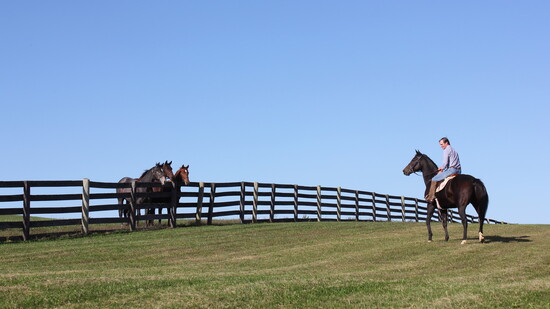
That future also includes responsibility for Thoroughbreds after their racing careers end. Industry-supported aftercare organizations help retrain horses for new roles or provide retirement care. Maryland’s broader equestrian community offers additional opportunities for former racehorses in disciplines ranging from eventing to steeplechase. At Bonita Farm, that commitment inspired the creation of Bonita Farm Thoroughbred Stewardship, a nonprofit focused on aftercare while also inviting the public to experience farm life and learn about the industry.
For St. John, gratitude for the Thoroughbred community begins with the experience that shaped her own life. “I was incredibly fortunate to grow up on a Thoroughbred farm,” she said. “Not only was raising and training Thoroughbreds our business and livelihood, but just getting to be around these incredible animals every day gives a sense of groundedness and peace which I wish every person could experience.”
She sees the same qualities horses taught her, particularly patience and perseverance, in the people who have sustained Maryland racing through challenging years.
“Their passion for the sport and the horses, and the momentum and support behind the changes that our industry is making, will only lead to a brighter future for horse racing and for Maryland.”
For me, seeing how horse racing opens doors for people is always awe-inspiring.