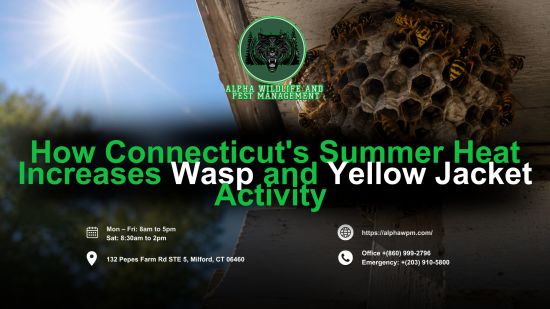
How Connecticut's Summer Heat Increases Wasp and Yellow Jacket Activity
Summer is one of the busiest seasons for outdoor activities in Connecticut—but it's also the time when wasps and yellow jackets become much more active. As temperatures rise, these stinging insects build larger colonies, search for food, and become increasingly aggressive around homes and businesses.
Knowing why wasp activity increases during the summer can help homeowners protect their families and prevent small nests from becoming major infestations.
Why Summer Heat Brings More Wasps
Wasps and yellow jackets begin building nests in the spring, but by mid-to-late summer, their colonies have grown significantly. A nest that started with a single queen can now contain hundreds or even thousands of workers.
Warm temperatures speed up their development, allowing colonies to expand quickly. As the population grows, so does the number of wasps flying around your property.
Where Wasps and Yellow Jackets Commonly Nest
These pests look for sheltered locations that provide protection from the elements. In Connecticut, common nesting areas include:
Rooflines and soffits
Attics
Decks and patios
Garages and sheds
Wall voids
Trees and shrubs
Underground burrows (especially yellow jackets)
Many homeowners don't realize a nest is nearby until they begin noticing frequent wasp activity.
Why They Become More Aggressive
As summer progresses, worker wasps spend more time searching for food to feed the colony. They're especially attracted to:
Sugary drinks
Outdoor cookouts
Pet food
Garbage cans
Fallen fruit
Compost bins
If their nest is disturbed, wasps and yellow jackets will aggressively defend it. Unlike honeybees, they can sting multiple times, making them a serious concern for children, pets, and anyone with allergies.
Warning Signs of a Wasp Problem
Watch for these common signs around your home:
Increased wasp activity near your roof or deck
Wasps entering the same small opening repeatedly
Visible paper nests under eaves or railings
Yellow jackets flying in and out of holes in the ground
Buzzing sounds inside walls or ceilings
Finding these signs early can help prevent a much larger infestation later in the season.
Tips to Reduce Wasp Activity
While professional treatment is often the safest option, homeowners can also reduce the chances of attracting wasps by:
Keeping garbage cans tightly sealed
Cleaning up food and drink spills outdoors
Removing fallen fruit from the yard
Sealing gaps around your home's exterior
Inspecting decks, sheds, and rooflines regularly for new nests
Regular inspections are especially important during the hottest months of the year.
When to Call a Professional
If you notice a growing nest or frequent wasp activity around your home, avoid trying to remove it yourself. Disturbing an active nest can provoke a swarm and increase the risk of multiple stings.
Professional pest control technicians have the proper equipment and experience to safely identify, treat, and remove wasp and yellow jacket nests while helping reduce the chances of future infestations.
Protect Your Home This Summer
Connecticut's summer heat creates ideal conditions for wasps and yellow jackets to thrive. Addressing nests early is the best way to protect your family, pets, and property before colonies reach their peak size.
If you're seeing increased wasp activity around your home, don't wait until the problem gets worse.
Alpha Wildlife & Pest Management provides professional wasp and yellow jacket treatments throughout Connecticut to help keep your property safe all summer long.
📞 Call (860) 999-2796 to schedule an inspection or learn more about our seasonal pest control services.