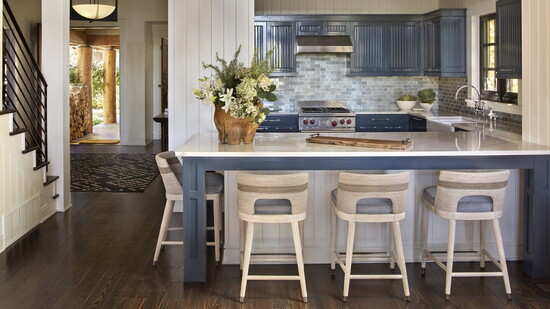
Sometimes I have an interior design idea in my head. I act on it. And I instantly regret it. Thank goodness for second-generation designer Hunter Dominick and her team at Hunter & Co for these practical tips! As a member of both the American Society of Interior Designers and the Green Building Council, Hunter shares an experienced outlook on what she's seeing define the year and how to implement that within your own home.
What are some easy ways to refresh a space without a full redesign?
Paint, rugs, and pillows are the most impactful ways to refresh your home. The biggest impact comes from color: don't shy away from it. Rich hues, deep greens, warm tones—these shades make you feel something when you walk into a room. A fresh accent wall, bold textured pillows, or a vintage rug can completely shift the energy of your space. These choices aren't just decorative; they're what make your home feel personal and alive.
What's an underrated design detail that makes a big impact?
Decorative lighting is one of the most underrated elements in design. Sconces, pendants, lamps, and chandeliers can completely transform any room. Lighting sets the mood and creates layers that make a room feel intentional and complete. A beautiful chandelier becomes a focal point, sconces add warmth and dimension to walls, and the right lamp can make a corner feel cozy and inviting. People often overlook lighting and gravitate toward furniture or paint, but lighting is one of the most powerful tools. Good lighting doesn't just illuminate; it elevates the entire atmosphere of your home.
How can homeowners use art to anchor a space?
Art is one of the best anchors you can use in a room. Whether it's a nostalgic piece that reflects your story or something bold that you simply love, art brings personality and weight to a space. The key is scale and placement; make sure the piece is the right size for the wall and positioned where it can be seen and appreciated. When the scale is right, the whole room suddenly makes sense. It's not just decoration; it's what makes your home feel complete. When you walk in and see something that speaks to you, that's when a home comes alive.
If you had to give homeowners just one design rule, what would it be?
Make sure the scale is right. Whether it's furniture, accent pieces, or artwork, proportion really matters. A massive sofa in a small room feels suffocating, and tiny art on a large wall just gets lost. When the scale is off, even beautiful pieces don't work together. Look to see how things relate to each other and to the room itself. Cohesion comes from balance; when your furniture, decor, and art are all in harmony with the space, everything clicks. It's one of the most important factors in making a room feel intentional and complete.
How is technology influencing modern home design?
It is, and it is not! Technology has become a seamless part of how we design homes. Anything that makes life easier, we add in. Window treatments that open or close with a button or lighting systems controlled from a single panel—it all adds convenience without sacrificing style. We're also integrating speaker systems and surround sound in ways that keep them completely hidden while maintaining incredible function. TVs are built into walls, sound flows through rooms without visible equipment, and everything can be programmed to work exactly how you want it. The goal is to make technology feel effortless and invisible, enhancing your daily life without cluttering your space or disrupting the design.
However, I also believe technology is not the only influence, because we are creating many rooms and spaces where people can decompress without technology. People are yearning for human interaction by adding game tables in their entertainment rooms and quiet spaces to read a book.
What color palettes do you expect to dominate the next few years?
We're seeing a bold shift toward color. Fun, vibrant hues that brighten and warm spaces are taking over. Deep greens, warm oranges, rich blues—colors that feel unique but still blend seamlessly with the rest of the room. We're also seeing natural stones with large, dramatic veining become a major factor. These bold patterns in stone add movement and character without competing with any color palettes. Together, they create spaces that feel dynamic and full of personality.
What design trends are you seeing emerge for 2026?
Vintage items, found pieces, and things that have character and imperfection are taking over. People are embracing authenticity in their homes. A vintage chair with history, an asymmetrical gallery wall, or a one-of-a-kind find from a local shop—pieces that feel collected over time rather than bought all at once—this is what makes a space feel personal. It's about telling your story through what you bring into your home. Rooms don't need to be perfectly symmetrical anymore. This approach makes spaces feel more honest, inviting, and real.
Cohesion comes from balance; when your furniture, decor, and art are all in harmony with the space, everything clicks. It's one of the most important factors in making a room feel intentional and complete.