Taking a summer vacation this year? Finding lodging, booking flights, or picking attractions are not the toughest choices you’ll make. The real dilemma is whether to post your scenic selfies on social media.
Award-winning environmental journalist, editor, and author—and local Durangoan—Jonathan Thompson offers an unusual travel tip to enrich your getaway without divesting a place of its inherent magic.
Thompson makes an ideal tour guide, having written extensively about how people interact with various landscapes, be it for resource extraction or recreation. He untangles the many conflicting generational and cultural attitudes for land—its uses and abuses—in both of his books, River of Lost Souls: The Science, Politics, and Greed Behind the Gold King Mine Spill (2018) and Sagebrush Empire: How a Remote Utah County Became the Battlefront of American Public Lands (2021).
From desert expanses to alpine rivers, Thompson observes a consistent human pattern: the more connected people are to a place, the less likely they are to trash it.
His observation is built from equal parts in-depth research and personal experience. Thompson’s own connection to this region runs deep.
“My ancestors first came to the Animas Valley in 1874,” he explains. As ranchers and farmers, they worked the land for sustenance and survival. Subsequent generations inherited deep knowledge and deep regard for the region.
“Learning as much as you can about a place makes the experience of being there richer,” he says.
However, modern tourism preferences competitive virality over immersive information. How many likes will your epic photograph garner? Or can you nab a coveted selfie at some iconic landmark?
As Thompson puts it, “Certain places become meccas for everybody, not necessarily for their intrinsic value, but because they simply make a nice picture.”
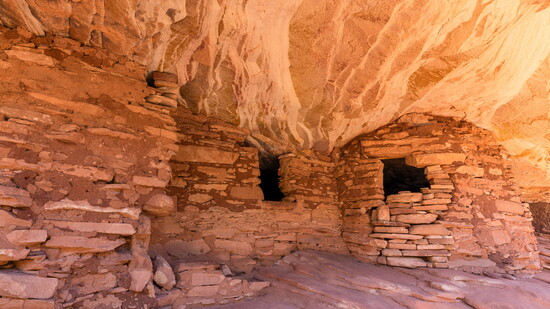
He points to House on Fire Ruins as a prime example. “It’s not a significant archaeological site,” he says, “but it’s getting thrashed because somebody put it on Instagram and it went viral.”
When people treat a place as something to use or consume, they forge no emotional ties to it. They are at a place, but not in it. Although they may have traveled hundreds or thousands of miles to be there, they are still far, far away. Scholars call this paradigm “othering” the landscape. And othering, according to Thompson, is often destructive.
Oil spills, radium and uranium groundwater leaching, toxic waterway spills, indigenous displacement—these and other disasters have scarred this region, in part, because people othered the lands.
To counteract othering a place, one can “family” it; that is, gain familiarity through a deeper, more meaningful understanding. Learning about a place—from the names of the peaks or the calls of its birds—increases your connection to it. The more connected you are, the more you relate to it like a family member. Regarding place as kin is a central facet of Indigenous cultural practices where people are descendants of the land; it is their ancestor, and its plants, animals, rivers, and mountains are their cousins or siblings.
Adopting such a mindset raises the question: How might tourists visit and flaunt the House on Fire Ruins on social media, were it not just some place but rather their beloved grandmother?
So, before you set off on summer travels, pack plenty of local knowledge, skip being at monkey-see-monkey-do selfie spots, and instead, be fully in and connected to that beautiful paradise.
How a community heals an 'othered' landscape is inspiring. - Jonathan Thompson