Luxury homeowners invest heavily in architecture, finishes, mechanical systems, landscaping, security, and interior design. Yet the one thing they rely on every minute inside the home is often overlooked: the air they breathe.
Homeowners often notice the symptoms long before they identify the cause: persistent dust despite constant cleaning, rooms that never feel consistently comfortable, lingering odors, or air that simply feels stale.
Indoor air quality is integral to a home’s performance, comfort, cleanliness, health profile, and long-term value. In high-end homes, poor indoor air quality is rarely caused by a single issue. More often, it results from multiple systems quietly failing to work together: HVAC, ductwork, humidity control, ventilation, filtration, building envelope, crawl spaces, attics, basements, and household maintenance.
A luxury home that looks perfect can still have air quality problems behind the walls, inside the ducts, above the ceilings, and below the floors.
That is where professional indoor air quality management becomes critical.
What’s Happening Behind the Walls
Luxury homes are often larger, tighter, more mechanically complex, and more heavily finished than the average home. They may include multiple HVAC zones, finished basements, wine rooms, home gyms, theaters, pool houses, guest quarters, garages, workshops, and elaborate kitchens.
Each of those spaces can affect indoor air quality.
Common issues include dust migration from leaky ductwork, musty odors from basements or crawl spaces, excess humidity, poor ventilation, construction dust, pet dander, and chemical off-gassing from finishes and furniture. Garage air infiltration, uneven temperatures, and negative pressure pulling air from unwanted areas can all play a role as well.
If a home is moving air through dirty, leaky, or poorly balanced systems, the homeowner is breathing the consequences.
Indoor Air Quality Starts with Building Performance
Many homeowners think indoor air quality begins and ends with an air purifier—but that’s only part of the picture.
Air purifiers may help, but they do not address the root causes. True indoor air quality management starts with understanding how the home performs as a system.
A properly managed large residential property should be evaluated for:
1. Air leakage: Where is outside air entering? Where is conditioned air escaping?
2. Duct leakage: Are supply and return ducts leaking into attics, basements, crawl spaces, garages, or mechanical rooms?
3. Ventilation: Is the home receiving enough fresh air without creating humidity or comfort problems?
4. Filtration: Are filters properly sized, installed, and maintained?
5. Humidity control: Is indoor relative humidity being managed year-round?
6. Pressure balance: Are rooms, zones, basements, attics, and mechanical spaces creating pressure problems?
7. Source control: Are contaminants being introduced by moisture, dust, chemicals, pets, combustion appliances, or poor maintenance?
A luxury home is not just a collection of rooms. It is a living mechanical environment. If the systems are not inspected and maintained together, problems get missed.
Ductwork: The Overlooked Air Highway of the Home
The duct system is one of the most important—and most overlooked—components affecting indoor air quality in a forced-air home.
Ducts move air throughout the home every day. If those ducts are dirty, leaking, poorly sealed, or drawing air from contaminated spaces, the entire home is affected.
Leaky ducts can pull air from attics, crawl spaces, basements, wall cavities, garages, mechanical rooms, and dusty construction areas—carrying insulation fibers, mold spores, odors, and humidity directly into the living space.
This is why duct inspection, duct cleaning, and duct sealing matter. In many homes, duct leakage is not visible from the finished rooms. The homeowner only notices the symptoms: dust, odors, uneven comfort, high utility bills, or rooms that never feel right.
The Role of Professional Duct Cleaning
Professional duct cleaning, when performed correctly, is a legitimate part of long-term system maintenance. The process requires trained professionals using proper containment, agitation, negative pressure, and cleaning methods.
Duct cleaning may be appropriate when there is visible dust or debris in the ductwork, post-construction contamination, evidence of pests, mold concerns, odor complaints, long-neglected systems, or prior water damage. It’s also worth considering after renovations or when return-air filtration has been poor for an extended period.
In luxury homes, duct cleaning should be handled carefully. Finished surfaces, floors, millwork, furnishings, artwork, and mechanical systems must be protected. The job is not just about cleaning ducts. It is about protecting the property while improving the air distribution system.
Duct Sealing and Aeroseal Technology
Duct sealing is one of the most overlooked improvements in indoor air quality and energy performance.
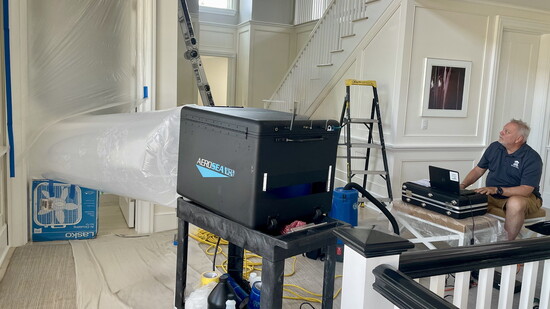
Traditional duct sealing only works where technicians can physically reach the ducts. But many ducts in large residential properties are hidden behind finished ceilings, walls, chases, and mechanical spaces. That is where advanced duct-sealing technology becomes valuable.
Aeroseal duct sealing allows leaks to be sealed from the inside of the duct system. This technology reduces duct leakage, improves airflow delivery, decreases dust infiltration, improves comfort, and supports better indoor air quality management.
When duct leakage is reduced, the HVAC system has a better chance of delivering clean, filtered, conditioned air where it belongs.
For luxury homes, that means:
• Cleaner air delivery
• Better comfort from room to room
• Less dust migration
• Reduced loss of conditioned air
• Better system performance
• Improved control over humidity and filtration
• Less contamination from attics, crawl spaces, basements, and wall cavities
Duct sealing is not just an energy upgrade—it’s an indoor air quality upgrade.
Humidity: The Hidden Risk
Moisture is one of the biggest threats to indoor air quality.
A home can be beautifully maintained and still have hidden humidity problems. Basements, crawl spaces, bathrooms, laundry rooms, kitchens, and poorly ventilated areas can all contribute to elevated moisture levels.
When humidity is not controlled, the home becomes more vulnerable to musty odors, mold-supporting conditions, dust mites, wood movement, condensation, and paint or finish problems—none of which are simple or inexpensive to address after the fact.
Luxury homes need active humidity management, not guesswork. That may include dehumidification, ventilation improvements, drainage corrections, crawl-space work, duct sealing, insulation repairs, and HVAC adjustments.
The target is not simply “make the house dry.” The goal is to keep the home in a healthy, stable humidity range without creating comfort or mechanical problems.
Filtration: Better Filters Are Not Always the Whole Answer
Many homeowners think upgrading to the strongest filter they can buy will solve everything. But that’s not always the right move.
A filter must match the HVAC system. If the filter is too restrictive, it can reduce airflow, strain equipment, create comfort issues, and even damage performance.
Good filtration depends on proper filter sizing, the right MERV rating (a standard that measures how effectively an air filter captures airborne particles), a tight fit with no bypass gaps, and regular replacement—all supported by clean return ducts, sealed ductwork, and well-maintained air handlers and coils.
A high-end home should not rely on random filter purchases from a hardware store. Filtration should be part of a planned maintenance program.
Ventilation: Fresh Air Without Creating New Problems
Modern homes are often tighter than older homes. That can improve efficiency—but it can also trap contaminants indoors.
Fresh air matters—but uncontrolled ventilation can also introduce humidity, pollutants, pollen, smoke, odors, and comfort issues.
Luxury homes may require carefully designed ventilation strategies, including balanced ventilation systems, energy recovery ventilation, dedicated outdoor air systems, exhaust management, makeup air evaluation, pressure testing, and proper kitchen and bath ventilation review.
The goal is straightforward: introduce fresh air in a controlled, balanced way that supports comfort, efficiency, and indoor air quality.
Fox Hill Luxury Real Estate Services: Complete IAQ and Property Maintenance Support
Fox Hill Luxury Real Estate Services provides indoor air quality management as part of a larger luxury property maintenance approach. We understand that high-end homes require more than standard home maintenance. They require system-level thinking, careful diagnostics, clean execution, and respect for the property.
Our indoor air quality-related services include:
• Duct inspection
• Professional duct cleaning
• Aeroseal duct sealing
• HVAC performance review
• Humidity and moisture evaluation
• Dryer vent cleaning
• Bathroom and kitchen exhaust review
• Crawl-space and basement inspection
• Filter and maintenance planning
• Dust and odor source investigation
• Building performance evaluation
• Luxury home maintenance planning
With affiliations including IAQA and NADCA, and training rooted in Building Performance Institute standards, Fox Hill Luxury Real Estate Services approaches indoor air quality from a practical, building-science perspective. The objective is to identify meaningful issues, correct them properly, and maintain the home’s systems with a long-term systems approach.
Luxury is not just marble countertops, custom millwork, and manicured landscaping—it’s also clean air, balanced comfort, controlled humidity, and a home that performs the way it should.
Indoor air quality management is no longer optional for serious luxury homeowners. It is part of protecting the property, protecting the people inside it, and preserving the value of the home.
A beautiful home should not just look clean. It should breathe clean.
Fox Hill Luxury Real Estate Services
Luxury Property Maintenance and Management
Ridgefield, Connecticut
Serving Fairfield County, Westchester County, and Litchfield County
We Provide Peace of Mind