Your child snores. They wake up exhausted. They can't sit still in class, and no one has been able to tell you why. You've asked. You've been told it's a phase. You're starting to wonder if you're the only one who thinks something isn't right.
You're not. And you're not overthinking it.
Mouth breathing, snoring, chronic fatigue, bed-wetting, teeth grinding, dark circles, difficulty focusing, and behavioral challenges — these symptoms look unrelated on the surface. In a pediatrician's office, they often get addressed one at a time, in isolation. But for a growing number of children, a single common thread is that the muscles of the face, jaw, and airway aren't functioning as they should.
It's a condition most parents have never heard of. It's called orofacial myofunctional disorder, and it's more common than you'd think.
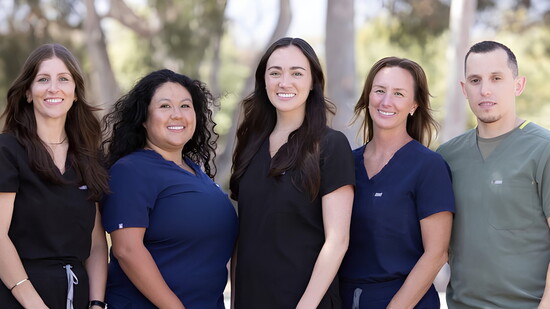
Nicole Cantello, a licensed orofacial myofunctional therapist and founder of Santa Barbara Myo, sees it every day. Families arrive in her office after months, sometimes years, of searching for answers. The list of symptoms she encounters reads like a checklist many parents would recognize: chronic mouth breathing, lips apart at rest, tongue thrust, nasal congestion that never fully clears, snoring, teeth grinding at night, dark circles, difficulty with attention and focus, behavioral challenges, and bed-wetting.
"You'd be shocked how many parents have been told that mouth breathing and snoring are normal," Cantello says. "Just because something is common does not make it normal."
What makes these cases particularly hard to catch is that the symptoms rarely arrive together with a clear label. A child who snores might be seen by an ENT. A child who wets the bed might be told they'll grow out of it. A child who can't focus might be evaluated for attention difficulties. Each issue is addressed in a silo, while the underlying pattern, the way the child breathes, holds their jaw, and uses their tongue, goes unexamined.
When a child breathes primarily through their mouth rather than their nose, the effects ripple outward. Sleep cycles are disrupted. Oxygen intake is reduced. The jaw and palate develop differently than they would with proper nasal breathing. The nervous system stays in a low-grade state of stress that can surface as restlessness, trouble concentrating, or bed-wetting long past the expected age.
Many families arrive having already pursued treatment. Some children have had tonsillectomies, adenoidectomies, or tongue-tie releases, procedures that address structural issues, only to find that their symptoms didn't fully resolve. Cantello explains why: changing structure doesn't automatically change function. The body has muscle memory. If a child has spent years breathing through their mouth, the muscles that support nasal breathing have gone underused and need to be deliberately retrained.
That's where a different kind of care comes in.
Orofacial myofunctional therapy (OMT) is a specialized treatment that retrains the muscles of the face, tongue, and mouth to function properly. Think of it as physical therapy for the airway: addressing breathing patterns, tongue posture, swallowing function, and oral habits that affect sleep, speech, facial development, and overall health.
Before treatment begins, Cantello says, the right providers ask a more fundamental question: why is this child mouth breathing? The answer may be structural, allergic, habitual, or neurological, and identifying the root cause shapes everything that follows. That's why myofunctional therapists work as part of an interdisciplinary team, coordinating with ENTs, orthodontists, dentists, allergists, and speech-language pathologists based on each child's specific needs.
"We believe wholeheartedly in interdisciplinary care," Cantello says. "It's all about the airway. Every parent deserves to understand that chronic mouth breathing can affect their child's airway development. When we recognize and treat dysfunction in the early years, we can completely change the trajectory of their facial and airway growth and set them up for a future of healthy breathing and sleep."
In Santa Barbara, that collaborative model is well developed. Santa Barbara Myo works closely with SB Orthodontics, led by Drs. Edstrom and Swenson, board-certified orthodontists whose practice focuses on the structural dimensions of airway health and facial development. Where Nicole Cantello retrains function, Drs. Edstrom and Swenson address form and timing; they say, "it's everything."
"In a growing child, the bones of the face and jaws are still malleable and responsive," Dr. Swenson says. "That means we can guide development rather than correct it after the fact." The difference that makes is significant: a narrow palate that would require surgery in an adult can often be expanded gradually and comfortably in a seven-year-old. Bite problems that develop over years can be intercepted before they affect speech, chewing, or even breathing. Early intervention doesn't necessarily mean early braces; it means actively supporting the child's development and stepping in with targeted treatment when the time is right.
For children with more complex concerns, the pathway may also include a specialist like Dr. Soroush Zaghi in Los Angeles, a nationally recognized expert in airway health and tongue-tie release, for cases where structural intervention is warranted alongside therapy.
If any of this has resonated, here's where to start.
Santa Barbara Myo offers orofacial myofunctional evaluations for children and can help determine whether therapy is the right fit. Many parents who bring their child in end up scheduling evaluations for themselves as well, because these patterns often go unaddressed for a lifetime, and it's never too late to breathe better.
You don't need a referral. You don't need the right vocabulary. You just need to trust that the symptoms you've been noticing are worth a closer look and that asking questions is always the right first step.
The goal isn't to alarm parents. It's to give children the best possible foundation — for sleep, for growth, for learning, and for the long run. In this place we call home, care is available, it's collaborative, and it starts with a conversation.
Just because something is common does not make it normal. — Nicole Cantello, Santa Barbara Myo
Early intervention doesn't necessarily mean early braces; sometimes it simply means watching carefully and acting when the timing is right. — Dr. Swenson, SB Orthodontics