Aaron Franklin still sounds a little surprised that it worked.
Sitting in the converted trailer that serves as his office, the man behind Franklin Barbecue laughs when asked what has surprised him most about the journey. “That we made it,” he says. “Sort of kidding, sort of not kidding.”
It started more than twenty years ago with backyard cookouts and a cheap smoker. Austin was cheaper then. There was no real barbecue scene the way people know it now. Social media was just waking up. Franklin and his wife, Stacy, had almost no money and zero interest in investors. “I didn’t want anybody to lose their money,” he says, “and we didn’t have any money to lose.” So they practiced. They threw parties. They learned. When the little trailer finally opened beside the highway in December 2009, it felt enormous to them even if, on the grand scale of things, it was just a little trailer behind a fence.
They cash-flowed everything that followed—the move to the East 11th Street building, the first smokehouse, the second smokehouse—without debt. That deliberate smallness is still the point.
The Franklin’s are lifelong tinkerers. They built the original trailer in the backyard. He has redone the office trailer he sits in now. He still builds as much as he can for Uptown Sports Club and for the new Franklin Backyard event space. “We’re pretty hardcore DIY people,” he says. “Sometimes it’s hard to spend money to pay someone to do something that we can do quicker, or to make something very specific.” The same curiosity that once had him welding pits now keeps him excited about the next project, as long as it feels like fun instead of work.
The early years were relentless. The rise was fast. Midnight cooking shifts were normal. Stacy and Aaron carried most of it themselves at first. Now, nearly eighteen years in, the team is deep and stable. Many people have been there a long time. Franklin no longer works those midnight rib shifts. The work has shifted toward the administrative side, and the quality of life is better.
That same protective instinct explains why there has never been a second Franklin Barbecue. Offers still come from all over the world. The answer remains no. “The last thing I ever wanted to be was that band that was better before they were on a major label,” he says. “We’re a mom and pop shop. The people that come through here are so excited and there’s just hugs for days and high fives... It would hurt my soul if we sold out and had a gazillion locations.”
Once a year the restaurant closes for ten days. Some of the staff take vacation together. Franklin and a few others stay behind for what he calls the “maintenance extravaganza.” The building dates to 1964 and has been asked to do far more than it was ever designed for. Plumbing gets replaced. Air-conditioning gets cut open. The rhythm of the closure has become part of the culture—something the team can count on.
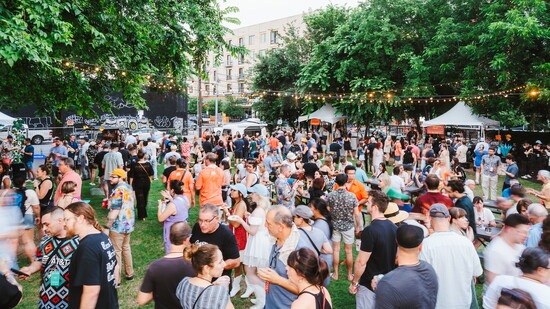
Hot Luck grew from a similar impulse. Franklin had spent years doing events that rarely set chefs up for success. He wanted something that felt Austin-y and DIY, that centered the chef community and mentorship instead of corporate polish. He and his partners built grills and set pieces by hand in the garage. The recent partnership with People Inc. and Food & Wine, he says, is about giving the festival the resources and bandwidth it always needed so it can keep growing the way they hoped—without losing the spirit that made it special in the first place. “They’re totally our people,” he says. “I’m just so excited for it.”
Austin shaped all of it. The older version of the city—the one that was friendly to artists, musicians, and people doing their own thing—made the slow, organic start possible. “We couldn’t have done any of this stuff anywhere else,” Franklin says.
When asked what he hopes people take away from the way he has built everything, the answer is simple and characteristically careful. “If you’re passionate about something, you think you’re pretty good at it, maybe don’t be afraid to follow your dreams a little bit. Be smart. Don’t do dumb stuff. Don’t put your family at risk. But yeah... it’s okay to follow your dreams a little bit.”
That is still the operating principle. Keep it small enough that it feels like family. Build the things yourself when you can. Protect the magic. And every once in a while, when there are a few free minutes for lunch, run over to Ensenada ATX for a ceviche tostada, one of Aaron’s proclaimed favorites in Austin—because even the guy who changed Texas barbecue still just wants something simple and good.
“We’re keeping it small. We’re a mom and pop shop... There are just hugs for days and high fives and it’s just such a special place we just don’t ever want to lose that magic. It would hurt my soul if we sold out.”