What's in your house? A new South Florida technology platform asks homeowners a deceptively simple question — and is betting that answering it now beats reconstructing it after the storm - when it’s too late.
The Harpers had hours. Not days — hours. They loaded the car the way every coastal family eventually does: valuables, photographs, a folder of documents, the dog, the kids' hamster, and then they drove for higher ground and watched the looming sky behind them.
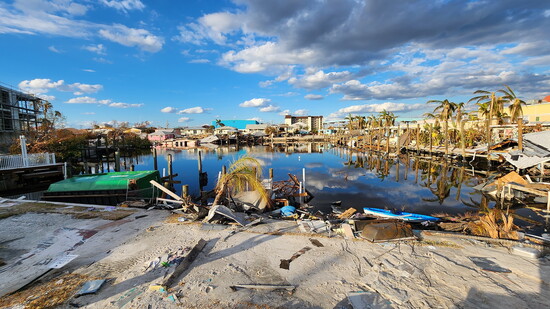
What they came home to was not a house so much as the idea of one. Furniture, electronics, a lifetime of small accumulations — gone, swept out with the tide or ruined in knee deep mud.
Then came the part nobody warns you about. Rebuilding the life they'd lost, the Harpers first had to prove the life they lived. No inventory. No receipts. A memory already going soft at the edges. So, they began the archaeology of their own household — bank statements, calls to stores that barely remembered the transaction, phone photos scrolled for a glimpse of a couch, a television, a handbag, a pair of shoes, a suit, a watch. They gave it 6 months. Then gave up. In the end, they recalled and recovered less than half of what they had- and were owed.
The other half simply could not be remembered.
The line item nobody adds
Every storm season, South Florida runs its familiar ritual. Water by the case. Batteries. Phone chargers. Shutters within reach. Homeowners are diligent, even practiced, about preparing for a storm.
What almost no one prepares for is the paperwork the storm leaves behind. The record of what you own tends to get written only after the roof is gone and open to the wind and rain — which is to say, at the exact moment it cannot be written at all.
This is not a small oversight. It is the point where families lose real value, and they lose it at the worst possible time. The fact remains, an insurer reimburses what you can prove, not what you actually had. After a disaster, the average homeowner can summon back only a fraction of a home's contents from memory. The distance between the two — between what was lost and what can be documented is costly – and paid out of pocket.
For the growing number of homeowners who self-insure, carrying the risk themselves, the math is even more stark. There is no claim to back up. The record is the safety net. There is no other.
What DocuList actually is
DocuList, the next generation home inventory and asset-management platform, is built around a single contrarian premise: do the remembering before you need it.
The idea is to catalog a household while the household still exists. Housewares, artwork, electronics, furniture, jewelry, tools, vehicles, even clothing and accessories — each gets a digital record, kept in the cloud rather than in a drawer that can flood or burn. One recent inventory of just one closet full of items cataloged 124 items totaling $58,760, logged and cataloged in advance and ready to support a claim before a single dark cloud had formed offshore.
Aimed at the obvious candidate — the homeowner watching the season approach — but also at the self-insured owner who carries the loss alone, the family settling into a new house, the renter who wants proof that their belongings are theirs, and anyone who would simply rather document now than reconstruct later under far worse conditions.
How it works
Cataloging your items is a matter of minutes, not weekends. Photograph an item or scan its receipt, and DocuList logs it — purchase date, cost, warranty, the related paperwork — and files the record where it belongs. Take ten minutes to do the primary closet or capture the whole house in a single afternoon before the weather turns.
From there the record lives in the cloud, secure, reachable from a phone even after an evacuation, even with the power down. Preparation reminders prompt the work worth finishing before a storm — trimming trees away from the roofline, securing loose fencing, checking the generator, clearing gutters before the rain comes. Every receipt, photograph, and service record is neatly organized and connected to the item it belongs to, which is precisely the connection that falls apart when disaster forces you to rebuild it from memory.
Before the next warning is issued
Storm prep has always meant stocking up and battening down. It has rarely meant knowing, line by line, what sits inside the home you're working so hard to protect — though that knowledge is worth more than any generator.
The Harpers spent 6 months trying to reassemble the list they wish they'd had. Too late. The case DocuList is making is that the catalog can exist before the first storm warning appears— that the remembering can be finished in advance, on a calm afternoon, in your living room, with the lights and A/C on.