Knox Heritage Executive Director Christine Cloninger, a Fountain City resident and co-chair of her historic neighborhood association, explains, “I just can’t get away from preservation.” With a passion inspired by a grandmother who loved sharing stories about Knoxville, Cloninger adds, “You don’t have to be a long-time resident to appreciate why Knoxville is so special. As preservationists, we think the places that make Knoxville unique are what draw people to want to live here.”
Q. What is the Scruffy City Soirée?
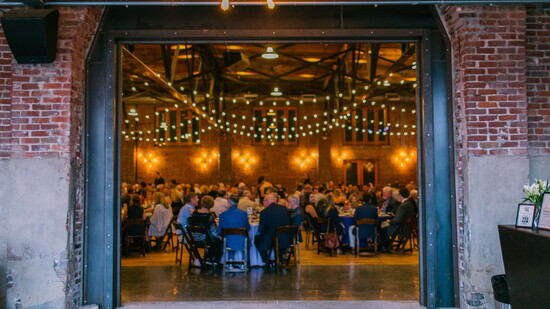
The Scruffy City Soirée, held September 11 at The Mill & Mine, is our largest annual fundraiser, bringing together community leaders, businesses and preservation advocates. It’s our signature event with amazing food and music, a whiskey pull and live auction, and the Preservationist of the Year award.
Our 2026 recipient is The Courtland Group. Founder Jeffrey Nash was a pioneer, taking risks on buildings when downtown Knoxville looked very different. We’re excited to honor their legacy of looking beyond downtown and making the first preservation investments in historic buildings, helping spark revitalization in surrounding neighborhoods.
As far as impact, the Soirée is the cornerstone of our fundraising, Knoxville’s biggest night for preservation that allows us to do our work the other 364 days of the year.
Q. What is Knox Heritage’s work in 2026?
When I started five years ago, we asked the community, “What are you grateful for in the work we’ve done? What do you want us to do now?” The feedback was preservation for everyone. Too often, preservation has a reputation for being exclusive and only for certain neighborhoods. Instead of “capital P Preservation” of landmark buildings and main street properties, it meant shifting to “lowercase p preservation,” which we took to heart to broaden the impact of our work for more places and more people.
Starting in the 1990s through the Vintage Properties Fund, Knox Heritage purchased blighted houses, restoring and selling them one at a time to then reinvest the proceeds into another property. But as trends and tastes shifted, more people, especially families, sought out older neighborhoods because of walkability, proximity to downtown and other factors that make a place feel like home. More people were already living in and restoring homes and small businesses in storefronts in older neighborhoods. How could we support them? When the Knoxville housing market changed with so many new people moving in, we reassessed investing such a large portion of funding into one project at a time.
We launched our Community Preservation Grants program in 2024—our 50th anniversary marking when our founders saved the Bijou Theatre from being razed for a parking lot. It gives grants to homeowners and small business owners in older neighborhoods across our community to support their preservation efforts. It’s had a wonderful impact. Instead of buying, restoring and selling one property at a time, we’ve given out 30 grants totaling more than $135,000 in the past three years.
The program fulfills the demand for preservation for everyone, impacting more neighborhoods and more people who knit the fabric of their community together. Now that we have before-and-after stories, we’re getting more investments from outside sources, not just our own funding, to distribute funds to our neighbors. It’s so inspiring to review applications and see all the projects and how much people care about their homes and businesses.
Q. How else do you support these home and business owners?
Feedback on challenges locating preservation resources and information (a contractor with older building expertise or design guidelines for a certain neighborhood) led to our creation of an online Preservation Directory (free to list and access) with lists of builders, tradespeople, realtors, landscapers, interior designers, etc., with experience with older homes. Our online Preservation Toolkit, an FAQ for all things preservationist, also connects people with agencies like the Tennessee Historical Commission.
Q. Tell us about Westwood.
Historic Westwood, the ancestral home of John Lutz and artist Adelia Armstrong Lutz, remained in the Lutz family until 2009 before the Aslan Foundation generously donated the property to Knox Heritage in 2013. Listed on the National Register of Historic Places, it’s one of seven Historic House Museums in Knoxville, and the only house museum in Tennessee in the national program, Historic Artists’ Home & Studios through the National Trust for Historic Preservation. People tour from every state and many countries. It’s a tangible representation of a preservation project for a house adapted to a new use 136 years later.
Q. How can people get involved?
People can sign up for our newsletter to stay in the loop on free educational workshops, opportunities to volunteer and social activities (ticketed events like Suppers and Such). Memberships start at $5 monthly (age 39 and under) and go as high as anyone cares to give. Our small staff of four is incredibly grateful for all our volunteers, our growing membership and our hard-working board of directors.
Q. What else would you want the community to know?
We maintain ongoing conversations about the value of community investment in historic buildings and neighborhoods. In our advocacy for fragile sites—reaching out to property owners, neighborhood groups, civic and business leaders and local developers—we communicate that preservation is not an obstacle but an opportunity. Investing in preservation provides economic vitality, contributes to our sense of place and defines Knoxville’s identity as being special, unique and vibrant because those historic buildings survived and serve new purposes.
People have to care for preservation to be actionable in a community. What really connects us to places is the stories connected to those places, and the stories link us back to the people who came before us and will come after us if we are faithful stewards.
KnoxHeritage.org.
“Knox Heritage wants to be the amplified voice for preservation, which, yes, is about buildings, but is really about people.”—Christine Cloninger.