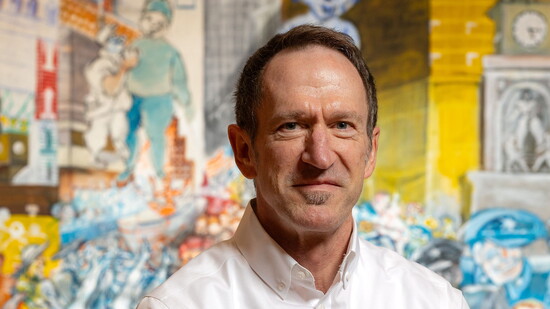
Stephen Wicks, the Barbara W. and Bernard E. Bernstein Curator for the Knoxville Museum of Art (KMA), joined the museum right out of graduate school in 1990, shortly after the KMA opened its doors. During his career, he has taken lead roles on game-changing exhibitions, such as Higher Ground: A Century of the Visual Arts in East Tennessee and Beauford Delaney and James Baldwin: Through the Unusual Door. Wicks also helped establish the KMA’s affinity membership group, the Collectors Circle, which has gone a long way to elevate the museum’s now lauded permanent collection.
“KMA’s visibility as a collecting institution has grown by leaps and bounds, especially when it comes to the art of Beauford Delaney, whom many consider Knoxville’s greatest artist. Thanks to financial support from our KMA Collectors Circle—composed of museum stakeholders interested in art and in supporting the KMA—we began to assemble a collection purchased largely from the artist’s estate. Instead of having to depend solely on donations, we were able to be proactive. We now own the largest institutional collection of Beauford Delaney’s art in the world,” Wicks explains.
Wicks shares with Knoxville City Lifestyle the experiential and educational model of Collectors Circle for museum supporters, as well as aspiring and seasoned collectors. Since its inception in the mid-1990s, Collectors Circle has helped the museum acquire nearly 100 works of art, with an insurance value of approximately $750,000.
“For that reason alone, Collectors Circle has been transformational. The group was created to offer something engaging and exciting for our stakeholders—encouraging them to collect on their own, while supporting the museum’s efforts to build a collection,” Wicks adds.
Q. Give us an overview of membership benefits in the KMA Collectors Circle.
This special membership group enjoys exclusive, in-depth, behind-the-scenes experiences with art domestically and sometimes abroad. Collectors Circle visits important art destinations, private collections and artists’ studios to gain a broad perspective on today’s art world. Led by the Museum’s Curatorial staff, this group offers an insider’s view into how art is created and collected.
When it comes to supporting the KMA collection, Collectors Circle membership dues go toward a restricted acquisitions account. At the annual Collectors Circle Purchase Reception, our curatorial team presents several acquisition options for members to vote on for purchase using the group’s funds.
Collectors Circle purchases each year have enabled the KMA to build a collection capable of filling the museum’s largest galleries with works by outstanding local talent, as well as contemporary artists from around the world. In this way, members become invested in the growth of the museum’s collection and take pride in its development.
Looking ahead, we’re eager to attract a new generation of young professionals whose presence and ideas can energize the group. We want to engage new members and encourage their development as aspiring collectors and future group leaders.
Q. When it comes to collecting, what are the members’ levels of interest?
Our members are drawn to art along a broad spectrum of involvement. For some, art is a centerpiece of their lives, and they are completely committed to collecting. Others enjoy acquiring work by artists from their region, whom they know and want to support. Some collect works that are familiar or nostalgic.
Other members collect with an adventurous spirit, leaning toward challenging and non-traditional works by contemporary artists from around the world. Some members aren’t active as collectors, but wish to support the KMA’s acquisitions efforts and enjoy being part of a dynamic community that shares a passion for art and education.
Q. Would you offer some tips on investing in art for emerging collectors?
Consider the experience of collecting.
Think about what an art acquisition will mean in your daily life. It’s important to consider any art acquisition not as a financial investment, but rather as something that energizes your living environment and enriches your worldview. Consider how the art you collect can raise meaningful questions and lead you to new ways of seeing.
View a broad range of fine art.
In addition to visiting museums, make a habit of attending local and regional art and craft fairs—such as the Dogwood Arts Festival—and especially national and international art expositions like Art Basel, Frieze and The Armory Show, which offer rich cross-sections of the art world. They provide access to curated selections representing what’s happening globally. Some collectors attend multiple fairs each year and savor every opportunity to experience art in top-tier locations worldwide.
Visit artists’ studios.
Visits to artists’ studios—the inner sanctums where art is created—allow collectors to understand artwork at a deeper level by seeing it in the making. In the studio, you can observe the tools, methods, and techniques artists use and how they prepare their materials. In some cases, you may witness significant modifications to works in progress. This insider’s perspective is invaluable and often transforms one’s understanding of an artist’s creative journey.
Do your homework, and be careful, especially when considering internet-based art purchases.
Buy art only after careful research and firsthand viewing, whenever possible. Purchasing solely from digital images and online descriptions can lead to disappointment and financial loss. Whether working with an auction house, commercial gallery, or online seller, request a detailed condition report that includes images revealing the structural integrity of the piece. If you are not satisfied with the report, walk away.
Seek expert advice to help develop your eye and avoid marginal works or those with serious flaws. In some cases, sellers may offer a work “on approval,” allowing you to live with it for a set period before buying.
Q. How do private collection visits benefit members?
Seasoned and successful collectors are usually very generous in discussing their strategies for collecting art and what it means to them to live with an art collection.
Rather than buying a piece to match a couch, they often arrange their living environment in ways that best suit their collection. They tend to see themselves not as owners of a commodity, but as custodians of an artistic legacy. Many think well in advance about how their collections might benefit a broader community if donated to an arts institution. Planning ahead is essential so that a thoughtfully assembled collection does not ultimately end up dispersed through a yard sale or flea market.
Q. Regarding art as an overall investment, what are some of the best tips you’ve gotten from veteran collectors?
In my work as KMA curator, I’ve come to know some very serious collectors—some internationally recognized. When hosting group visits to their homes, they consistently caution against trying to get rich by speculating in the art market.
Veteran collectors are quick to point out the rewards of acquiring art that truly moves you and that you cannot see yourself living without. Ask yourself important questions before buying. Does the work intrigue and challenge you? Is the experience of viewing it unforgettable?
If you base your art buying decisions on such questions, you’re much more likely to end up on the right side of the collecting equation because you acquired something you genuinely love.
Learn more about KMA Collectors Circle at KnoxArt.org.
“Veteran collectors are quick to point out the rewards of acquiring art that truly moves you and that you cannot see yourself living without. Ask yourself important questions before buying. Does the work intrigue and challenge you? Is the experience of viewing it unforgettable?”