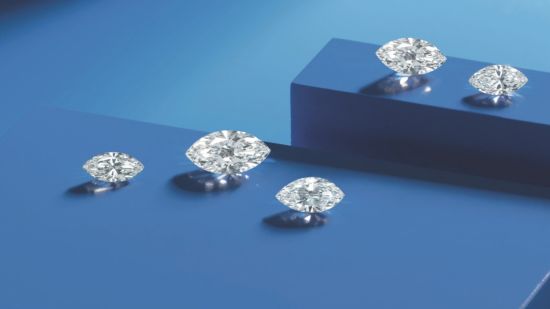
Choosing between a lab-grown diamond and a natural diamond should not feel like choosing a side in an argument. It should feel like making an informed decision about something you will enjoy wearing.
At Christopher Fine Diamonds in Chandler, we offer both. Our approach is to help you understand the differences, compare individual stones, and decide which option fits your priorities.
Before deciding, separate the conversation into a few questions: What does the diamond’s origin mean to you? What appearance do you prefer? What are you comfortable spending? And what do you need to understand before moving forward?
First, Understand What You Are Comparing
Lab-grown diamonds are diamonds—not imitation stones made to look like them. Natural diamonds form in the earth, while lab-grown diamonds are produced in controlled environments using technology.
Our lab-grown diamond options give you an opportunity to explore that choice in person, rather than relying entirely on photographs or an online description.
For shoppers drawn to geological history and an earth-formed gemstone, natural diamonds offer a different starting point. Their natural origin may be an important part of what makes the purchase meaningful.
The distinction is not “real versus fake.” It is a difference in origin, with other considerations—including pricing—that deserve a clear explanation.
Neither choice needs to be justified by someone else’s preferences.
Compare Prices in Two Different Ways
Lab-grown diamonds generally cost less than comparable natural diamonds. But a useful comparison goes further than looking at two price tags.
We recommend approaching the conversation in two rounds.
First, ask to compare diamonds with similar characteristics. Keep the shape, approximate carat weight, and quality considerations as consistent as possible. This helps you understand the price difference between the actual options in front of you.
Then compare what each category offers within your preferred budget.
For example, you might ask: “What natural diamond would you recommend within this range, and what would you show me in a lab-grown diamond?”
That second conversation can help you decide whether you would prefer a larger stone, a different balance of characteristics, or more room in the budget for the setting.
You do not have to choose the largest diamond available. You also do not have to spend your entire budget simply because you have established one.
Evaluate the Individual Diamond—not Just Its Category
“Natural” and “lab-grown” tell you about origin. They do not, by themselves, tell you which diamond you will find most beautiful.
Cut, proportions, color, clarity, and shape still belong in the conversation. Two stones with similar descriptions can present differently in person.
Rather than asking only which diamond has the higher grade, ask us to show you what the differences look like.
Can you notice a color difference? Which stone’s proportions appeal to you? Do you prefer the way one looks when you move it or view it from a different angle?
Try to compare like with like before drawing conclusions about an entire category. A preference for one particular oval diamond does not necessarily mean you prefer every lab-grown or every natural diamond.
You may simply prefer that stone.
Decide How Much Origin Matters to You
This is the part of the decision that a chart cannot settle.
You might feel strongly about choosing a natural diamond because an earth-formed gemstone has personal significance. That is a valid priority, even when another option offers a larger appearance at a lower price.
You might prefer a lab-grown diamond because it allows you to create the look you have in mind while keeping the purchase within a comfortable budget. That is equally worth discussing.
Perhaps you do not have a strong preference yet. You are allowed to compare both without committing before your appointment.
For couples shopping together, we encourage an honest conversation about this early. For someone planning a surprise proposal, understanding the wearer’s preference is more useful than assuming price or size will be the deciding factor.
A thoughtful choice begins with what matters to the person who will wear the ring.
Ask Us to Walk You Through the Documentation
Diamond paperwork should help you understand your purchase—not leave you feeling that you need to study a technical manual.
Ask what independent documentation accompanies the stone you are considering. Have the jeweler explain how its origin is identified, which characteristics are described, and how the document relates to that particular diamond.
Reporting formats and terminology can vary, so do not assume every document presents information in exactly the same way.
Useful questions include: “What does this report tell me?” and “Which of these details should matter most for the ring I am creating?”
You can also ask how the report number and any identifying inscription are checked.
We want the documentation and the in-person comparison to work together. One helps describe the stone; the other helps you decide whether you love it.
Bring Your Sourcing Questions, Too
You may have questions about where a diamond came from, who supplied it, or the information available about its production.
Bring those questions into the conversation rather than assuming a broad label answers all of them.
Ask what is documented for the particular diamond you are considering. Be specific about the information that matters to you, and ask the jeweler to distinguish what is known from what has not been verified.
The same approach applies to any purchase terms that influence your decision. Discuss the policies for that particular ring and ask for important details in writing.
Choose the Diamond as Part of the Finished Ring
Once you have narrowed down the diamond, return to the overall design.
Look at how it works with your preferred metal, band width, and setting. Ask to compare proportions rather than choosing the center stone in isolation.
At Christopher Fine Diamonds, both natural and lab-grown diamonds can be part of a custom engagement-ring project. Our in-person CAD Jewelry Design Experience gives you an opportunity to discuss and review the proposed design before the finished piece is made.
Choosing the diamond and designing the ring are connected decisions. Give both the attention they deserve.
Compare Both at Our Chandler Showroom
For couples in Chandler, Gilbert, Mesa, and the surrounding East Valley, our showroom offers a place to work through these questions with a team that carries both options.
Christopher Fine Diamonds has served the community since 2003, with an on-site Graduate Gemologist and in-house jewelry expertise to help guide the conversation.
Bring your preferred shapes, your questions, and a comfortable spending range. You do not need to arrive knowing whether you want a natural or lab-grown diamond.
You should leave understanding the differences—and feeling clearer about what is right for you.
Schedule a diamond consultation at Christopher Fine Diamonds to compare your options in person.