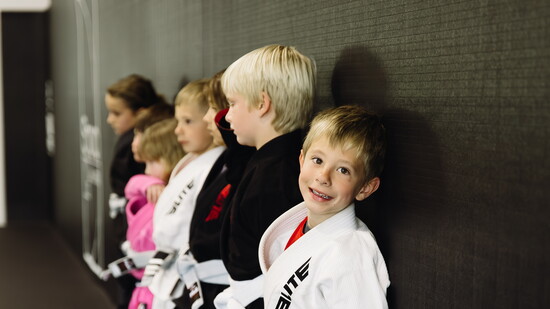
For many parents, enrolling a child in martial arts is about more than learning self-defense.
We sat down with Laci Douthitt, co-owner and instructor at Stoic Jiu Jitsu, to learn more about how martial arts help children develop confidence, perseverance, and body awareness—skills that extend far beyond the mats.
Q: What ages can participate in youth Jiu Jitsu?
A: Classes begin as early as age 3½ and are divided by age group to ensure children learn at an appropriate pace. Younger students, ages 4 to 8, focus on body awareness, coordination, and learning how to control their movements. Older students, ages 9 to 12, begin more advanced grappling and self-defense techniques.
Q: What does a typical class look like?
A: Classes are highly active and designed to keep children engaged. Students start with movement-based exercises, such as bear crawls and crab walks, before learning techniques. We teach techniques through games and partner activities, so they’re having fun while learning important skills.
Q: How does Jiu Jitsu help children build confidence?
A: Unlike many sports that rely on size, strength, or speed, Jiu Jitsu emphasizes problem-solving and strategy.
I think of Jiu Jitsu as the chess of physical sports. You don’t have to be bigger or stronger than your partner. Jiu Jitsu teaches you to work smarter, not harder.
Training teaches children that they can remain calm under pressure, make good decisions, and take control of difficult situations. The sport is also widely recognized for its anti-bullying benefits because students learn self-defense while understanding that aggression should always be a last resort.
Q: What lessons do children learn from competition and setbacks?
A: Perseverance is one of the biggest takeaways. Many young competitors lose matches early in their competitive careers, but our coaches use those moments to teach emotional regulation and resilience. We remind our athletes that now they know what it feels like to try. They will work even harder and get through it. That’s where perseverance comes from.
Q: Are there opportunities available for teens and young adults?
A: Twice a month we offer self-defense classes for ages 12 and older, including students preparing to leave for college. The classes teach practical safety skills, situational awareness, and techniques to stay calm and help people protect themselves in uncomfortable or potentially dangerous situations.
For parents who worry their child isn’t athletic, confident, or tough enough, Douthitt says Jiu Jitsu may be exactly what they need. The sport teaches children that confidence comes not from overpowering others, but from learning to trust themselves.
StoicJiuJitsu.com | @stoic.jiujitsu
“You don’t have to be bigger or stronger than your partner. Jiu Jitsu teaches you to work smarter, not harder.” - Laci Douthitt